
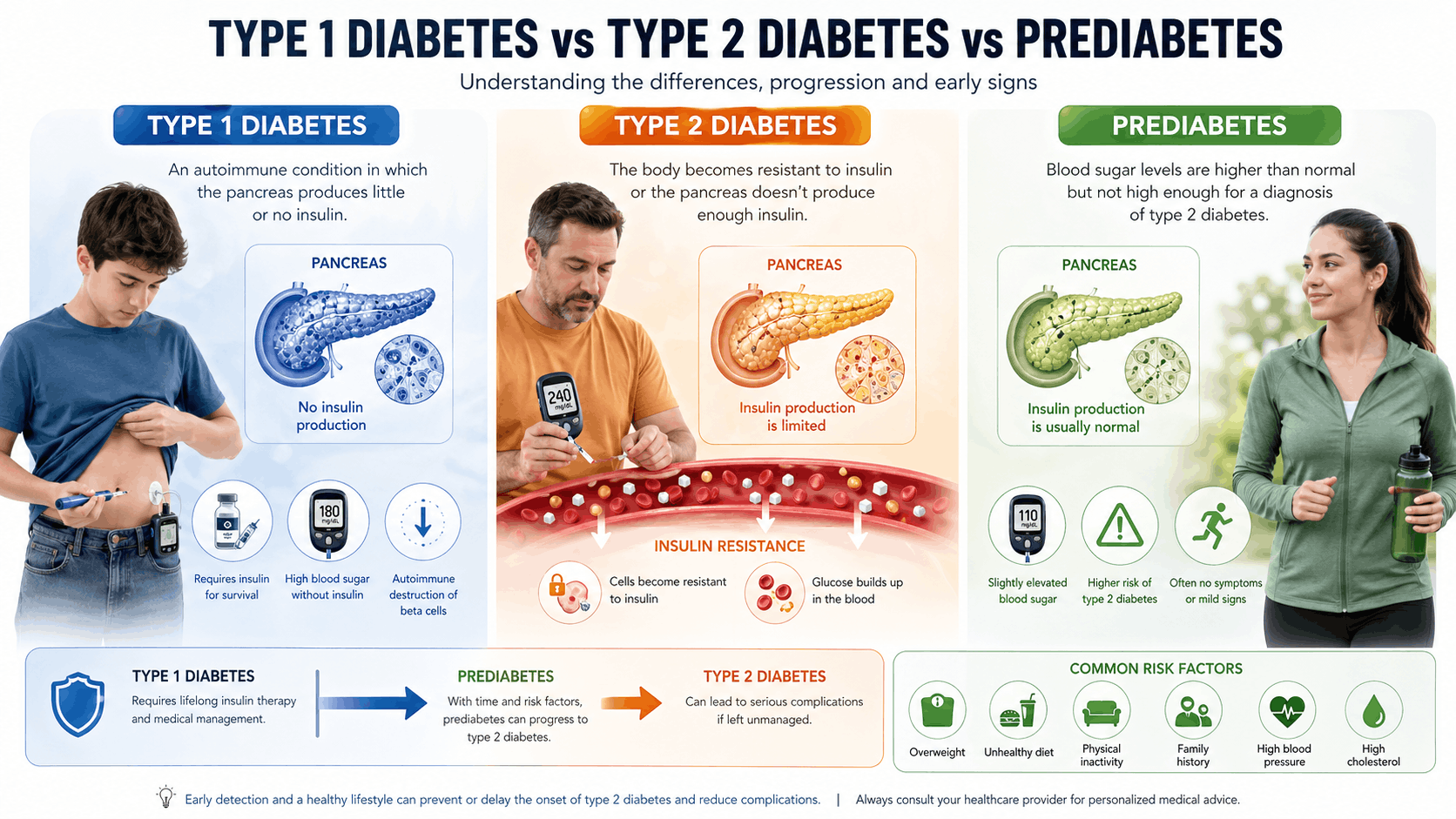
Diabetes is one of the fastest-growing health concerns in the United States, affecting millions of adults every year. The challenge? Many people overlook the early symptoms until the condition progresses. Recognizing the early signs of diabetes can help you take action sooner, prevent complications, and protect your long-term health.
In this guide, we’ll break down the early warning signs of diabetes in American adults, why they occur, and when you should see a doctor.
Contents
What Is Diabetes?
Diabetes is a chronic condition that affects how your body processes blood sugar (glucose). When your body either doesn’t produce enough insulin or can’t use it effectively, glucose builds up in the bloodstream—leading to serious health issues over time.
There are three main types:
- Type 1 diabetes
- Type 2 diabetes (most common in adults)
- Prediabetes (early stage, reversible)
Type 1 diabetes:
Type 1 diabetes is a chronic condition in which the body can no longer produce insulin, a hormone essential for regulating blood sugar (glucose). Type 1 diabetes is an autoimmune disorder that can develop at any age, though it’s most commonly diagnosed in children and young adults.
Type 2 diabetes
Type 2 diabetes is the most common form of diabetes, affecting millions of people worldwide. It develops when the body either resists insulin or doesn’t produce enough of it to keep blood sugar levels in a healthy range. Unlike Type 1 diabetes, this condition often develops gradually and is strongly influenced by lifestyle factors.
Prediabetes (early stage, reversible)
Prediabetes is a warning sign—not a life sentence. It means your blood sugar levels are higher than normal but not yet high enough to be diagnosed as diabetes. The good news: this stage is often reversible with the right steps.
Why Early Detection Matters
Early diagnosis is critical. Catching diabetes in its early stages can:
- Prevent heart disease and stroke
- Reduce the risk of nerve damage
- Protect kidney and eye health
- Improve overall quality of life
10 Early Signs of Diabetes in American Adults
1. Frequent Urination (Polyuria)
One of the earliest and most common symptoms is needing to urinate more often than usual, especially at night. Excess sugar in the blood forces your kidneys to work harder, leading to increased urination.
2. Increased Thirst (Polydipsia)
As your body loses more fluids through frequent urination, you may feel constantly thirsty—even after drinking water.
3. Unexplained Weight Loss
If you’re losing weight without trying, it could be a sign your body isn’t using glucose properly. Instead, it starts breaking down fat and muscle for energy.
4. Extreme Hunger (Polyphagia)
Despite eating regularly, you may feel unusually hungry. This happens because your cells aren’t getting enough glucose for energy.
5. Fatigue and Low Energy
Persistent tiredness is a key warning sign. When your body can’t efficiently use sugar for fuel, energy levels drop significantly.
6. Blurred Vision
High blood sugar can affect the lenses in your eyes, causing temporary blurred vision. If left untreated, it may lead to serious eye problems.
7. Slow-Healing Wounds
Cuts, bruises, or infections that take longer to heal may indicate poor blood circulation and nerve damage—both linked to diabetes.
8. Frequent Infections
People with early diabetes often experience:
- Skin infections
- Urinary tract infections (UTIs)
- Yeast infections
This happens because high sugar levels weaken the immune system.
9. Tingling or Numbness in Hands and Feet
Early nerve damage (neuropathy) may cause a tingling or “pins and needles” sensation, especially in the extremities.
10. Dark Patches of Skin (Acanthosis Nigricans)
Dark, velvety patches of skin—usually around the neck, armpits, or groin—can be an early sign of insulin resistance.
Who Is at Higher Risk in the U.S.?
Certain factors increase the risk of developing diabetes among American adults:
- Being overweight or obese
- Sedentary lifestyle
- Family history of diabetes
- Age 45 and older
- High blood pressure or cholesterol
- History of gestational diabetes
When Should You See a Doctor?
You should consult a healthcare provider if you notice:
- Persistent thirst and urination
- Sudden weight changes
- Ongoing fatigue
- Vision problems
A simple blood ‘A1C test‘ (HbA1c) can confirm whether you have diabetes or prediabetes.
Tips to Prevent or Delay Diabetes

The good news is that early-stage diabetes, especially prediabetes, can often be managed or reversed with lifestyle changes:
✔ Maintain a Healthy Diet
Focus on:
- Whole grains
- Lean proteins
- Fruits and vegetables
- Low sugar intake
✔ Stay Physically Active
Aim for at least 150 minutes of moderate exercise per week, such as walking or cycling.
✔ Manage Weight
Even losing 5–10% of your body weight can significantly reduce your risk.
✔ Monitor Blood Sugar Levels
Regular check-ups help you stay informed and take timely action.
Also read, diabetes causes, symptoms, and management
Final Thoughts
The early signs of diabetes are often subtle but should never be ignored. Paying attention to your body and recognizing these symptoms can make a life-saving difference. If you suspect something isn’t right, don’t wait—early intervention is key.
FAQs,
1. What is Type 1 diabetes?
Type 1 diabetes is a chronic condition where the body’s immune system attacks insulin-producing cells in the pancreas. As a result, the body cannot make insulin, and blood sugar levels rise.
2. What causes Type 1 diabetes?
The pancreas doesn’t produce insulin or make a very small amount. It is caused by an autoimmune reaction. The exact trigger is unknown, but genetics and environmental factors (like viruses) may play a role.
3. Can Type 1 diabetes be prevented?
No, there is currently no known way to prevent Type 1 diabetes. However, early diagnosis and proper treatment can help manage it effectively.
4. How is Type 1 diabetes treated?
Common early symptoms include excessive thirst, frequent urination, sudden weight loss, fatigue, and blurred vision. Symptoms can develop quickly and may become severe if untreated.

Diploma in Lab Technician (DMLT)
Paramedical Board, Delhi, Govt. of India
(Reg. No. REG/23/41/1391)
Dedicated and detail-oriented Lab Technician with hands-on experience in diagnostic
testing, sample collection, and laboratory procedures. Seeking a challenging role in a
reputable healthcare organization where I can utilize my skills and contribute to accurate
and efficient patient care.
“Each health article undergoes professional medical review by experienced doctors.”