
An experimental drug—also known as an investigational drug—is a medication that is still being tested and has not yet received full approval for general use. These drugs are studied in controlled environments to evaluate their safety, effectiveness, and potential side effects before they become available to the public.
Experimental drugs are a crucial part of modern medicine, helping researchers discover new treatments for diseases such as cancer, Alzheimer’s, and rare genetic disorders.
Experimental Drug Meaning in Clinical Trials Explained
In clinical research, an experimental drug refers to a treatment that is being tested in clinical trials involving human participants. These trials are designed to answer key questions:
- Does the drug work?
- Is it safe for humans?
- What is the correct dosage?
- What side effects may occur?
Before reaching human trials, experimental drugs are tested in laboratories and on animals. Only after showing promising results do they move to human testing.
How Do Experimental Drugs Work?
Experimental drugs work by targeting specific biological processes in the body. Depending on the condition being treated, they may:
- Block harmful proteins or cells
- Boost the immune system
- Replace missing or defective functions
- Prevent disease progression
For example, some experimental cancer drugs target tumor cells without harming healthy tissues, offering more precise treatment compared to traditional therapies.
Phases of Experimental Drug Testing Explained
Clinical trials for experimental drugs are conducted in four main phases:
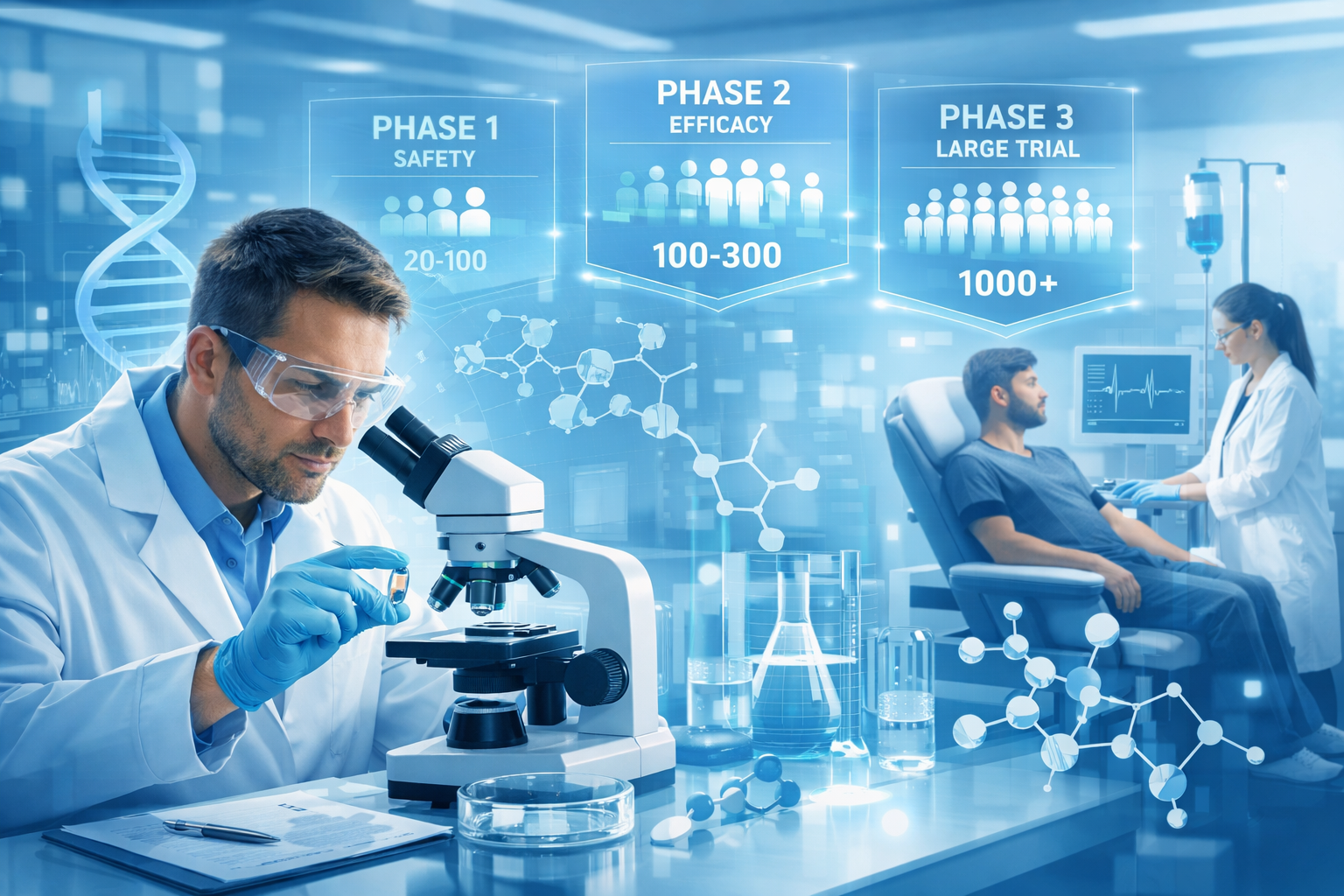
Phase 1 – Safety Testing
- Conducted on a small group (20–100 participants)
- Focus: Safety, dosage, and side effects
Phase 2 – Effectiveness
- Larger group (100–300 participants)
- Focus: Does the drug work for the condition?
Phase 3 – Large-Scale Testing
- Hundreds to thousands of participants
- Compares the drug with existing treatments
Phase 4 – Post-Approval Monitoring
- Conducted after approval
- Tracks long-term effects and safety
How Are Experimental Drugs Approved?
In the United States, experimental drugs must go through a strict approval process before they can be marketed:
Step 1: Preclinical Research
Scientists first test the drug in laboratories and animal studies to check its safety, effects, and possible side effects before testing it in humans.
Step 2: Investigational New Drug (IND) Application
After successful laboratory and animal testing, developers submit the research data to regulatory authorities for approval to begin human clinical trials.
Step 3: Clinical Trials (Phases 1–3)
Human clinical trials are conducted to evaluate the drug’s safety, effectiveness, proper dosage, and potential side effects.
Step 4: New Drug Application (NDA)
If the clinical trials are successful, the company submits an application to regulatory authorities for official approval to market the drug.
Step 5: Review and Approval
Regulatory authorities carefully review the clinical trial data to determine whether the drug is safe and effective before approving it for public use.
Difference Between Experimental Drug and Approved Drug
| Feature | Experimental Drug | Approved Drug |
|---|---|---|
| Status | Under testing | Approved for public use |
| Availability | Limited (clinical trials) | Widely available |
| Safety | Still being evaluated | Proven safe (within limits) |
| Effectiveness | Not fully confirmed | Clinically proven |
Safety of Experimental Drugs in Humans
Safety is the top priority in clinical trials. While experimental drugs are carefully tested, they may still carry risks because:
- Long-term effects may not be fully known
- Side effects can vary between individuals
- Effectiveness is still under evaluation
However, strict ethical guidelines and monitoring systems are in place to protect participants.
Risks and Benefits of Experimental Drug Use
✅ Benefits
- Access to cutting-edge treatments
- Potential for better outcomes
- Contribution to medical research
⚠️ Risks
- Unknown side effects
- No guarantee of effectiveness
- Possible need for frequent monitoring
Patients often consider experimental drugs when standard treatments have failed or are unavailable.
How Long Does Experimental Drug Testing Take?
The development and approval of an experimental drug can take 10 to 15 years or more. The timeline includes:
- Preclinical research: 3–6 years
- Clinical trials: 6–10 years
- Regulatory review: 1–2 years
This long process ensures that only safe and effective drugs reach the market.
Who Can Access Experimental Drugs?
Access is usually limited to:
- Clinical trial participants
- Patients under “compassionate use” programs
- Individuals with serious or life-threatening conditions
Doctors help determine eligibility based on strict criteria.
The Future of Experimental Drugs
Advancements in technology, including AI-driven drug discovery and personalized medicine, are speeding up the development of experimental drugs. In the future, treatments may become:
- More targeted
- Faster to develop
- Safer with fewer side effects
Conclusion
Experimental drugs play a vital role in advancing healthcare by offering hope for new and improved treatments. While they come with risks, they also open the door to life-saving innovations. Understanding how these drugs work, their testing phases, and approval processes can help patients make informed decisions about their treatment options.

Diploma in Lab Technician (DMLT)
Paramedical Board, Delhi, Govt. of India
(Reg. No. REG/23/41/1391)
Dedicated and detail-oriented Lab Technician with hands-on experience in diagnostic
testing, sample collection, and laboratory procedures. Seeking a challenging role in a
reputable healthcare organization where I can utilize my skills and contribute to accurate
and efficient patient care.
“Each health article undergoes professional medical review by experienced doctors.”