

Introduction
Antibiotic medicines have revolutionized modern healthcare by saving millions of lives from once-deadly bacterial infections. From treating simple throat infections to managing life-threatening conditions like sepsis, antibiotics are essential tools in medicine. However, their misuse and overuse have raised serious concerns worldwide. Understanding how antibiotics work, the correct dosage, and their potential risks is crucial for protecting both individual health and global public safety.
What Are Antibiotics?
Antibiotics are medications specifically designed to fight bacterial infections. They either kill bacteria or prevent them from multiplying, allowing the body’s immune system to eliminate the infection more effectively.
Types of Antibiotics
Broad-Spectrum Antibiotics
- Target a wide range of bacteria
- Used when the exact bacteria causing infection is unknown
Narrow-Spectrum Antibiotics
- Target specific types of bacteria
- Preferred when the exact pathogen is identified
How Antibiotics Work
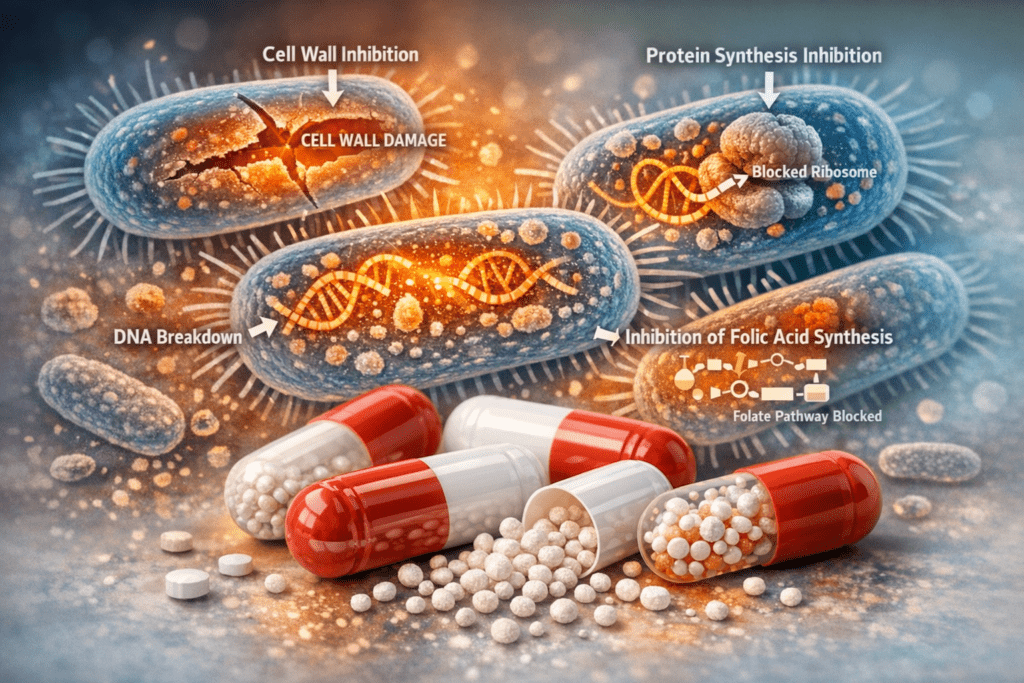
Antibiotics function through different mechanisms depending on their class. Their primary goal is to eliminate harmful bacteria without harming the human body.
1. Killing Bacteria (Bactericidal)
Some antibiotics destroy bacterial cell walls, causing the bacteria to burst and die.
2. Inhibiting Growth (Bacteriostatic)
Others stop bacteria from multiplying, giving the immune system time to fight the infection.
3. Disrupting Protein Production
Certain antibiotics block bacterial protein synthesis, preventing their survival.
Antibiotics vs Viral Infections
A common misconception is that antibiotics can treat all infections. This is incorrect.
- Antibiotics do NOT work against viruses
- Conditions like flu, common cold, and most sore throats are viral
Using antibiotics unnecessarily in such cases can lead to serious health risks.
Common Types of Antibiotics
Here are some commonly used antibiotic classes:
- Penicillins – Used for throat infections, skin infections
- Cephalosporins – Broad use for respiratory and urinary infections
- Macrolides – Often prescribed for lung infections
- Tetracyclines – Used for acne and certain bacterial infections
- Fluoroquinolones – Used for severe infections
Each type works differently and is prescribed based on the infection type.
Proper Dosage and Usage Guidelines
Correct antibiotic usage is essential for effective treatment and preventing complications.
Follow the Prescription Strictly
- Always take antibiotics exactly as prescribed by your doctor
- Do not self-medicate
Factors Affecting Dosage
- Age
- Body weight
- Type and severity of infection
- Kidney and liver function
Complete the Full Course
Even if symptoms improve, stopping early can:
- Allow bacteria to survive
- Lead to antibiotic resistance
Avoid Skipping Doses
Missing doses can reduce effectiveness and prolong infection.
Side Effects of Antibiotics
Like all medications, antibiotics can cause side effects.

Common (Mild) Side Effects
- Nausea
- Diarrhea
- Stomach discomfort
- Headache
Serious Side Effects
- Severe allergic reactions
- Difficulty breathing
- Skin rashes
- Swelling of face or throat
Immediate medical attention is required in severe cases.
Dangers and Risks to the Human Body
While antibiotics are life-saving, they can also pose risks if misused.
1. Antibiotic Resistance
One of the biggest global health threats today.
- Bacteria evolve and become resistant
- Infections become harder to treat
- Leads to longer hospital stays and higher mortality
2. Damage to Gut Health
Antibiotics kill both harmful and beneficial bacteria.
- Disrupts gut microbiome
- Can lead to digestive issues
- Weakens immunity over time
3. Allergic Reactions
Some individuals may develop:
- Skin rashes
- Breathing problems
- Anaphylaxis (life-threatening condition)
4. Long-Term Health Risks
Overuse of antibiotics has been linked to:
- Increased risk of chronic diseases
- Weakened immune response
- Recurrent infections
When Should You Take Antibiotics?
Antibiotics should only be used when:
- Prescribed by a qualified healthcare professional
- There is a confirmed bacterial infection
- Symptoms are severe or worsening
Never take antibiotics:
- For viral infections
- Based on someone else’s prescription
- Without medical consultation
Tips for Safe Antibiotic Use
Do’s
- Follow your doctor’s advice
- Complete the full course
- Maintain proper hygiene
- Inform your doctor about allergies
Don’ts
- Do not self-medicate
- Do not skip doses
- Do not share antibiotics
- Do not use leftover medication
Conclusion
Antibiotic medicines are powerful tools that have transformed modern medicine, but they must be used responsibly. Understanding how they work, following proper dosage, and being aware of their potential dangers can help prevent serious health risks. Misuse not only harms individuals but also contributes to the growing problem of antibiotic resistance worldwide.
Responsible use of antibiotics ensures they remain effective for future generations.