
Introduction
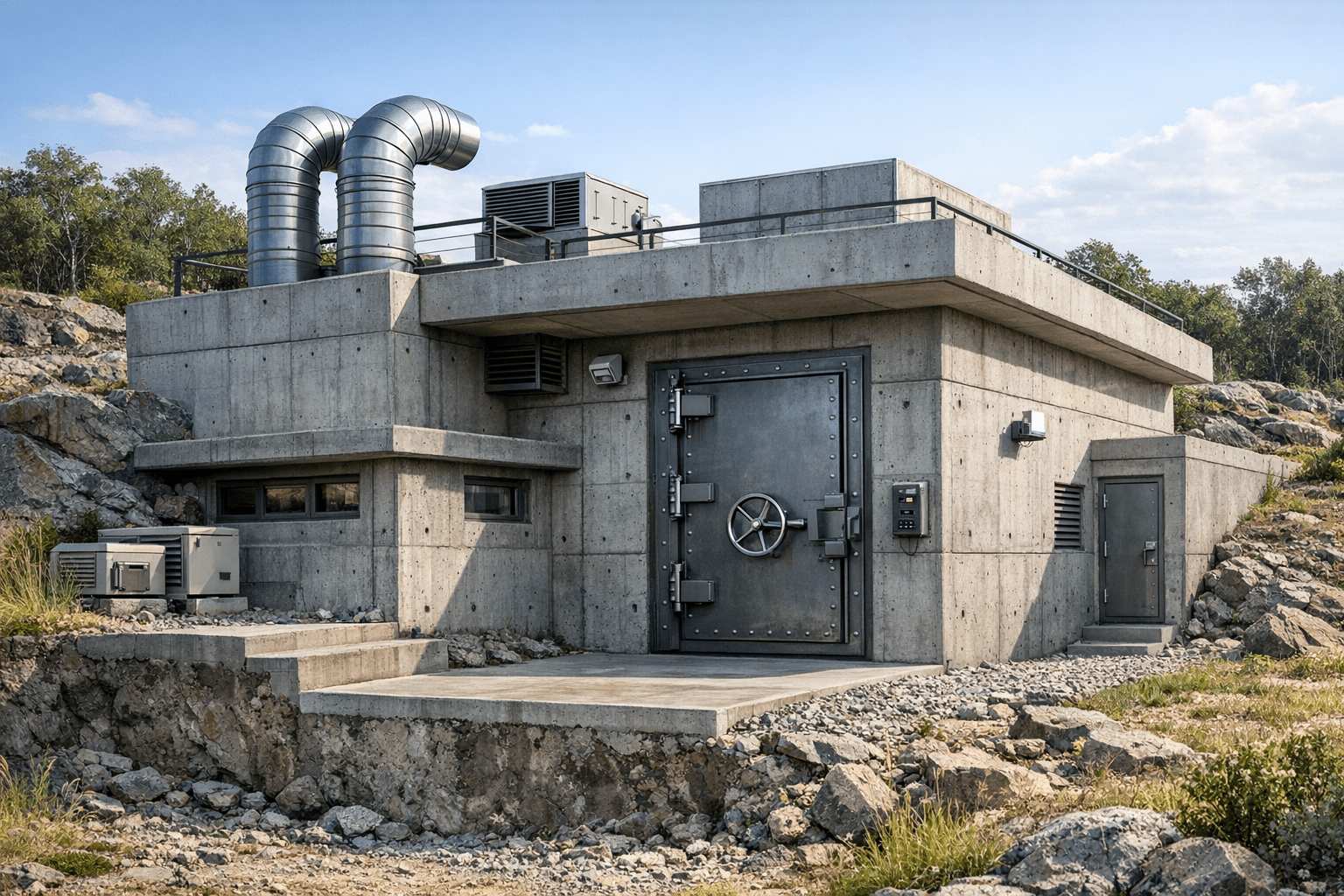
The threat of nuclear warfare has influenced architecture, engineering, and civil defense planning for decades. After the devastating impact of the Hiroshima and Nagasaki atomic bombings in 1945, governments and scientists began researching ways to protect civilians from nuclear explosions and radioactive fallout. One major outcome of this effort was the development of atomic-proof houses, also known as nuclear-resistant homes or fallout shelters.
Atomic-proof houses are specially designed structures that help shield people from the dangerous effects of a nuclear blast, including radiation, shock waves, and heat. These houses combine advanced building materials, strategic design, and protective technologies to provide safety during a nuclear emergency.
This article explores the development of atomic-proof homes, the technologies behind them, and how modern engineering continues to improve protection against atomic radiation.
Contents
Understanding Atomic Radiation
Atomic radiation is the harmful energy released during nuclear reactions, explosions, or accidents. When a nuclear weapon detonates, it releases several types of radiation and energy.
The most dangerous forms include:
- Gamma radiation – high-energy electromagnetic waves capable of penetrating buildings and human tissue.
- Neutron radiation – particles released during nuclear fission that can cause severe biological damage.
- Radioactive fallout – radioactive dust and debris that falls back to Earth after an explosion.
Exposure to intense radiation can lead to serious health conditions such as Acute Radiation Syndrome, which damages internal organs and can be fatal in severe cases.
Because of these risks, scientists developed structural designs and materials capable of reducing radiation exposure inside buildings.
Historical Development of Atomic-Proof Housing
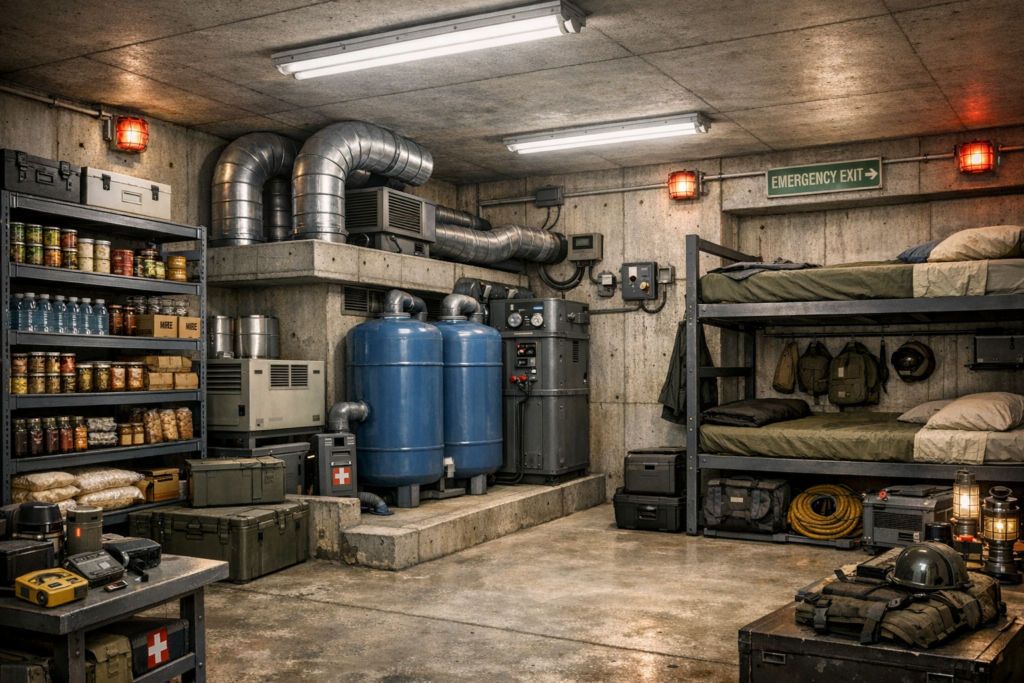
The idea of nuclear-resistant housing gained momentum during the Cold War. During this period, global tensions and nuclear weapons testing increased the likelihood of a nuclear conflict.
Many governments began investing in civil defense systems and protective housing.
Key milestones in the development of atomic-proof structures include:
Civil Defense Shelter Programs
Countries like the United States launched nationwide civil defense campaigns encouraging families to build backyard fallout shelters. Government manuals provided instructions on building underground shelters using concrete, steel, and earth.
National Shelter Infrastructure
Some countries took shelter construction further. For example, Switzerland built one of the world’s most comprehensive nuclear shelter systems, ensuring that nearly every resident has access to a protected bunker.
Military-Grade Bunkers
Nations including Russia and China developed massive underground bunkers capable of housing thousands of people in the event of nuclear war.
These developments laid the foundation for modern nuclear-resistant homes.
Key Design Features of Atomic-Proof Houses
1. Underground Construction
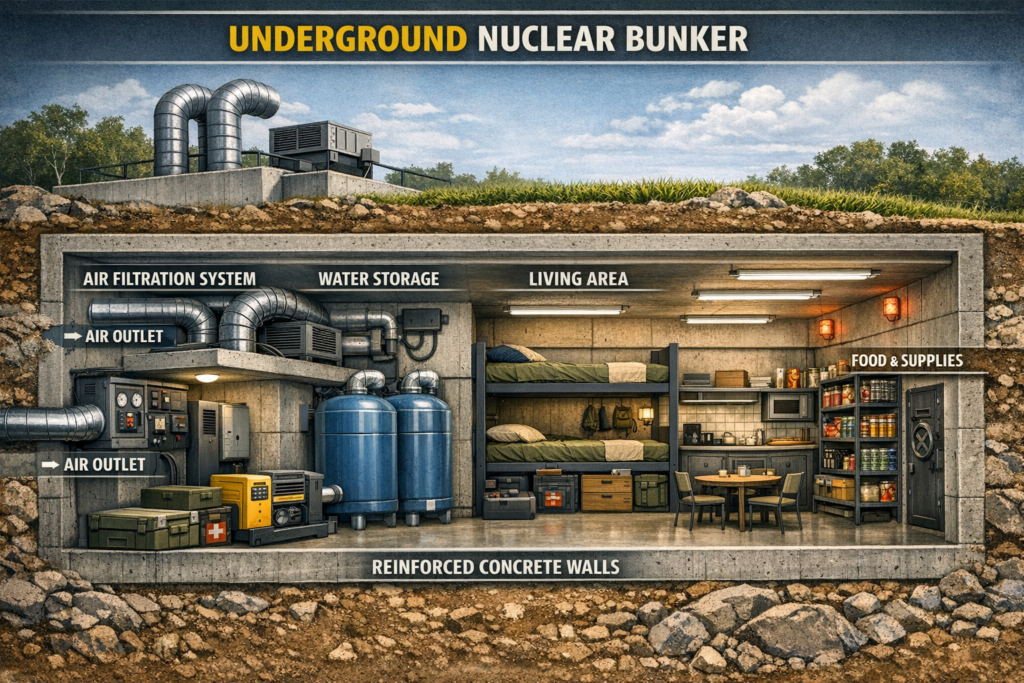
One of the most effective ways to reduce radiation exposure is to build structures underground. Soil and rock provide natural shielding that significantly reduces radiation levels.
Underground shelters are typically built:
- 10 to 30 feet below ground
- Covered with thick layers of soil
- Reinforced with concrete and steel
This design protects occupants from both radiation and blast waves.
2. Thick Reinforced Concrete Walls
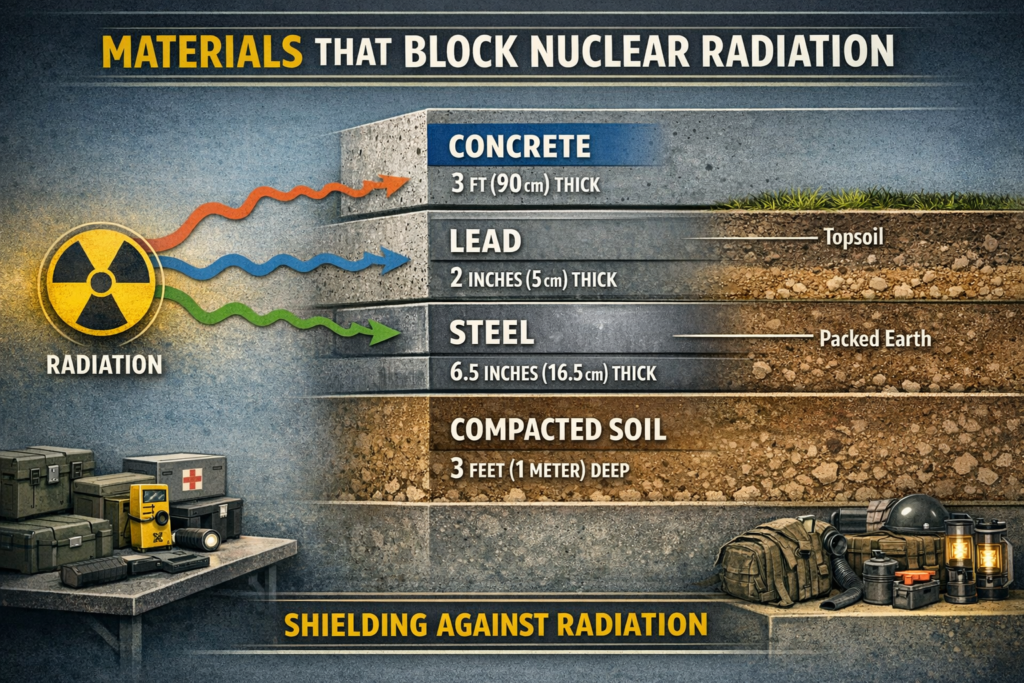
Concrete is widely used in nuclear-resistant construction because of its density and strength. Thick concrete walls can absorb and weaken gamma radiation.
Typical atomic-proof houses use:
- Reinforced concrete walls
- Multi-layer shielding systems
- Structural designs that distribute blast pressure
The thicker the material barrier, the greater the protection from radiation.
3. Lead and Steel Radiation Shielding
Lead is one of the most effective materials for blocking radiation. In nuclear-safe construction, lead sheets or panels may be placed inside walls to provide additional protection.
Steel is also used to reinforce structures and increase durability against blast pressure.
Together, these materials form a layered defense system.
4. Air Filtration and Ventilation Systems
Radioactive fallout can contaminate outside air, making ventilation systems critical for survival in a nuclear shelter.
Advanced filtration systems include:
- HEPA filters for radioactive particles
- Activated charcoal filters for chemical contamination
- Sealed ventilation pipes to control airflow
These systems ensure that the air inside the shelter remains breathable and free from radioactive dust.
5. Shock-Resistant Structural Design
Nuclear explosions generate powerful blast waves capable of destroying buildings. Atomic-proof houses incorporate shock-resistant engineering techniques such as:
- Rounded or dome-shaped structures
- Flexible foundations
- Reinforced support beams
These features help structures withstand high pressure and vibrations.
Essential Life-Support Systems Inside Atomic-Proof Houses
A nuclear shelter must support life for days or even weeks while radiation levels outside decrease.
Common life-support provisions include:
- Long-term food storage
- Large water reserves
- Backup electricity generators
- Medical supplies
- Waste management systems
Some modern shelters also include communication equipment and radiation monitoring devices.
Modern Advances in Nuclear-Resistant Housing
Technology has significantly improved the safety and efficiency of nuclear-resistant structures.
Modern innovations include:
Radiation-Absorbing Materials
Researchers are developing new materials that absorb radiation more efficiently than traditional concrete.
Smart Monitoring Systems
Modern shelters can include sensors that monitor:
- Radiation levels
- Air quality
- Structural stress
- Oxygen levels
These systems help occupants respond quickly to environmental changes.
EMP-Resistant Infrastructure
Nuclear explosions can generate electromagnetic pulses (EMP) that damage electronics. Modern atomic-proof homes often include EMP-protected wiring and communication systems.
Countries Leading in Civil Nuclear Protection
Several countries maintain strong civil defense shelter programs today.
For example:
- Israel requires reinforced safe rooms in many residential buildings.
- Switzerland continues to maintain extensive underground shelter networks.
- Finland has large underground shelters designed for emergency protection.
These systems demonstrate how infrastructure planning can help protect civilian populations.
Limitations of Atomic-Proof Houses
Although atomic-proof houses can significantly reduce radiation exposure, they are not completely immune to extreme nuclear events.
Their effectiveness depends on several factors:
- Distance from the explosion
- Size of the nuclear weapon
- Structural design and material thickness
- Duration of shelter occupancy
For this reason, nuclear safety strategies often combine shelters with evacuation planning and emergency response systems.
Conclusion
Atomic-proof houses represent one of the most important architectural responses to the threat of nuclear warfare. Developed primarily during the Cold War, these structures combine underground construction, dense shielding materials, and advanced filtration systems to protect people from atomic radiation and nuclear fallout.
Although the global threat of nuclear conflict fluctuates, the science behind nuclear-resistant housing continues to evolve. Modern engineering innovations are making these shelters safer, more efficient, and better prepared to protect human life in extreme situations.
Understanding how atomic-proof houses work not only highlights advances in structural engineering but also emphasizes the importance of preparedness in an uncertain world.