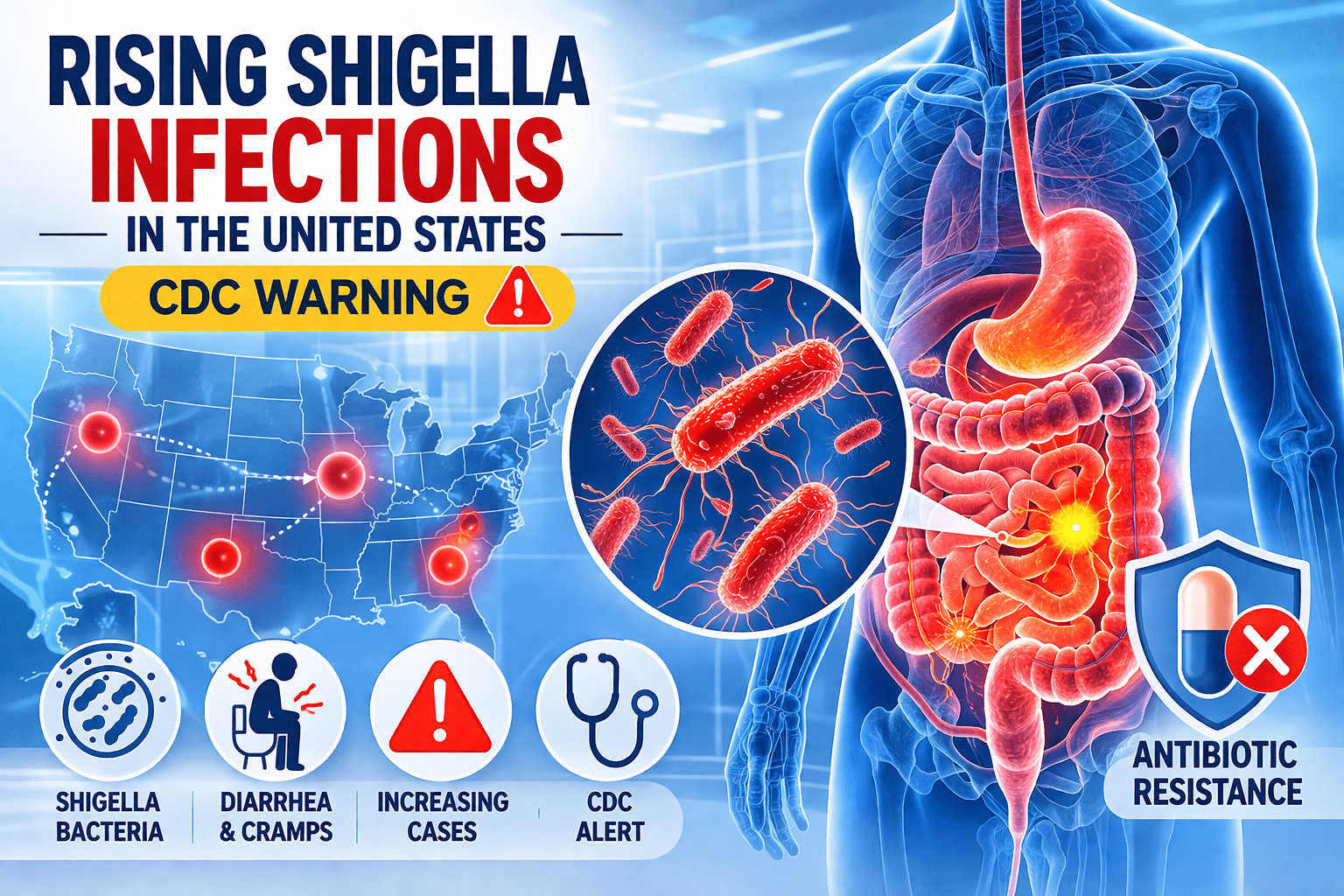
A recent warning from the Centers for Disease Control and Prevention (CDC) has raised concern about a growing surge in Shigella infections across the United States. This increase is particularly alarming due to the emergence of drug-resistant strains, making treatment more challenging and posing a serious public health threat.
What Is Shigella Infection?
Shigella is a group of bacteria that causes shigellosis, a highly contagious intestinal infection. It primarily affects the digestive system and spreads easily from person to person.
According to health data, Shigella causes around 450,000 infections annually in the U.S.
Why Is the CDC Concerned?
The CDC’s latest findings highlight a worrying trend:
- Antibiotic-resistant (XDR) Shigella strains are increasing
- Resistance rose from 0% (2011–2015) to 8.5% in 2023
- Many strains are now resistant to commonly used antibiotics like azithromycin and ciprofloxacin
This means:
- Standard treatments may no longer work
- Severe cases may require hospitalization
- There are limited alternative treatment options
Health experts warn that this trend could make infections harder to control in the future.
Common Symptoms of Shigella Infection
Symptoms typically appear 1–2 days after exposure and may include:
- Diarrhea (sometimes bloody)
- Fever
- Stomach cramps
- Nausea
- Urge to pass stool even when bowels are empty
Most cases resolve within 5–7 days, but severe infections can last longer or require medical care

How Shigella Spreads
Shigella spreads through the fecal-oral route, meaning even a small amount of bacteria can cause infection.
Common transmission routes include:
- Contaminated food or water
- Poor hand hygiene
- Person-to-person contact
- Sexual contact involving exposure to bacteria
The CDC notes that many recent infections are domestically acquired, not just linked to travel
Who Is at Higher Risk?
Certain groups are more vulnerable to infection:
- Children under 5 years
- Travelers
- People with weakened immune systems
- Individuals experiencing homelessness
- People in close-contact environments (daycares, shelters)
Recent data also shows a higher number of cases among adult men, especially in specific community transmission patterns
Why Drug Resistance Is a Big Concern
Drug-resistant Shigella (XDR) is considered a “superbug” because it can survive multiple antibiotics.
Key concerns include:
- Limited or no effective oral treatments
- Higher hospitalization rates
- Risk of spreading resistance to other bacteria
About 1 in 3 cases required hospitalization in some reports
Prevention Tips Recommended by the CDC
To reduce your risk of infection:
- Wash hands thoroughly with soap and water
- Avoid contaminated food and untreated water
- Practice safe hygiene during travel
- Avoid swallowing water while swimming
- Stay home if you are sick
- Avoid sexual activity for at least 2 weeks after symptoms resolve
Treatment Options
Most mild cases improve without antibiotics. Treatment focuses on:
- Hydration (fluids and electrolytes)
- Rest
- Proper nutrition
In severe cases, doctors may use IV antibiotics, but options are limited due to resistance
Final Takeaway
The rise in Shigella infections in the U.S. is a serious public health concern, especially with increasing antibiotic resistance. While most cases are manageable, the growing presence of drug-resistant strains highlights the importance of:
- Good hygiene
- Early detection
- Responsible antibiotic use

Diploma in Lab Technician (DMLT)
Paramedical Board, Delhi, Govt. of India
(Reg. No. REG/23/41/1391)
Dedicated and detail-oriented Lab Technician with hands-on experience in diagnostic
testing, sample collection, and laboratory procedures. Seeking a challenging role in a
reputable healthcare organization where I can utilize my skills and contribute to accurate
and efficient patient care.
“Each health article undergoes professional medical review by experienced doctors.”