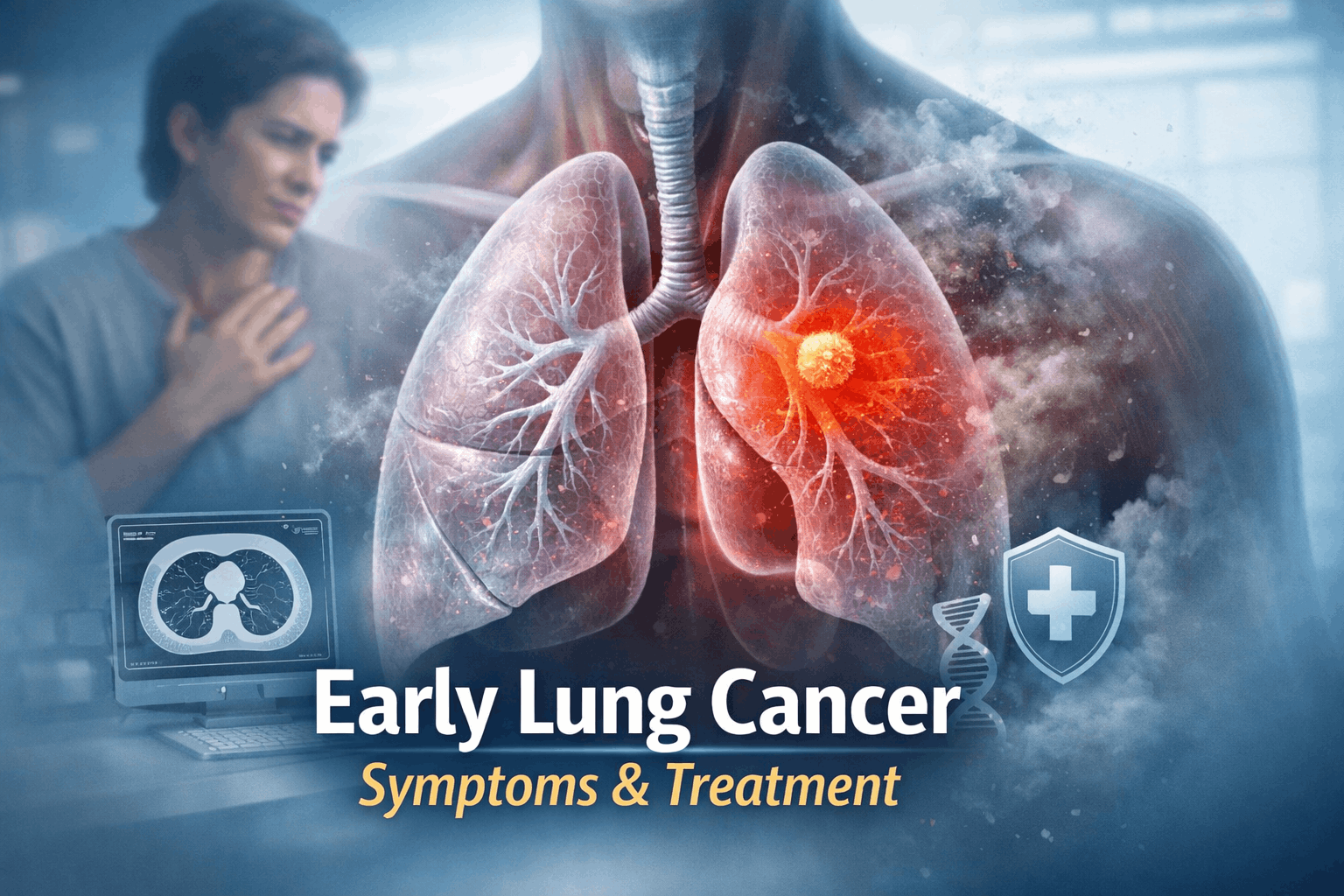
Lung cancer remains one of the most serious and commonly diagnosed cancers in the United States. Despite its severity, early detection and advanced lung cancer treatment options—including immunotherapy and targeted therapy—are improving survival rates every year.
If you’re looking for accurate, easy-to-understand information, this guide covers everything—from early symptoms of lung cancer to treatment costs in the U.S. and prevention tips.
Contents
What Is Lung Cancer?
Lung cancer develops when abnormal cells in the lungs grow uncontrollably, forming tumors that interfere with normal breathing. In advanced stages, these cells can spread to other organs.
There are two primary types:
- Non-Small Cell Lung Cancer (NSCLC) – Most common
- Small Cell Lung Cancer (SCLC) – More aggressive and fast-growing
Early Stage Lung Cancer Symptoms
Early detection is key to survival, but symptoms can be subtle.

Causes of Lung Cancer
Causes of Lung Cancer
Common Early Symptoms
- Persistent cough that doesn’t go away
- Chest pain during breathing or coughing
- Shortness of breath
- Fatigue and weakness
- Hoarseness
Warning Signs Often Ignored
- Unexplained weight loss
- Frequent chest infections
- Coughing up blood
- Back or shoulder pain
👉 Many people delay care, which increases the overall lung cancer treatment cost due to late-stage diagnosis.
Lung Cancer in Non-Smokers (Growing Concern)
A rising number of cases are being diagnosed in non-smokers, especially in the U.S.
Causes in Non-Smokers
- Air pollution exposure
- Radon gas (a major hidden cause in homes)
- Secondhand smoke
- Genetic mutations
Symptoms in Non-Smokers
- Persistent dry cough
- Mild breathing difficulty
- Chest discomfort
Causes and Risk Factors of Lung Cancer
Major Causes
- Smoking (leading cause)
- Exposure to toxic chemicals (asbestos, arsenic)
- Air pollution
Additional Risk Factors
- Family history
- Radiation therapy
- Workplace exposure
Lung Cancer Screening and Diagnosis
Early diagnosis significantly reduces mortality.
Best Tests for Lung Cancer Detection
- Low-dose CT scan (recommended screening test)
- Chest X-ray
- PET scan
- Biopsy
👉 The lung cancer screening cost in the U.S. varies but is often covered by insurance for high-risk individuals.
Who Should Get Screened?
- Adults aged 50–80
- Heavy smokers or former smokers
Stages of Lung Cancer
- Stage 1: Localized tumor
- Stage 2: Spread to nearby lymph nodes
- Stage 3: Advanced regional spread
- Stage 4: Metastatic lung cancer
👉 Advanced stages significantly increase the cost of lung cancer treatment without insurance.
Lung Cancer Treatment Options (Latest Advances)
Modern treatments have transformed patient outcomes.
1. Surgery
Best for early-stage cancer. Removes tumors completely in many cases.
2. Chemotherapy
Uses drugs to destroy cancer cells. Often used in combination therapies.
3. Radiation Therapy
Targets cancer cells using high-energy radiation.
4. Targeted Therapy (High CPC Topic)
- Focuses on genetic mutations in cancer cells
- Uses advanced targeted therapy drugs for lung cancer
- Fewer side effects than chemotherapy
5. Immunotherapy for Lung Cancer (Trending in the U.S.)
- Boosts the immune system to fight cancer
- Widely used in advanced stages
- High success rates in certain patients
👉 However, immunotherapy for lung cancer cost can be high without insurance, making coverage essential.
Lung Cancer Treatment Cost in the U.S.
The average lung cancer treatment cost in the United States can vary widely:
- Early-stage treatment: $40,000–$60,000+
- Advanced-stage treatment: $100,000+ annually
- Immunotherapy: $10,000+ per month
👉 Choosing the best lung cancer hospitals in the U.S. can improve outcomes but may also affect pricing.
Lung Cancer Survival Rate
Survival depends on early diagnosis and treatment.
- Early-stage: ~60% survival rate
- Regional spread: ~30%
- Stage 4: ~6%
👉 Access to advanced care like targeted therapy and immunotherapy is improving survival outcomes.
Diet and Lifestyle for Lung Cancer Patients
Best Foods
- Antioxidant-rich fruits (berries)
- Leafy greens
- Lean protein
Avoid
- Processed foods
- Sugary drinks
- Alcohol
Natural Support and Recovery Tips
- Breathing exercises
- Light physical activity
- Stress management
- Proper sleep
These help improve quality of life during treatment.
How to Prevent Lung Cancer
Prevention Tips
- Quit smoking
- Avoid secondhand smoke
- Test for radon at home
- Reduce pollution exposure
When to See a Doctor
Seek immediate care if you notice:
- Persistent cough
- Blood in sputum
- Chest pain
- Sudden weight loss
Early consultation reduces both risk and long-term treatment costs.
FAQs,
What is the best treatment for lung cancer?
It depends on the stage. Early-stage cases may require surgery, while advanced stages benefit from immunotherapy or targeted therapy.
How much does lung cancer treatment cost in the U.S.?
Costs can range from $40,000 to over $100,000 depending on the stage and treatment type.
Is immunotherapy better than chemotherapy?
In many cases, yes – especially for advanced lung cancer with specific biomarkers.
Can lung cancer be cured?
Yes, if detected early and treated promptly.
What is the best screening test?
A low-dose CT scan is the most effective early detection method.
Conclusion
Lung cancer is a life-threatening condition, but early detection, advanced treatments like immunotherapy, and lifestyle changes are improving outcomes across the United States.
Understanding symptoms, getting screened early, and choosing the right treatment plan can not only save lives but also reduce the financial burden of lung cancer treatment.

Diploma in Lab Technician (DMLT)
Paramedical Board, Delhi, Govt. of India
(Reg. No. REG/23/41/1391)
Dedicated and detail-oriented Lab Technician with hands-on experience in diagnostic
testing, sample collection, and laboratory procedures. Seeking a challenging role in a
reputable healthcare organization where I can utilize my skills and contribute to accurate
and efficient patient care.
“Each health article undergoes professional medical review by experienced doctors.”