
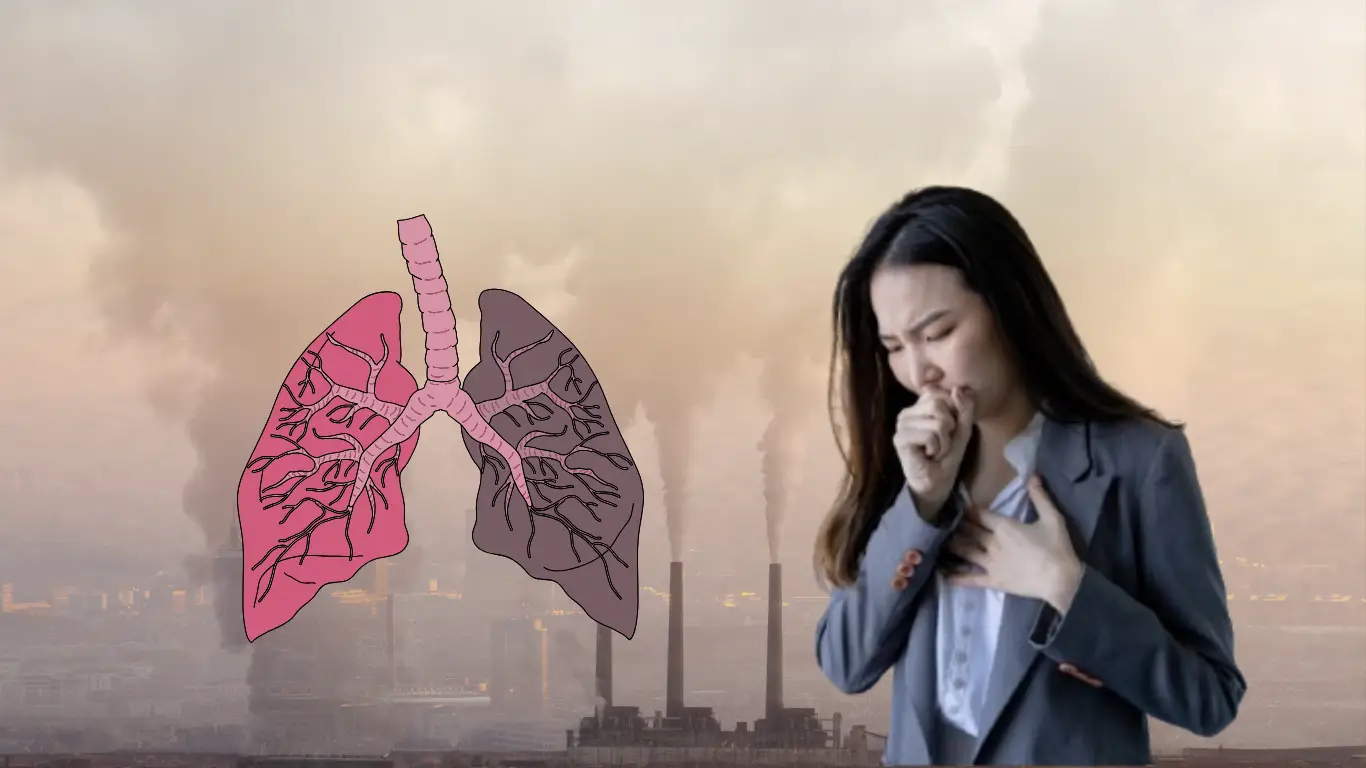
Every day, your lungs process thousands of liters of air. Most of the time, you do not think about what is traveling into your body with each breath.
But polluted air can contain a complex mixture of tiny particles and gases that irritate the airways, trigger inflammation, worsen existing lung disease, and—over years of exposure—contribute to serious health problems.
The most concerning pollutants are not always the ones you can see or smell.
PM2.5, for example, is made up of particles so small that they can travel deep into the lungs and may even enter the bloodstream.
Air pollution can affect anyone, but children, older adults, pregnant women, outdoor workers, and people with asthma, COPD, heart disease, or other chronic conditions may face greater risks.
The good news is that you cannot control every source of pollution, but you can take practical steps to reduce your exposure.
This guide explains what air pollution is, how it affects your lungs, what symptoms to watch for, how to understand the Air Quality Index (AQI), and what you can do to protect yourself and your family.
What Is Air Pollution?
Air pollution occurs when harmful particles, gases, or biological substances contaminate the air we breathe.
Pollution can come from both outdoor and indoor sources.
Common outdoor sources include:
- Vehicle exhaust
- Industrial emissions
- Power plants
- Construction dust
- Burning coal, oil, wood, or waste
- Agricultural activity
- Wildfires
- Dust storms
Indoor air pollution may come from:
- Tobacco smoke
- Cooking smoke
- Wood-burning stoves or fireplaces
- Poor ventilation
- Candles and incense
- Cleaning products and chemicals
- Mold
- Secondhand smoke
- Polluted outdoor air entering the home
The World Health Organization identifies particulate matter, carbon monoxide, ozone, nitrogen dioxide, and sulfur dioxide among the major pollutants of public-health concern.
Major Air Pollutants That Can Affect Your Lungs
PM2.5
PM2.5 means particulate matter with a diameter of 2.5 micrometers or smaller.
These particles can come from:
- Vehicle exhaust
- Wildfire smoke
- Industrial combustion
- Power plants
- Burning wood or waste
- Chemical reactions in the atmosphere
Because PM2.5 is extremely small, it can travel deep into the respiratory system.
Long-term and short-term exposure has been associated with respiratory and cardiovascular health effects.
PM10
PM10 particles are larger than PM2.5 but still small enough to be inhaled.
Sources can include:
- Road dust
- Construction
- Agricultural activity
- Pollen and other environmental material
- Industrial processes
They can irritate the nose, throat, and airways and contribute to respiratory symptoms.
Nitrogen Dioxide
Nitrogen dioxide, or NO2, is commonly produced by fuel combustion.
Major sources include:
- Cars and trucks
- Power plants
- Industrial equipment
- Gas-burning appliances
NO2 can irritate the respiratory system and may worsen asthma and other lung conditions.
Ground-Level Ozone
Ground-level ozone is different from the protective ozone layer high in the atmosphere.
It forms when pollutants react in sunlight.
Breathing elevated ozone can lead to:
- Coughing
- Throat irritation
- Chest discomfort
- Airway inflammation
- Reduced lung function
- Worsening asthma symptoms
Sulfur Dioxide
Sulfur dioxide is produced mainly when fuels containing sulfur are burned.
Exposure can irritate the respiratory system, particularly in people with asthma.
Carbon Monoxide
Carbon monoxide is a colorless and odorless gas produced by incomplete combustion.
Sources include:
- Vehicle exhaust
- Faulty furnaces
- Generators
- Fires
- Improperly ventilated fuel-burning appliances
High carbon monoxide exposure can become a medical emergency because the gas interferes with the blood’s ability to carry oxygen.
Why PM2.5 Is Especially Important
Among air pollutants, PM2.5 receives particular attention because of its tiny size.
A human hair is many times wider than a PM2.5 particle.
When these particles are inhaled, some can reach deep into the small airways and air sacs of the lungs.
Exposure can contribute to:
- Airway irritation
- Oxidative stress
- Inflammation
- Asthma attacks
- Reduced lung function
- Cardiovascular stress
Long-term exposure has also been associated with chronic respiratory disease and lung cancer.
WHO identifies particulate matter as one of the pollutants with the strongest evidence for adverse health effects.
How Air Pollution Affects the Lungs
Your respiratory system is designed to filter and remove many contaminants.
However, very small particles and irritating gases can overwhelm those defenses.
Air pollution may:
- Irritate airway tissue
- Increase inflammation
- Trigger mucus production
- Narrow sensitive airways
- Increase oxidative stress
- Reduce normal lung function
- Worsen existing respiratory disease
The effects depend on:
- Pollution level
- Type of pollutant
- Duration of exposure
- Age
- Existing medical conditions
- Physical activity
- Individual sensitivity
A short exposure during a severe smoke event is different from breathing moderately polluted air every day for years.
Both can matter.
Short-Term Effects of Air Pollution
Short-term exposure may produce symptoms within hours or days.
Possible symptoms include:
- Cough
- Throat irritation
- Wheezing
- Shortness of breath
- Chest tightness
- Eye irritation
- Increased mucus
- Headache in some situations
- Reduced exercise tolerance
Healthy people may notice few symptoms at moderate pollution levels.
However, people with asthma, COPD, cardiovascular disease, or other chronic illnesses may react more strongly.
Wildfire smoke can be particularly irritating because it often contains high concentrations of fine particulate matter.
Long-Term Effects of Air Pollution
Repeated or long-term exposure can have more serious consequences.
Research has linked chronic air pollution exposure with:
- Reduced lung function
- Chronic respiratory disease
- COPD
- Worsening asthma
- Increased respiratory infections
- Lung cancer
- Cardiovascular disease
- Stroke
Children are an important concern because their lungs are still developing.
Repeated exposure during childhood may interfere with normal lung growth and function.
Air Pollution and Asthma
Air pollution does not affect every person with asthma in the same way.
However, pollutants such as ozone, PM2.5, and nitrogen dioxide can irritate sensitive airways and contribute to asthma symptoms.
Exposure may trigger:
- Wheezing
- Cough
- Chest tightness
- Shortness of breath
- Increased need for rescue medication
People with asthma should pay close attention to local AQI alerts and follow the asthma action plan provided by their healthcare professional.
Do not stop prescribed inhalers because the air feels cleaner on a particular day.
Air Pollution and COPD
COPD, or chronic obstructive pulmonary disease, causes persistent airflow limitation.
Smoking remains a major cause, but long-term air pollution and occupational exposures can also contribute to respiratory damage.
Pollution can worsen COPD symptoms, including:
- Breathlessness
- Cough
- Mucus production
- Reduced exercise tolerance
Severe pollution episodes may increase the likelihood of flare-ups requiring medical treatment.
Air Pollution and Lung Cancer
Long-term exposure to outdoor air pollution has been associated with an increased risk of lung cancer.
The International Agency for Research on Cancer has classified outdoor air pollution and particulate matter in outdoor air as carcinogenic to humans.
This does not mean that everyone exposed to polluted air will develop cancer.
Cancer risk is influenced by many factors, including:
- Smoking
- Radon exposure
- Occupational hazards
- Genetics
- Age
- Environmental exposure
For a detailed explanation of symptoms, diagnosis, stages, and treatment, read HealthMozo’s Lung Cancer: Symptoms, Diagnosis, and Treatment Guide.
Air Pollution Can Affect More Than the Lungs
Air pollution is often discussed as a respiratory problem, but fine particles can also affect the cardiovascular system.
Research links air pollution exposure with increased risks of:
- Heart disease
- Heart attack
- Stroke
- Worsening heart failure
This matters because heart and lung health are closely connected.
People who already have cardiovascular risk factors such as high blood pressure, diabetes, smoking, or high cholesterol may need to be particularly cautious during periods of poor air quality.
HealthMozo’s High Cholesterol guide explains how LDL, HDL, triglycerides, and other cardiovascular risk factors affect heart health.
Can Air Pollution Increase Respiratory Infections?
Air pollution can irritate and inflame the respiratory tract and may interfere with some of the lungs’ normal defense mechanisms.
This can contribute to vulnerability to respiratory illness.
Respiratory infections can include conditions such as pneumonia, particularly in vulnerable people.
If you want to understand how pneumonia affects the lungs, read HealthMozo’s guide to viral pneumonia symptoms, causes, prevention, and treatment.
Who Is Most at Risk From Air Pollution?
Anyone can be affected, but some groups may experience effects at lower exposure levels or develop more serious symptoms.
Children
Children breathe more air relative to their body size and their lungs are still developing.
They may also spend more time being physically active outdoors.
Older Adults
Older adults are more likely to have heart or lung conditions that increase vulnerability to air pollution.
Pregnant Women
Air pollution exposure during pregnancy has been associated with adverse pregnancy and birth outcomes.
Pregnant women should follow local air-quality recommendations during severe pollution or wildfire events.
People With Asthma or COPD
Sensitive or damaged airways may respond more strongly to pollutants.
People With Heart Disease
Fine particulate pollution can affect the cardiovascular system as well as the lungs.
Outdoor Workers
Construction workers, delivery workers, traffic personnel, agricultural workers, and others who spend long periods outdoors can experience greater exposure.
People Who Smoke
Smoking already exposes the lungs to harmful particles and chemicals.
Adding environmental pollution increases the total burden on the respiratory system.
Wildfire Smoke and Lung Health
Wildfire smoke has become an increasingly important public-health concern in many parts of the United States.
Smoke can travel hundreds or even thousands of miles from the original fire.
PM2.5 is one of the major health concerns in wildfire smoke.
Possible effects include:
- Burning eyes
- Cough
- Sore throat
- Wheezing
- Shortness of breath
- Asthma flare-ups
- Reduced lung function
Children, older adults, pregnant women, outdoor workers, and people with heart or lung conditions may be particularly vulnerable.
During wildfire smoke events, follow official air-quality alerts and reduce outdoor exposure when recommended.
Indoor Air Pollution Matters Too
Staying indoors does not always guarantee clean air.
Indoor pollution can come from:
- Cigarette smoke
- Vaping aerosols
- Cooking
- Gas appliances
- Wood burning
- Candles
- Incense
- Cleaning chemicals
- Mold
- Outdoor pollution entering through windows and doors
How to Improve Indoor Air Quality
Practical steps include:
- Do not smoke indoors
- Use kitchen ventilation while cooking
- Maintain heating and cooling systems
- Replace air filters as recommended
- Control moisture to reduce mold
- Avoid unnecessary indoor burning
- Use a properly sized HEPA air purifier when appropriate
- Keep windows closed temporarily during severe outdoor smoke events
Ventilation decisions should depend on outdoor conditions.
When outdoor air is clean, ventilation can be helpful.
When wildfire smoke or particle pollution is severe, bringing large amounts of outside air indoors may make indoor conditions worse.
What Does the Air Quality Index Mean?
The Air Quality Index (AQI) is a tool used in the United States to communicate how polluted the air is and what health effects may be expected.
The higher the AQI, the greater the potential health concern.
The U.S. AQI has six general categories:
AQI 0–50: Good
Air quality is generally satisfactory.
AQI 51–100: Moderate
Air quality is acceptable for most people, although unusually sensitive individuals may experience symptoms.
AQI 101–150: Unhealthy for Sensitive Groups
Children, older adults, and people with heart or lung disease may need to reduce prolonged or strenuous outdoor activity.
AQI 151–200: Unhealthy
Some members of the general public may experience effects, while sensitive groups may experience more serious symptoms.
AQI 201–300: Very Unhealthy
Health risk is increased for everyone.
AQI 301–500: Hazardous
Emergency conditions may occur, and everyone is more likely to be affected.
For current conditions you can check real-time air quality on IQAir or review the National Weather Service Air Quality Index information.
In the United States, AirNow and local environmental agencies are also useful official sources for current AQI alerts.
Should You Exercise Outdoors When Air Quality Is Poor?
Exercise causes you to breathe faster and more deeply.
That means you may inhale more pollutants during strenuous outdoor activity.
When AQI is elevated:
- Consider reducing intensity
- Shorten outdoor exercise
- Exercise away from busy roads
- Move workouts indoors when appropriate
- Follow advice for sensitive groups
People with asthma, COPD, or cardiovascular disease should follow personalized medical advice.
Do not stop exercising altogether because of pollution concerns.
Regular physical activity remains important for health; the goal is to choose the safest time and environment.
Do N95 or KN95 Masks Help With Air Pollution?
A properly fitting N95 or KN95 respirator can reduce inhalation of fine particles such as PM2.5.
This can be useful during:
- Wildfire smoke
- Severe particle pollution
- Dust exposure
However, masks have limitations.
An N95 is primarily designed to filter particles.
It does not provide reliable protection from all harmful gases, such as carbon monoxide.
Fit also matters.
Air leaking around the sides of the mask reduces protection.
People with significant breathing or heart conditions should ask a healthcare professional whether prolonged respirator use is appropriate for them.
Do Cloth or Surgical Masks Protect Against PM2.5?
Cloth and loose-fitting surgical masks generally provide much less protection against fine particle pollution than a properly fitting respirator.
They may block larger droplets and some particles, but they should not be considered equivalent to an N95 for wildfire smoke or severe PM2.5 exposure.
Do Air Purifiers Help?
A portable air cleaner equipped with an appropriate HEPA filter can reduce airborne particles inside a room.
For best results:
- Select a purifier designed for the room size
- Keep doors and windows controlled during severe outdoor pollution
- Replace filters according to manufacturer instructions
- Avoid devices that intentionally produce ozone
An air purifier cannot eliminate every indoor pollutant.
Source control—such as avoiding smoking indoors—remains essential.
Can Houseplants Clean Polluted Indoor Air?
Houseplants can make a home feel more pleasant, but ordinary numbers of indoor plants should not be relied upon as a substitute for:
- Ventilation
- Source control
- HEPA filtration
- Smoke avoidance
Do not depend on houseplants to protect you during wildfire smoke or severe pollution episodes.
How to Protect Your Lungs From Air Pollution
You cannot eliminate all exposure, but you can reduce it.
Check Air Quality Before Going Out
Make AQI part of your daily routine when pollution or wildfire smoke is a concern.
Adjust Outdoor Activities
On poor-air-quality days:
- Reduce prolonged strenuous activity
- Exercise indoors when possible
- Avoid heavy traffic corridors
- Follow local health advisories
Use a Proper Respirator When Needed
During significant smoke or particle pollution, a well-fitting N95 or KN95 may reduce particle exposure.
Keep Indoor Air Cleaner
Consider:
- HEPA filtration
- Smoke-free indoor spaces
- Smart ventilation
- Clean HVAC filters
- Reduced indoor burning
Avoid Tobacco Smoke
Smoking is one of the strongest preventable causes of lung damage.
Avoiding smoking and secondhand smoke is one of the most important steps for protecting respiratory health.
Follow Your Treatment Plan
If you have asthma or COPD:
- Keep prescribed medications available
- Follow your action plan
- Monitor symptoms during pollution events
- Contact your healthcare provider if symptoms worsen
Can Food or Supplements Protect Your Lungs From Pollution?
A balanced diet supports general health, but no food, vitamin, antioxidant supplement, tea, or home remedy can make polluted air harmless.
A healthy eating pattern may support cardiovascular and immune health, but it does not replace:
- Reducing exposure
- Using appropriate respiratory protection
- Managing asthma or COPD correctly
- Seeking medical care for significant symptoms
Be cautious about products marketed as “lung detox” supplements.
Your lungs already have natural clearance mechanisms, and there is no proven drink or supplement that rapidly removes pollution particles from lung tissue.
Can Steam Inhalation Remove Pollution From the Lungs?
No.
Steam may temporarily soothe a dry or irritated nose and throat in some people, but it does not remove PM2.5 from deep lung tissue.
Very hot steam can also cause burns.
It should not be considered a treatment for pollution exposure.
How Can Doctors Assess Lung Health?
If you have persistent breathing symptoms or significant exposure, a healthcare professional may consider tests based on your symptoms and medical history.
These can include:
Spirometry
Spirometry measures how much air you can move in and out of your lungs and how quickly you can exhale.
It is commonly used when conditions such as asthma or COPD are suspected.
Pulse Oximetry
A small device placed on a finger estimates blood oxygen saturation.
Chest Imaging
A chest X-ray or CT scan may be used when doctors suspect specific lung disease, infection, injury, or other abnormalities.
Imaging is not routinely required simply because someone lives in a polluted area.
Additional Testing
Further testing depends on symptoms and may include allergy evaluation, exercise testing, or specialist assessment.
There is no single blood test that can tell you how much pollution has “built up” in your lungs.
Watch: How Air Pollution Can Affect Your Lungs
Keep the existing embedded video from the current article here: “How to Assess Impact of Air Pollution on Your Lungs?”
Place the existing YouTube embed directly under this heading rather than leaving it between unrelated paragraphs.
After watching, remember that online educational videos can improve understanding but cannot diagnose an individual’s lung condition.
When Should You See a Doctor?
Contact a healthcare professional if you experience:
- A persistent cough
- New or worsening wheezing
- Shortness of breath during routine activities
- Frequent chest tightness
- Repeated respiratory infections
- Symptoms that consistently worsen on polluted days
- Asthma or COPD symptoms that are becoming harder to control
Seek Urgent Medical Care for:
- Severe difficulty breathing
- Chest pain or pressure
- Blue or gray lips
- Confusion or fainting
- Coughing up blood
- Severe asthma symptoms not responding to prescribed rescue treatment
- Signs of carbon monoxide poisoning such as severe headache, dizziness, nausea, weakness, or confusion—especially if several people in the same location develop symptoms
Do not assume every breathing problem is caused by air pollution.
Heart disease, infections, blood clots, asthma, and many other conditions can produce similar symptoms.
Frequently Asked Questions
Can Air Pollution Permanently Damage the Lungs?
Long-term or repeated exposure can contribute to chronic respiratory disease and reduced lung function.
The degree of harm varies with exposure and individual susceptibility.
Can PM2.5 Enter the Bloodstream?
Very small particles can penetrate deep into the lungs, and evidence indicates that components of fine particulate pollution can affect the cardiovascular system beyond the lungs.
Is Air Pollution Worse for Children?
Children can be particularly vulnerable because their lungs and bodies are still developing and they often spend more time being active outdoors.
Does Air Pollution Cause Lung Cancer?
Long-term exposure to outdoor air pollution is an established lung-cancer risk factor.
However, lung cancer usually involves multiple risk factors and does not develop in every person exposed to pollution.
Can Air Pollution Trigger Asthma?
Yes. Polluted air can trigger or worsen asthma symptoms in susceptible individuals.
Is It Safe to Walk Outside When AQI Is High?
It depends on the AQI level, your health, and activity intensity.
As pollution rises, reducing strenuous outdoor activity becomes increasingly important, particularly for sensitive groups.
Is an N95 Useful During Wildfire Smoke?
A well-fitting N95 can reduce exposure to fine particles in wildfire smoke.
It does not protect against every gas or pollutant.
Should I Buy an Air Purifier?
A correctly sized HEPA purifier can help reduce indoor particle pollution, particularly during wildfire smoke or other high-PM events.
It is one part of an overall exposure-reduction strategy.
Can I Clean My Lungs After Pollution Exposure?
There is no proven “lung detox.”
The most useful approach is reducing ongoing exposure, avoiding tobacco smoke, maintaining overall health, and seeking medical care for persistent symptoms.
Does Air Pollution Affect the Heart Too?
Yes. Fine-particle pollution is associated with cardiovascular disease as well as respiratory problems.
The Global Health Impact of Air Pollution
Air pollution is not simply an inconvenience or a problem limited to visibly smoggy cities.
WHO identifies it as one of the world’s major environmental health risks.
Both outdoor and household air pollution contribute to respiratory disease, cardiovascular disease, stroke, lung cancer, and premature death.
In its 2026 technical update, WHO estimated that air pollution is associated with approximately 6.6 million deaths globally each year, with most pollution-related deaths linked to noncommunicable diseases.
Children, pregnant women, older adults, people with chronic disease, and disadvantaged populations can carry a disproportionate burden.
For broader scientific information, readers can review the World Health Organization’s air pollution resources.
The Bottom Line
You cannot see every dangerous pollutant in the air.
That is what makes air pollution easy to underestimate.
Fine particles such as PM2.5 can travel deep into the lungs, while gases such as ozone and nitrogen dioxide can irritate the respiratory system.
For many people, the immediate effect may be nothing more than a cough or irritated throat.
For others—especially people with asthma, COPD, cardiovascular disease, or prolonged exposure—the consequences can be much more serious.
The most useful response is not fear.
It is awareness.
Check air-quality conditions when pollution is elevated. Reduce strenuous outdoor exposure on unhealthy days. Use a properly fitting respirator when particle pollution is severe. Keep indoor air as clean as reasonably possible. Avoid tobacco smoke. And do not ignore persistent breathing symptoms.
Clean air is a population-level challenge, but small decisions can still reduce your personal exposure.
Every breath matters.
Medical Disclaimer
This article is intended for general health education and informational purposes only. It is not a substitute for medical diagnosis, treatment, or personalized advice from a licensed healthcare professional. If you have persistent respiratory symptoms, an existing heart or lung condition, or concerns about significant pollution exposure, consult a qualified healthcare provider. Seek emergency medical care for severe breathing difficulty, chest pain, confusion, coughing up blood, or other potentially life-threatening symptoms.

Diploma in Lab Technician (DMLT)
Paramedical Board, Delhi, Govt. of India
(Reg. No. REG/23/41/1391)
Dedicated and detail-oriented Lab Technician with hands-on experience in diagnostic
testing, sample collection, and laboratory procedures. Seeking a challenging role in a
reputable healthcare organization where I can utilize my skills and contribute to accurate
and efficient patient care.
“Each health article undergoes professional medical review by experienced doctors.”