
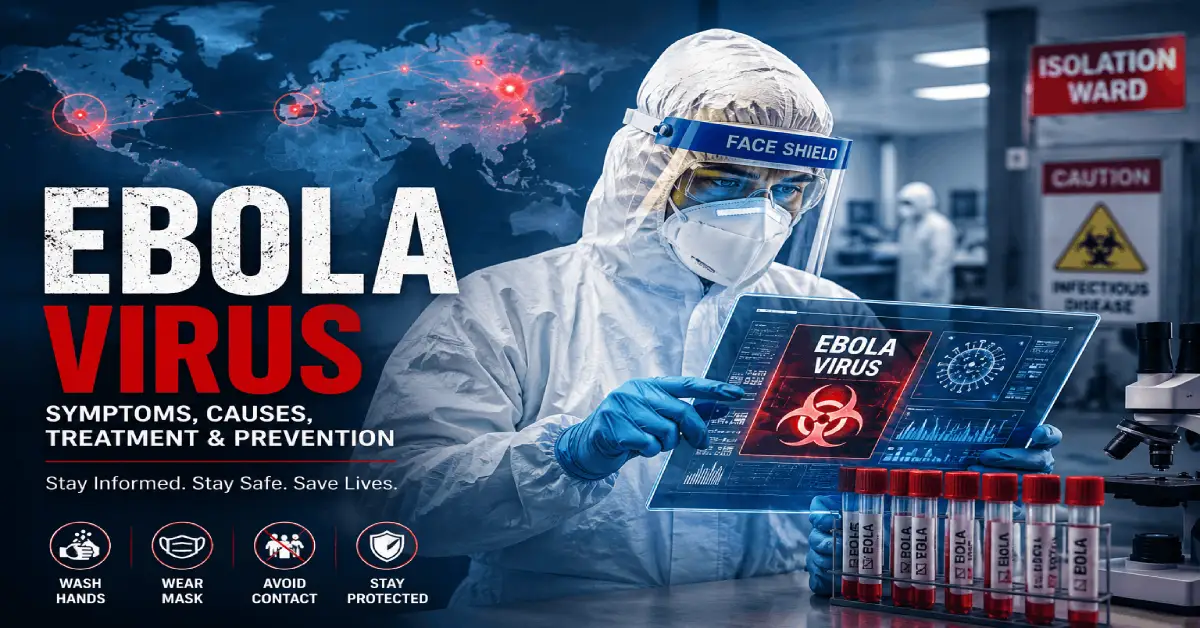
Ebola Virus Disease is a rare but serious viral illness that can affect both humans and animals. It is known for causing severe fever, internal bleeding, and damage to vital organs. Although Ebola outbreaks are uncommon, the disease can spread quickly in areas with limited healthcare resources.
Understanding how Ebola spreads, recognizing its symptoms early, and taking preventive steps can help reduce the risk of infection and improve survival outcomes.
What Is Ebola Virus Disease?
Ebola Virus Disease (EVD), commonly called Ebola, is caused by a group of viruses known as ebolaviruses. The illness was first identified in 1976 near the Ebola River in Central Africa.
The virus attacks the immune system and organs, making it difficult for the body to function properly. In severe cases, Ebola can lead to organ failure, heavy bleeding, and death.
How Does Ebola Spread?
Ebola spreads through direct contact with the body fluids of an infected person. These fluids can carry the virus from one person to another, especially when they enter the body through broken skin, cuts, or the eyes, nose, or mouth.
These body fluids may include:
- Blood:- The virus is highly concentrated in blood, especially during severe stages of infection. Contact with infected blood can quickly spread the disease to other people.
- Saliva:- Infected saliva may spread the virus through close personal contact, coughing droplets at close range, or sharing contaminated items.
- Vomit – Vomit from an infected person can contain large amounts of the virus, increasing the risk of infection for caregivers and healthcare workers.
- Sweat – Although the risk is lower than blood exposure, direct contact with infected sweat may still spread the virus.
- Urine – The virus can remain present in urine during illness and recovery, making proper hygiene and sanitation important.
- Semen – Ebola virus may stay in semen for months after recovery, which is why protected sexual activity is recommended for survivors.
- Breast milk – An infected mother may pass the virus to her baby through breastfeeding.
A person can become infected by:
- Touching an infected person’s body fluids
- Handling contaminated needles or medical equipment
- Contact with infected animals such as bats or monkeys
- Touching contaminated surfaces or clothing
Note: Ebola does not spread through the air like the flu or common cold.
Unlike illnesses such as the flu or common cold, Ebola Virus Disease does not spread through the air. The virus is not known to travel long distances in tiny airborne particles when an infected person coughs or sneezes.
Instead, Ebola mainly spreads through direct contact with infected body fluids or contaminated materials. This is why close physical contact and poor infection control are the biggest causes of transmission during outbreaks.
Early Symptoms of Ebola
Typically, symptoms begin to appear within 2 to 21 days of exposure to the virus. The early symptoms of Ebola Virus Disease are often non-specific and may resemble common infections such as flu, malaria, or typhoid fever, making the disease difficult to identify in its early stages. According to the Centers for Disease Control and Prevention (CDC) Ebola Information Page, early recognition and medical evaluation are important for preventing complications and reducing the risk of transmission.
Common early symptoms include:
- Fever: A sudden high fever is often one of the first signs of Ebola as the body reacts to the viral infection.
- Severe fatigue: Patients may feel extreme tiredness and lack of energy because the virus weakens the body rapidly.
- Headache: Persistent headaches can develop due to infection, fever, and inflammation in the body.
- Muscle pain: Many people experience body aches and muscle pain similar to severe flu symptoms.
- Sore throat: Throat irritation or pain may occur as the infection begins affecting the body.
- Weakness: General weakness and difficulty performing normal activities are common during the early phase of illness.
As the disease progresses, early symptoms may become more severe.
Advanced Symptoms
As Ebola Virus Disease progresses, symptoms can become more severe and life-threatening. The virus may begin damaging blood vessels, organs, and the immune system.
- Severe vomiting: Frequent vomiting can lead to dehydration, weakness, and loss of important minerals in the body.
- Persistent diarrhea: Ongoing diarrhea may cause rapid fluid loss and dangerously low blood pressure.
- Stomach pain: Many patients develop abdominal pain and digestive discomfort as the infection worsens.
- Skin rash: A rash may appear on different parts of the body due to inflammation and immune system reactions.
- Unexplained bleeding or bruising: Ebola can damage blood clotting mechanisms, leading to bleeding from the gums, nose, eyes, or under the skin.
- Internal bleeding: In severe cases, bleeding may occur inside the body, affecting organs and reducing oxygen delivery to tissues.
- Difficulty breathing: Lung complications, weakness, or shock may make breathing harder for some patients.
- Chest pain: Some individuals may experience chest discomfort due to infection-related stress on the body.
- Confusion or mental changes: Reduced oxygen levels, dehydration, or organ failure can affect brain function and alertness.
- Organ failure: The virus may severely damage organs such as the liver, kidneys, and heart, leading to life-threatening complications.
- Shock: Severe fluid loss and low blood pressure can cause shock, a critical condition where the body cannot supply enough blood to vital organs.
In severe cases, Ebola may lead to shock, organ failure, and death.
Who Is Most at Risk?
People at higher risk of Ebola Virus Disease infection include individuals who are more likely to come into close contact with infected people, body fluids, or contaminated materials during an outbreak.
Higher-risk groups are the Healthcare Sector and the Public Sector:
Health care sector
- Healthcare workers — Doctors, nurses, and medical staff caring for Ebola patients may face increased exposure to infected blood and body fluids, especially without proper protective equipment.
- Family members and caregivers — People providing close personal care to infected relatives are at greater risk because of direct physical contact.
- Laboratory workers — Individuals handling infected blood samples or medical specimens may be exposed to the virus if strict safety procedures are not followed.
Public sector
- People involved in burial ceremonies — Traditional burial practices that involve touching or washing the body of a person who died from Ebola can spread the virus.
- People living in outbreak areas — Communities in regions experiencing active Ebola outbreaks may have a higher risk of exposure.
- Hunters or handlers of wild animals — Contact with infected animals such as bats, monkeys, or chimpanzees may increase the risk of infection.
- Travelers visiting outbreak regions — Travelers may face increased risk if they come into contact with infected individuals or contaminated environments.
Travelers visiting outbreak regions may also face increased risk if proper precautions are not followed.
How Is Ebola Diagnosed?
Doctors use laboratory tests to confirm Ebola infection. Since early symptoms can resemble other illnesses such as malaria or typhoid fever, testing is important for accurate diagnosis.
Common laboratory testing methods may include:
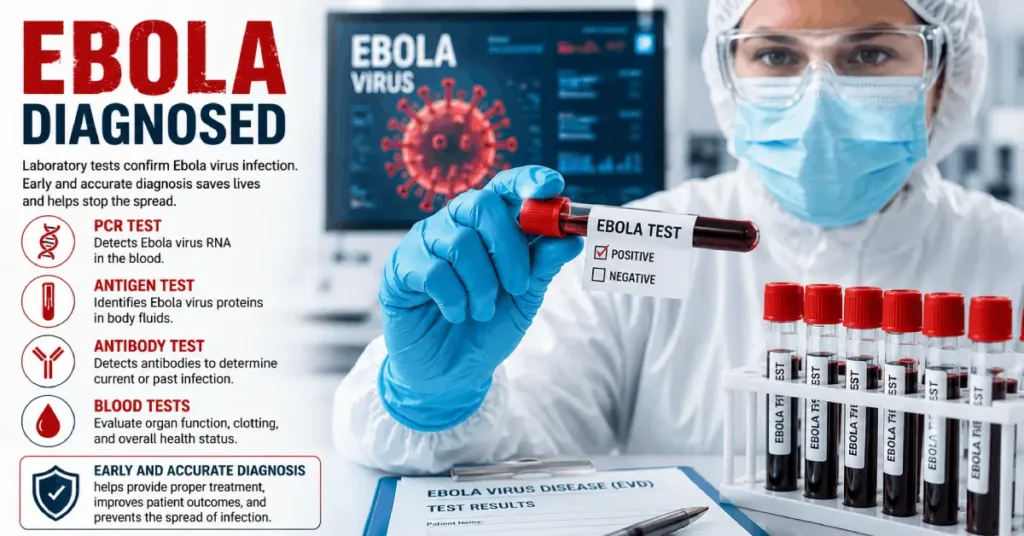
- PCR (Polymerase Chain Reaction) test: Detects Ebola virus genetic material in the blood and is one of the most accurate early diagnostic methods.
- Antigen tests: Identify specific Ebola virus proteins in body fluids to help detect active infection.
- Antibody tests: Check whether the immune system has produced antibodies against the virus, which may indicate current or past infection.
- Blood tests: Doctors may also examine blood cell counts, liver function, kidney function, and clotting ability to monitor the severity of the illness.
Patients suspected of having Ebola are usually isolated during testing to help prevent the spread of infection.
Treatment for Ebola
There is no simple cure for Ebola, but early medical care greatly improves survival chances.
Treatment may include:
- Intravenous (IV) fluids: patients can lose large amounts of fluids through vomiting, diarrhea, sweating, and bleeding. IV fluids help replace lost fluids, maintain blood pressure, and support proper organ function.
- Oxygen therapy: patients may develop breathing problems, weakness, or organ failure. Oxygen therapy can help improve oxygen flow and support recovery
- Blood pressure support: In serious illnesses, Ebola Virus Disease, severe dehydration, bleeding, or infection can cause blood pressure to drop dangerously low. When this happens, organs may not receive enough oxygen and nutrients.
- Pain and fever management: patients may experience severe fever, headaches, muscle pain, and body aches. Managing these symptoms can help improve comfort and support recovery.
- Treatment for secondary infections: In serious illnesses, such as Ebola Virus Disease, the immune system can become weak. This makes the body more vulnerable to other infections caused by bacteria, fungi, or other viruses.
- Secondary infections may be – pneumonia, bacterial bloodstream infections, urinary tract infections, skin infections
Certain antibody-based medications may also help some patients recover more effectively.
Ebola Vaccine
Ervebo is an FDA-approved vaccine that helps protect against one of the major Ebola virus strains. Vaccination has played an important role in controlling outbreaks in affected regions.
Ervebo is an FDA-approved vaccine developed to help protect people against the Zaire strain of the Ebola virus, one of the deadliest and most common strains linked to major outbreaks in Africa. The vaccine has become an important public health tool in reducing the spread of Ebola Virus Disease during emergency outbreaks.
Ervebo works by training the immune system to recognize and fight the Ebola virus before severe infection occurs. The vaccine uses a weakened vesicular stomatitis virus (VSV) that has been genetically modified to contain a protein from the Ebola virus. Because of this, the body learns to identify Ebola without causing the disease itself.
After vaccination, the immune system begins producing protective antibodies and immune responses that may help prevent serious illness if a person is later exposed to the virus.
The vaccine is mainly used for:
- Healthcare workers
- Laboratory staff
- Outbreak response teams
- Close contacts of infected patients
- People living in outbreak regions
During Ebola outbreaks, health authorities often use a strategy called “ring vaccination.” In this method, people who have been in close contact with an infected person, along with their contacts, are vaccinated to create a protective barrier that helps stop the virus from spreading further.
Vaccination campaigns using Ervebo have helped control outbreaks in countries such as:
- Democratic Republic of the Congo
- Guinea
Clinical studies have shown that the vaccine can provide strong protection against the targeted Ebola strain, especially when given before exposure or early during outbreak response efforts.
Like many vaccines, Ervebo may cause mild temporary side effects in some people, including:
- Fever
- Headache
- Tiredness
- Muscle pain
- Injection-site discomfort
Serious side effects are considered rare, and health professionals monitor vaccinated individuals carefully during immunization programs.
Although Ervebo has significantly improved Ebola outbreak control, it does not protect against every Ebola virus species. Researchers continue developing additional vaccines and treatments to improve protection against multiple strains and future outbreaks worldwide.
How to Prevent Ebola
Preventive measures are essential during outbreaks.
Helpful prevention tips include:
- Wash your hands frequently with soap and water
- Avoid contact with infected body fluids
- Wear protective medical equipment when caring for patients
- Avoid handling dead animals in outbreak areas
- Follow safe burial practices
- Avoid travel to active outbreak zones when advised
Public health monitoring and rapid isolation of infected patients are also important in preventing outbreaks.
Where Have Ebola Outbreaks Occurred?
Most Ebola outbreaks have occurred in parts of Africa, including:
Health organizations closely monitor these outbreaks to reduce global spread.
Final Thoughts
Ebola is a serious viral disease, but awareness and early treatment can save lives. Understanding the symptoms, transmission methods, and prevention strategies is important for protecting individuals and communities.
While Ebola outbreaks remain relatively rare, continued medical research, vaccination programs, and public health efforts are helping reduce the impact of this dangerous disease worldwide.

Diploma in Lab Technician (DMLT)
Paramedical Board, Delhi, Govt. of India
(Reg. No. REG/23/41/1391)
Dedicated and detail-oriented Lab Technician with hands-on experience in diagnostic
testing, sample collection, and laboratory procedures. Seeking a challenging role in a
reputable healthcare organization where I can utilize my skills and contribute to accurate
and efficient patient care.
“Each health article undergoes professional medical review by experienced doctors.”