
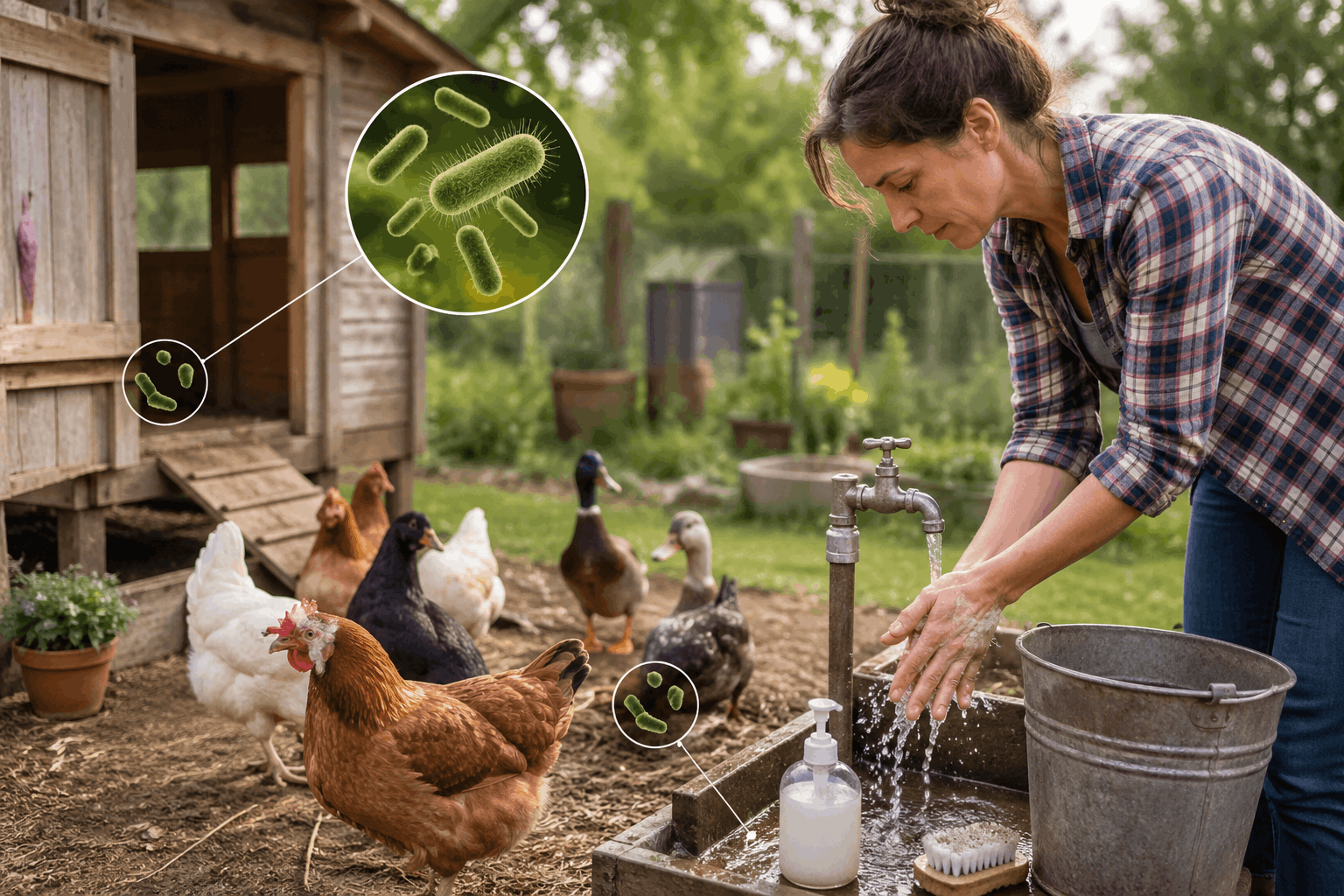
A recent backyard poultry salmonella outbreak in the United States has raised serious health concerns. According to the Centers for Disease Control and Prevention (CDC), infections linked to backyard chickens and ducks are spreading across multiple states — and many people don’t even realize the risk.
Let’s break down what’s happening, why it matters, and how to stay safe.
Contents
What Is the Backyard Poultry Salmonella Outbreak?
In early 2026, health officials confirmed a multi-state outbreak of Salmonella infections linked to backyard poultry.
- 34 people have been infected across 13 U.S. states
- 13 individuals required hospitalization
- No deaths reported so far
Most cases were connected to direct contact with backyard birds like chickens and ducks.
Even more concerning:
- Around 80% of infected people had recent poultry exposure
- Some infections show antibiotic resistance, making treatment harder
Why Backyard Poultry Can Be Dangerous
Backyard poultry may look clean and healthy, but they can still carry Salmonella bacteria.
The CDC warns that:
- Birds can spread germs through feathers, droppings, eggs, and their environment
- You can get infected by touching birds and then touching your mouth or food without washing hands
This means infection doesn’t require eating contaminated food — simple contact is enough.
Who Is Most at Risk?
Some groups face a higher risk of severe illness during this backyard poultry salmonella outbreak:
- Children under 5 (over 40% of cases in some reports)
- Older adults
- People with weak immune systems
Young children are especially vulnerable because they are more likely to touch animals and forget proper hygiene.
🦠 What Is Salmonella? (Simple Explanation)
Salmonella is a type of bacteria that can make people sick, most often through food poisoning. It naturally lives in the intestines of animals like chickens, ducks, cattle, and even reptiles. Humans can get infected when they eat contaminated food or touch animals and then don’t wash their hands properly.
There are two main types of Salmonella infections:
- Common (non-typhoidal) – causes diarrhea, fever, and stomach cramps
- More serious (typhoidal) – includes illnesses like Typhoid fever, which can spread through the bloodstream and become dangerous if untreated
Symptoms usually start within 6 hours to a few days after exposure. Most people recover on their own, but some cases can become severe—especially in children, older adults, and people with weak immune systems.
One growing concern is that some Salmonella strains are becoming resistant to antibiotics, making infections harder to treat. That’s why prevention—like washing hands, cooking food properly, and handling animals safely—is so important.
Symptoms of Salmonella Infection
Symptoms usually appear 6 hours to 6 days after exposure and may include:
- Diarrhea
- Fever
- Stomach cramps
- Nausea or vomiting
Most people recover without treatment, but severe cases may require hospitalization.
The Antibiotic Resistance Concern
One alarming aspect of this outbreak is drug-resistant Salmonella strains.
This means:
- Some infections may not respond to common antibiotics
- Treatment becomes more complicated
- Risk of complications increases
Public health experts see this as a growing global threat, not just a one-time outbreak.
How the Outbreak Started
Investigations suggest many infected individuals:
- Recently purchased poultry (often chicks or ducklings)
- Got birds from agricultural stores or hatcheries
- Introduced new birds into backyard flocks
This indicates the outbreak may be linked to supply chains and hatchery sources, though investigations are ongoing.
How to Protect Yourself and Your Family
The CDC recommends simple but effective precautions:
1. Wash Hands Every Time
Always wash with soap after touching:
- Birds
- Eggs
- Coops or equipment
2. Keep Poultry Outside
Avoid bringing birds, cages, or supplies inside your home.
3. Don’t Kiss or Snuggle Birds
Close contact increases infection risk significantly.
4. Supervise Children
Young kids should not handle poultry without strict supervision.
5. Avoid Eating Near Poultry
Never eat or drink while handling birds.
Why This Outbreak Matters
Backyard poultry farming has become more popular in recent years. While it offers benefits like fresh eggs and sustainability, it also increases exposure to zoonotic diseases.
This backyard poultry salmonella outbreak is a reminder that:
- Even “healthy-looking” animals can carry harmful bacteria
- Hygiene practices are critical
- Public awareness can prevent infections
Final Thoughts
The 2026 outbreak shows how quickly infections can spread from something as simple as backyard chickens. With cases rising and antibiotic resistance emerging, taking precautions is more important than ever.
If you raise poultry — or plan to — treat safety as seriously as animal care. A few small habits can prevent a serious illness.
FAQs,
What is the backyard poultry salmonella outbreak?
The backyard poultry salmonella outbreak is a multi-state spread of Salmonella infections linked to contact with backyard chickens and ducks. People become infected by handling birds or touching contaminated surfaces and then touching their mouth without proper handwashing.
🦠 How do backyard chickens spread Salmonella?
Backyard chickens spread Salmonella through their droppings, feathers, and living areas. The bacteria can transfer to hands, clothing, or surfaces, and infection occurs when someone touches their mouth or food without washing hands after handling poultry.
⚠️ What are the symptoms of Salmonella infection?
Symptoms of Salmonella infection include diarrhea, fever, stomach cramps, nausea, and vomiting. They usually appear within 6 hours to 6 days after exposure and last several days. Severe cases may require hospitalization, especially in high-risk individuals.
👶 Who is most at risk in a backyard poultry salmonella outbreak?
Children under 5 years old, older adults, and people with weakened immune systems are most at risk. These groups are more likely to develop severe illness or complications from Salmonella infections linked to backyard poultry.
💊 Is this salmonella outbreak antibiotic-resistant?
Yes, some cases in the backyard poultry salmonella outbreak show antibiotic resistance. This means certain infections may not respond to standard treatments, making them harder to treat and increasing the risk of complications.
🛡️ How can you prevent Salmonella from backyard poultry?
Yes, you can get Salmonella without eating contaminated food. Simply touching infected poultry or contaminated surfaces and then touching your mouth can cause infection if proper hygiene is not followed.

Diploma in Lab Technician (DMLT)
Paramedical Board, Delhi, Govt. of India
(Reg. No. REG/23/41/1391)
Dedicated and detail-oriented Lab Technician with hands-on experience in diagnostic
testing, sample collection, and laboratory procedures. Seeking a challenging role in a
reputable healthcare organization where I can utilize my skills and contribute to accurate
and efficient patient care.
“Each health article undergoes professional medical review by experienced doctors.”