
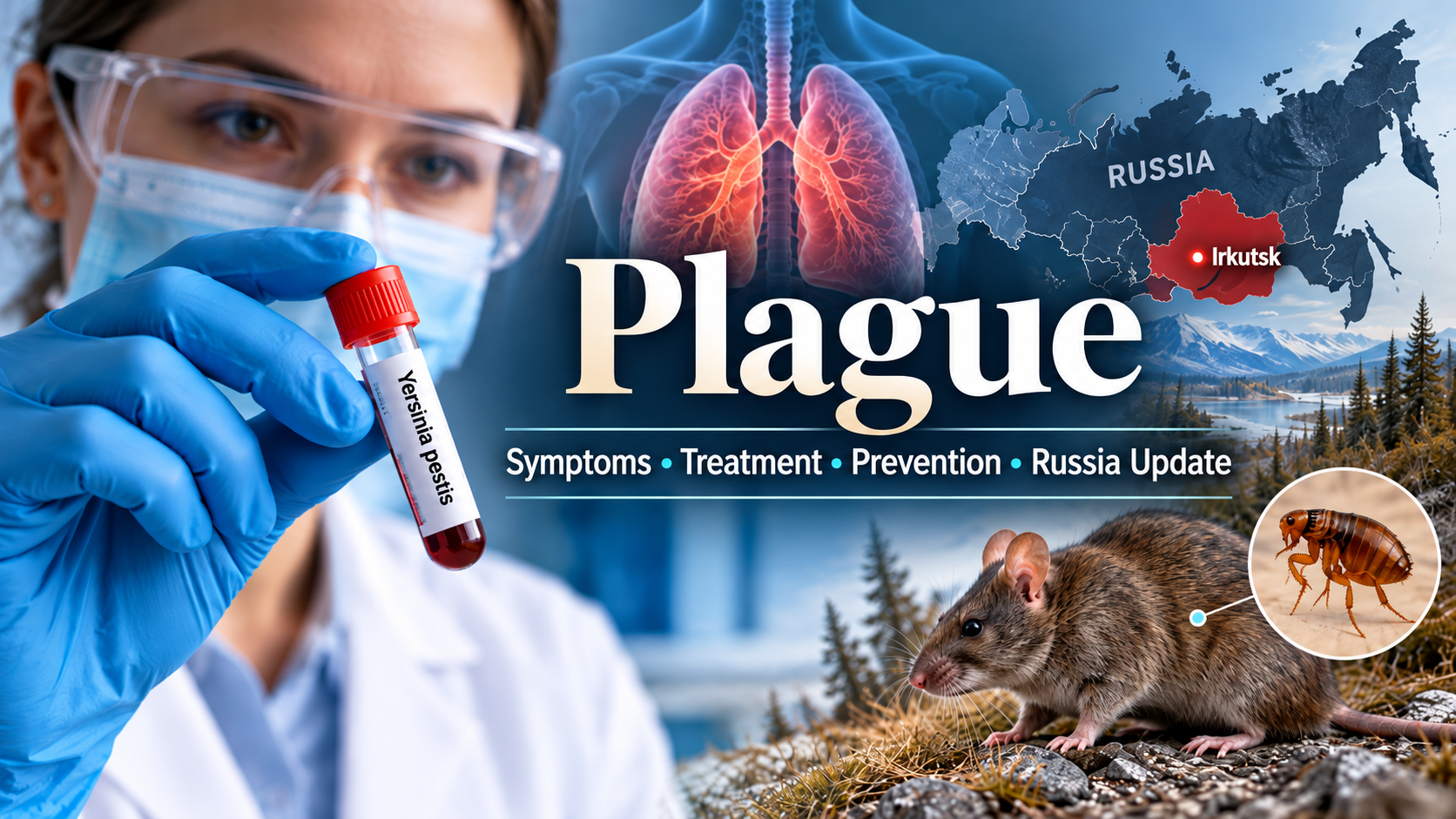
Plague is often remembered as a disease from history books, but it has never completely disappeared. The infection that once caused devastating epidemics can still occur today in parts of the world where the bacteria circulate naturally among rodents and fleas.
Contents
The good news is that modern medicine has changed the outlook dramatically. Plague is caused by a bacterium—not a mysterious virus—and it can usually be treated successfully with antibiotics when recognized early.
Interest in the disease has risen again following reports from Russia in October 2026 involving the death of a young worker at an anti-plague research facility in Siberia. Reports have raised concern about possible exposure to a dangerous pathogen, including suspected pneumonic plague. However, as of the latest available information, Russian authorities had not publicly confirmed plague as the official cause of death.
So, what exactly is plague? How does a person get it? Can it spread between people? What symptoms should you watch for, and is there anything you can do at home?
Here is what you need to know.
What Is Plague?
Plague is a serious bacterial infectious disease caused by Yersinia pestis.
The bacteria primarily circulate among certain wild rodents and the fleas that feed on them. Humans can become infected when an infected flea bites them, when they have direct contact with infected animals or tissues, or—in the case of pneumonic plague—when they inhale infectious respiratory particles.
According to the World Health Organization (WHO), plague remains present in natural animal reservoirs in several parts of the world. Human cases are uncommon compared with centuries ago, but the disease has not been eradicated.
Plague is therefore best understood as a zoonotic disease, meaning an infection that can move from animals to humans.
Why Was Plague Called the “Black Death”?
Plague has one of the most dramatic histories of any infectious disease.
During the 14th century, a massive plague pandemic swept through Europe and other regions. The epidemic became known as the Black Death and killed tens of millions of people.
The frightening name is often associated with the severe tissue damage that can occur in advanced septicemic plague. Poor blood circulation and tissue death may cause parts of the skin—especially fingers, toes, and the nose—to become dark or black.
Modern plague is very different from plague during the Middle Ages because we now understand its cause, know how it spreads, and have effective antibiotics.
What Causes Plague?
Plague is caused by the bacterium:
Yersinia pestis
It normally survives in a cycle involving wild animals—particularly rodents—and fleas.
A flea may feed on an infected animal, acquire the bacteria, and later transmit them when it bites another animal or a human.
However, flea bites are not the only way plague can spread.
Humans may become infected through:
- The bite of an infected flea
- Direct contact with an infected animal
- Contact with infected body fluids or tissues
- Handling dead animals carrying the bacteria
- Inhaling infectious respiratory particles from someone or an animal with pneumonic plague
- Rare occupational or laboratory exposure
The exact route of infection determines, in part, which form of plague develops.
The Three Main Types of Plague
Plague does not always affect the body in the same way. Doctors generally describe three major clinical forms.
1. Bubonic Plague
Bubonic plague is the most common form.
It usually develops after the bite of an infected flea.
Once the bacteria enter the body, they travel through the lymphatic system and multiply in nearby lymph nodes. Those lymph nodes may become extremely swollen, tender, and painful.
These enlarged lymph nodes are called buboes.
Common symptoms may include:
- Sudden fever
- Chills
- Headache
- Weakness
- Body aches
- Nausea or vomiting
- Painful, swollen lymph nodes
The swollen nodes commonly appear around the groin, armpit, or neck.
Bubonic plague itself does not usually spread directly from one person to another. However, without treatment, the bacteria may spread into the bloodstream or lungs and cause more dangerous forms of the disease.
2. Septicemic Plague
Septicemic plague develops when Yersinia pestis multiplies in the bloodstream.
It may begin on its own or develop as a complication of untreated bubonic plague.
Symptoms can include:
- High fever
- Chills
- Severe weakness
- Abdominal pain
- Shock
- Bleeding into the skin or internal organs
- Organ failure
- Tissue damage
In severe cases, reduced blood supply can cause tissue in the fingers, toes, or nose to die and turn dark.
This is an emergency requiring immediate medical treatment.
3. Pneumonic Plague
Pneumonic plague affects the lungs and is considered the most dangerous form of plague.
It can develop when plague bacteria spread to the lungs from another part of the body, or when a person directly inhales infectious respiratory particles.
Symptoms may appear very rapidly and can include:
- Sudden fever
- Severe weakness
- Headache
- Chest pain
- Shortness of breath
- Rapidly worsening pneumonia
- Cough
- Bloody or watery mucus in some cases
Pneumonic plague is particularly concerning because it is the form capable of spreading from person to person through infectious respiratory particles during close contact.
WHO warns that untreated pneumonic plague can progress extremely rapidly, making early diagnosis and treatment critical.
How Quickly Do Plague Symptoms Appear?
Symptoms usually develop within several days of exposure.
WHO notes that people infected with Yersinia pestis often develop symptoms within approximately one to seven days.
Pneumonic plague can develop even faster. Following respiratory exposure, symptoms may sometimes appear within about a day.
That short window is one reason doctors treat suspected plague as a medical emergency.
Can Plague Spread From Person to Person?
This depends on the type of plague.
Bubonic plague is generally not transmitted directly from person to person.
Pneumonic plague is different.
A person with pneumonic plague may release infectious respiratory particles when coughing. Someone who has sufficiently close exposure may inhale those particles and become infected.
This does not mean plague spreads as easily as every common respiratory infection. But confirmed or strongly suspected pneumonic plague requires strict infection-control measures and rapid public-health follow-up.
Close contacts may need medical monitoring and, in some circumstances, preventive antibiotics.
Is Plague Still Found Today?
Yes.
Plague is rare compared with its historical impact, but naturally occurring plague has not disappeared.
WHO reported that human plague remains endemic in several countries. From 2019 through 2025, most cases reported to WHO occurred in the Democratic Republic of the Congo and Madagascar.
Natural plague cycles can persist wherever susceptible animal populations, fleas, and the bacteria coexist.
For most people, this does not mean that plague is an everyday threat. It means that health authorities continue to monitor the disease because isolated cases and localized outbreaks can still occur.
Why Is Plague Trending Again? What Happened in Russia?
Plague returned to international headlines in early October 2026 after the death of a laboratory worker connected to the Irkutsk Anti-Plague Research Institute in Siberia.
Media reports described a woman in her late 20s who worked at an anti-plague facility in or near Shelekhov, in Russia’s Irkutsk region.
According to multiple reports, she developed severe pneumonia described by Russian authorities as being of unknown origin and later died.
Several reports, citing local sources, alleged that an accident involving biological material may have occurred in the laboratory and raised the possibility of exposure to the plague pathogen.
Nearly 200 people who had contact with the worker were reportedly placed under medical observation as authorities introduced anti-epidemic precautions.
Viral pneumonia symptoms, causes, prevention, and treatment.
Has Russia Confirmed That She Died From Plague?
This is the most important distinction in the story.
At the time of reporting, Russian authorities had not publicly confirmed that plague caused the worker’s death.
Local and international reports discussed suspected pneumonic plague, while official descriptions referred to severe or unexplained pneumonia and precautionary public-health measures.
That means it would be premature to describe the incident as a confirmed plague outbreak unless laboratory or official public-health findings establish that conclusion.
Background reporting: CNN report · Yahoo News report
Should People Outside Russia Be Worried?
Based on currently available information, there is no reason for the general public to assume that the Russian incident represents a new global plague pandemic.
A suspected infection linked to a specialized laboratory is very different from evidence of sustained community transmission.
Public-health authorities investigate incidents like this aggressively because pneumonic plague can be extremely serious and because rapid contact tracing is essential if a case is confirmed.
The best approach is therefore awareness without panic.
Watch for updates from recognized public-health authorities rather than relying on viral social-media claims or unverified outbreak posts.
Plague and Ebola are very different infections—plague is bacterial, while Ebola is viral—but both require rapid public-health response when serious cases are suspected. Read more about Ebola virus symptoms, transmission, treatment, and prevention.
How Is Plague Diagnosed?
Symptoms alone cannot reliably confirm plague.
Doctors consider:
- Symptoms
- Recent travel
- Exposure to rodents or fleas
- Contact with sick or dead animals
- Contact with someone suspected of having pneumonic plague
- Occupational or laboratory exposure
- Local disease activity
Laboratory testing may involve samples taken from:
- Blood
- Sputum
- Fluid or material from a swollen lymph node
Tests are then used to look for Yersinia pestis.
Importantly, when doctors strongly suspect plague, treatment may begin before final laboratory confirmation because waiting can be dangerous.
Is Plague Curable?
Yes.
This is one of the biggest differences between plague today and plague centuries ago.
Plague is a bacterial infection, and effective antibiotics are available.
When treatment begins early, the chances of recovery improve considerably.
CDC clinical guidance emphasizes that appropriate antibiotic therapy should begin as soon as plague is suspected rather than waiting for confirmatory test results.
Treatment depends on the type and severity of infection, the patient’s age, underlying medical conditions, allergies, and other clinical factors.
Doctors may use antibiotics such as gentamicin or certain fluoroquinolones in appropriate patients in the United States, but the exact medication should always be selected by a healthcare professional.
Do not attempt to obtain or take antibiotics on your own.
Incorrect antibiotics, wrong doses, delayed treatment, and incomplete courses can make treatment less effective and create additional health risks.
When Should You Seek Emergency Medical Care?
Seek urgent medical attention if you develop symptoms consistent with plague and have a possible exposure, particularly:
- A painful and rapidly enlarging lymph node with fever
- Severe fever after flea or rodent exposure
- Sudden pneumonia after contact with a suspected plague patient
- Difficulty breathing
- Chest pain
- Cough with blood
- Severe weakness or confusion
- Signs of shock
- Unusual bleeding or blackening of skin or extremities
Tell healthcare professionals about any recent travel, flea bites, animal exposure, or contact with a suspected case.
Providing that history can help clinicians consider plague earlier.
Are There Home Remedies for Plague?
This point deserves special attention.
There is no proven home remedy that cures plague.
Garlic, herbs, spices, teas, essential oils, supplements, or traditional preparations should never be used as substitutes for antibiotics when plague is suspected.
Because pneumonic and septicemic plague can worsen extremely quickly, trying home remedies first may dangerously delay lifesaving treatment.
What Can Be Done at Home?
Supportive measures may help a recovering patient only after medical evaluation and according to the treating clinician’s instructions.
Depending on the person’s condition, supportive care may include:
- Getting adequate rest
- Drinking enough fluids if medically permitted
- Eating light, nutritious meals as tolerated
- Taking only clinician-approved medicines for fever or discomfort
- Following the prescribed antibiotic schedule exactly
- Completing the entire antibiotic course
- Monitoring for worsening fever, breathing difficulty, confusion, or weakness
Anyone with suspected pneumonic plague should not simply stay home around family members. Medical evaluation and appropriate infection-control precautions are essential.
Think of home care as supporting recovery, not treating the bacterial infection itself.
How Can You Prevent Plague?
Most people will never encounter plague, but sensible precautions can reduce risk in areas where the disease occurs naturally.
1. Avoid Contact With Wild Rodents
Do not handle sick or dead wild rodents with bare hands.
If animal removal is necessary, follow local public-health or animal-control guidance.
2. Protect Yourself From Flea Bites
In areas where plague occurs, use appropriate insect repellents and protective clothing when spending time outdoors.
Pets should also receive veterinarian-recommended flea prevention.
3. Keep Rodents Away From Your Home
Reduce potential rodent shelter around living spaces by removing:
- Piles of trash
- Excess brush
- Wood piles close to the home
- Easily accessible pet food
- Other food sources that may attract rodents
4. Use Caution Around Sick Animals
Avoid direct contact with animals that appear severely ill or have died unexpectedly.
Wear appropriate protective equipment if your job requires handling potentially infected animals.
5. Take Respiratory Precautions Around Suspected Pneumonic Plague
Anyone suspected of having pneumonic plague requires professional medical isolation and infection-control management.
Close contacts should follow public-health instructions carefully.
6. Practice Good Hand Hygiene
Regular handwashing with soap and water remains an important basic infection-control measure, particularly after handling animals or potentially contaminated materials.
Can Pets Get Plague?
Yes.
Cats and dogs can potentially be exposed to infected fleas or animals.
Cats are considered particularly susceptible and may become seriously ill.
Pet owners living in plague-endemic regions should:
- Maintain regular flea control
- Prevent pets from roaming and hunting rodents
- Avoid allowing pets to play with animal carcasses
- Contact a veterinarian if a pet becomes suddenly ill after possible wildlife exposure
A sick pet with possible plague exposure should be handled cautiously because infected animals can sometimes expose humans.
Is There a Vaccine for Plague?
Routine plague vaccination is not generally recommended for the public.
WHO notes that vaccination may be considered in certain high-risk occupational situations, such as some laboratory or healthcare settings, depending on exposure risk and public-health guidance.
For most people, prevention focuses instead on reducing flea and rodent exposure, recognizing symptoms quickly, and treating suspected infections promptly.
Plague vs. COVID-19: They Are Not the Same
Because the Russia story involves a laboratory and severe pneumonia, some social-media discussions may draw comparisons with COVID-19.
The diseases are fundamentally different.
Plague is caused by a bacterium: Yersinia pestis.
COVID-19 is caused by a virus: SARS-CoV-2.
Plague can be treated with appropriate antibacterial drugs. Antibiotics do not treat COVID-19 itself because antibiotics do not kill viruses.
This distinction is important when interpreting online claims about the current Russian incident.
Frequently Asked Questions About Plague
Is plague still deadly?
It can be. Untreated plague—especially pneumonic or septicemic plague—can become fatal very quickly. Early antibiotic treatment significantly improves outcomes.
Can bubonic plague spread between people?
Direct person-to-person transmission of bubonic plague is generally not expected. The major person-to-person transmission concern is pneumonic plague.
Can pneumonic plague spread through coughing?
Yes. A person with pneumonic plague may transmit Yersinia pestis through infectious respiratory particles during close exposure.
Is plague caused by rats?
Not directly in every case.
Plague is caused by Yersinia pestis. Rodents can serve as animal hosts, while fleas can acquire the bacteria from infected animals and transmit them to humans.
Can antibiotics cure plague?
Yes. Several antibiotics are effective against Yersinia pestis, particularly when treatment starts early.
Can plague be treated at home?
Suspected plague should not be managed as a home-treated infection. Anyone with possible plague symptoms and a relevant exposure requires urgent professional medical assessment.
Is there a natural or herbal cure for plague?
No scientifically established herbal or household remedy has been shown to eliminate Yersinia pestis infection. Supportive home measures should never replace antibiotic treatment.
Does the Russia case mean a plague pandemic is beginning?
There is currently no evidence supporting that conclusion. Reports concern a suspected case associated with a specialized research facility, and plague had not been officially confirmed as the cause of death at the time of reporting.
The Bottom Line
The word plague naturally sounds frightening. History gives us plenty of reasons for that reaction.
But today’s situation is very different from the era of the Black Death.
Scientists know exactly which bacterium causes plague. Doctors know how to recognize and test for it. Public-health agencies know how to trace contacts and contain suspected pneumonic cases. Most importantly, effective antibiotics are available.
What makes plague dangerous today is not that medicine has no answer—it is that the disease can progress rapidly when diagnosis and treatment are delayed.
The recent incident involving a Russian anti-plague laboratory deserves careful monitoring, especially because of reports suggesting possible occupational exposure and the medical observation of nearly 200 contacts. But a suspected laboratory-linked case should not automatically be interpreted as evidence of a widespread outbreak.
For the public, the most useful response is straightforward: stay informed, avoid sensational claims, understand the symptoms, and seek urgent medical care if a genuine exposure is followed by illness.
Medical Disclaimer
This article is for health education and general information only. It is not intended to diagnose, treat, cure, or prevent any disease and should not replace professional medical advice. Suspected plague requires urgent medical evaluation. If you believe you may have been exposed to plague or develop severe symptoms, contact a qualified healthcare professional or local public-health authority immediately.

Diploma in Lab Technician (DMLT)
Paramedical Board, Delhi, Govt. of India
(Reg. No. REG/23/41/1391)
Dedicated and detail-oriented Lab Technician with hands-on experience in diagnostic
testing, sample collection, and laboratory procedures. Seeking a challenging role in a
reputable healthcare organization where I can utilize my skills and contribute to accurate
and efficient patient care.
“Each health article undergoes professional medical review by experienced doctors.”