
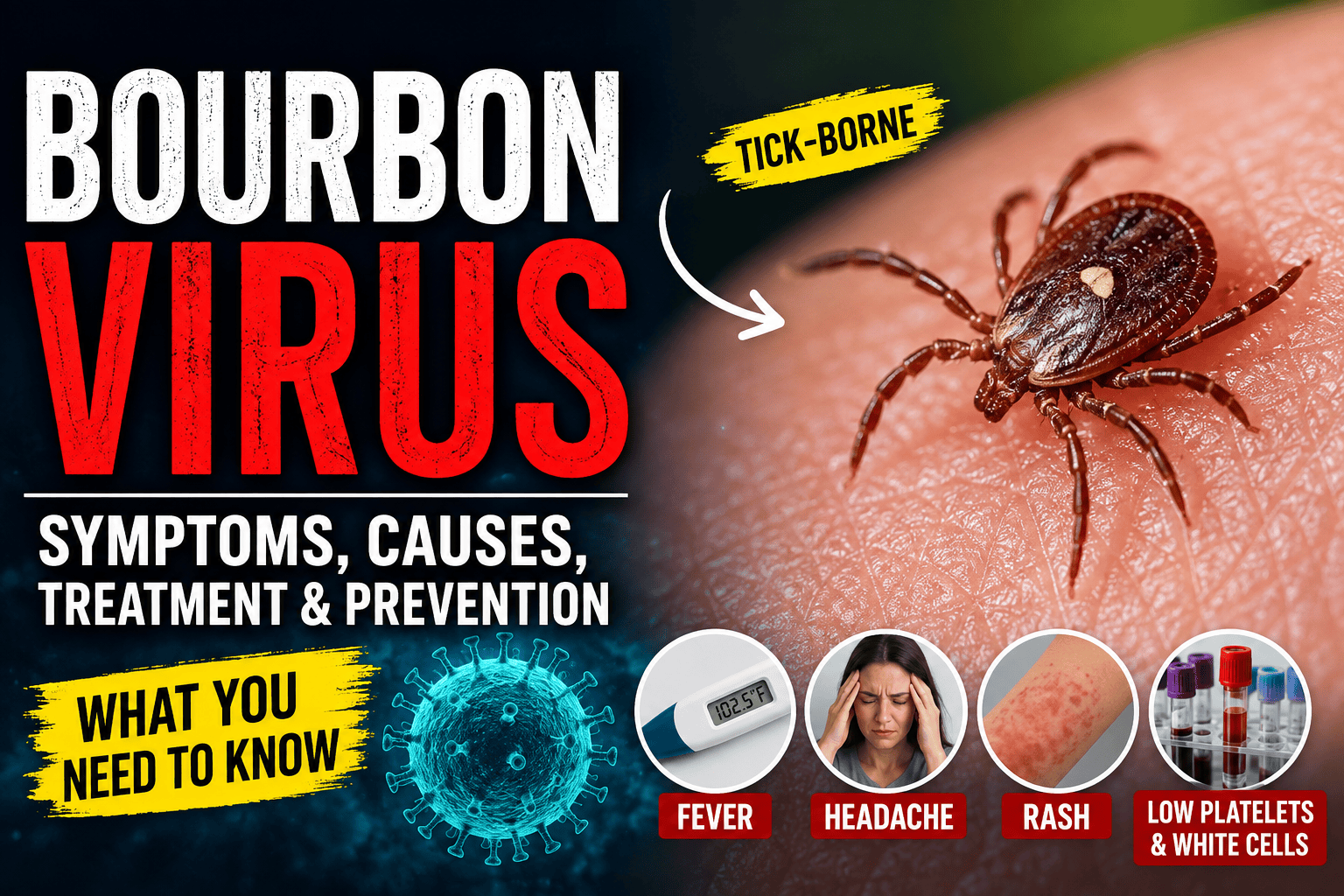
Most people have heard of Lyme disease after a tick bite, but far fewer know about the Bourbon virus, a rare but potentially serious tick-borne infection found in the United States. Although only a small number of human cases have been confirmed, public health experts believe the infection may be underdiagnosed because its symptoms resemble many other illnesses and specialized testing is not widely available.
Here’s what you should know about Bourbon virus, including how it spreads, who is at risk, symptoms to watch for, and how to protect yourself.
What Is Bourbon Virus?
Bourbon virus is a rare virus transmitted primarily through the bite of infected ticks. It belongs to the Thogotovirus genus in the Orthomyxoviridae family—the same virus family that includes influenza viruses, although Bourbon virus causes a completely different illness.
The virus was first identified in 2014 after a patient from Bourbon County, Kansas, became seriously ill, giving the virus its name.
How Does Bourbon Virus Spread?
Current evidence suggests that Bourbon virus is spread mainly through the bite of infected lone star ticks (Amblyomma americanum).
Researchers are still studying the virus, but person-to-person transmission has not been documented.
People are most likely to be exposed while:
- Hiking
- Camping
- Hunting
- Gardening
- Landscaping
- Working in wooded or grassy areas
Where Has Bourbon Virus Been Found?
Confirmed human cases have been reported only in the United States.
Most cases have occurred in:
- Kansas
- Missouri
- Oklahoma
Evidence of infected ticks or animals has also been found in several other states, suggesting the virus may have a wider geographic distribution than currently recognized.
Recently, New York reported its first confirmed human case, highlighting that healthcare providers are becoming more aware of this rare infection.
Symptoms of Bourbon Virus
Symptoms usually resemble many other tick-borne illnesses.
Common symptoms include:
- Fever
- Extreme fatigue
- Headache
- Muscle and body aches
- Skin rash
- Nausea
- Vomiting
Blood tests may also show:
- Low white blood cell count (leukopenia)
- Low platelet count (thrombocytopenia)
These laboratory findings often raise suspicion for a tick-borne infection.
Can Bourbon Virus Become Serious?
Yes.
Although many infections are believed to be mild or may go undiagnosed, some reported patients have developed severe illness requiring hospitalization.
Serious complications can include:
- Severe dehydration
- Organ dysfunction
- Shock
- Death in rare cases
Because so few confirmed cases exist, researchers are still learning about the full range of illness caused by the virus.
Who Is at Higher Risk?
Anyone bitten by an infected tick can become infected.
The risk is higher for people who:
- Spend significant time outdoors
- Live near wooded or grassy areas
- Work in farming, forestry, landscaping, or park maintenance
- Frequently hike or camp
Older adults and individuals with weakened immune systems may be more vulnerable to severe disease, although research is still limited.
How Is Bourbon Virus Diagnosed?
Diagnosis is challenging because symptoms resemble other illnesses such as:
- Lyme disease
- Ehrlichiosis
- Rocky Mountain spotted fever
- Heartland virus infection
Routine laboratory tests cannot confirm Bourbon virus.
Diagnosis requires specialized molecular or antibody testing, which is generally coordinated through state public health laboratories and the CDC. Commercial diagnostic tests are not widely available.
Is There a Treatment?
Currently:
- No antiviral medication specifically treats Bourbon virus.
- No vaccine is available.
Treatment focuses on supportive care, including:
- Fluids to prevent dehydration
- Fever control
- Pain relief
- Hospital care if complications develop
Because Bourbon virus is caused by a virus, antibiotics do not treat the infection. If a patient does not improve with antibiotics commonly used for suspected tick-borne bacterial infections, healthcare providers may consider other diagnoses, including Bourbon virus.
How Can You Prevent Bourbon Virus?
Since there is no vaccine, preventing tick bites is the best protection.
Experts recommend:
- Wear long sleeves and long pants in tick-prone areas.
- Use EPA-registered insect repellents containing DEET or other recommended ingredients.
- Treat clothing and gear with permethrin when appropriate.
- Stay in the center of trails and avoid tall grass.
- Check your body, children, and pets for ticks after outdoor activities.
- Remove attached ticks promptly using fine-tipped tweezers.
These simple precautions reduce the risk of Bourbon virus and many other tick-borne diseases.
When Should You See a Doctor?
Seek medical attention if you develop:
- Fever after a recent tick bite
- Rash with flu-like symptoms
- Persistent fatigue after outdoor exposure
- Severe headache or vomiting
- Symptoms that worsen despite treatment for another tick-borne illness
Tell your healthcare provider if you have recently been in wooded or grassy areas or remember a tick bite.
Frequently Asked Questions
Is Bourbon virus contagious?
There is currently no evidence that Bourbon virus spreads from person to person.
Can antibiotics cure Bourbon virus?
No. Antibiotics work against bacteria, not viruses. They do not treat Bourbon virus infection.
Is Bourbon virus common?
No. It is considered very rare, although experts believe some infections may go unrecognized because testing is limited.
Should travelers be worried?
The overall risk remains very low. Most people who spend time outdoors can greatly reduce their risk by following standard tick-bite prevention measures.
Key Takeaway
Bourbon virus is a rare but potentially serious tick-borne illness found in the United States. While confirmed cases remain uncommon, awareness is important because the symptoms resemble other tick-borne diseases and there is no specific treatment or vaccine. Preventing tick bites, recognizing symptoms early, and seeking medical evaluation after a tick exposure are the best ways to reduce the risk of severe illness.

Diploma in Lab Technician (DMLT)
Paramedical Board, Delhi, Govt. of India
(Reg. No. REG/23/41/1391)
Dedicated and detail-oriented Lab Technician with hands-on experience in diagnostic
testing, sample collection, and laboratory procedures. Seeking a challenging role in a
reputable healthcare organization where I can utilize my skills and contribute to accurate
and efficient patient care.
“Each health article undergoes professional medical review by experienced doctors.”