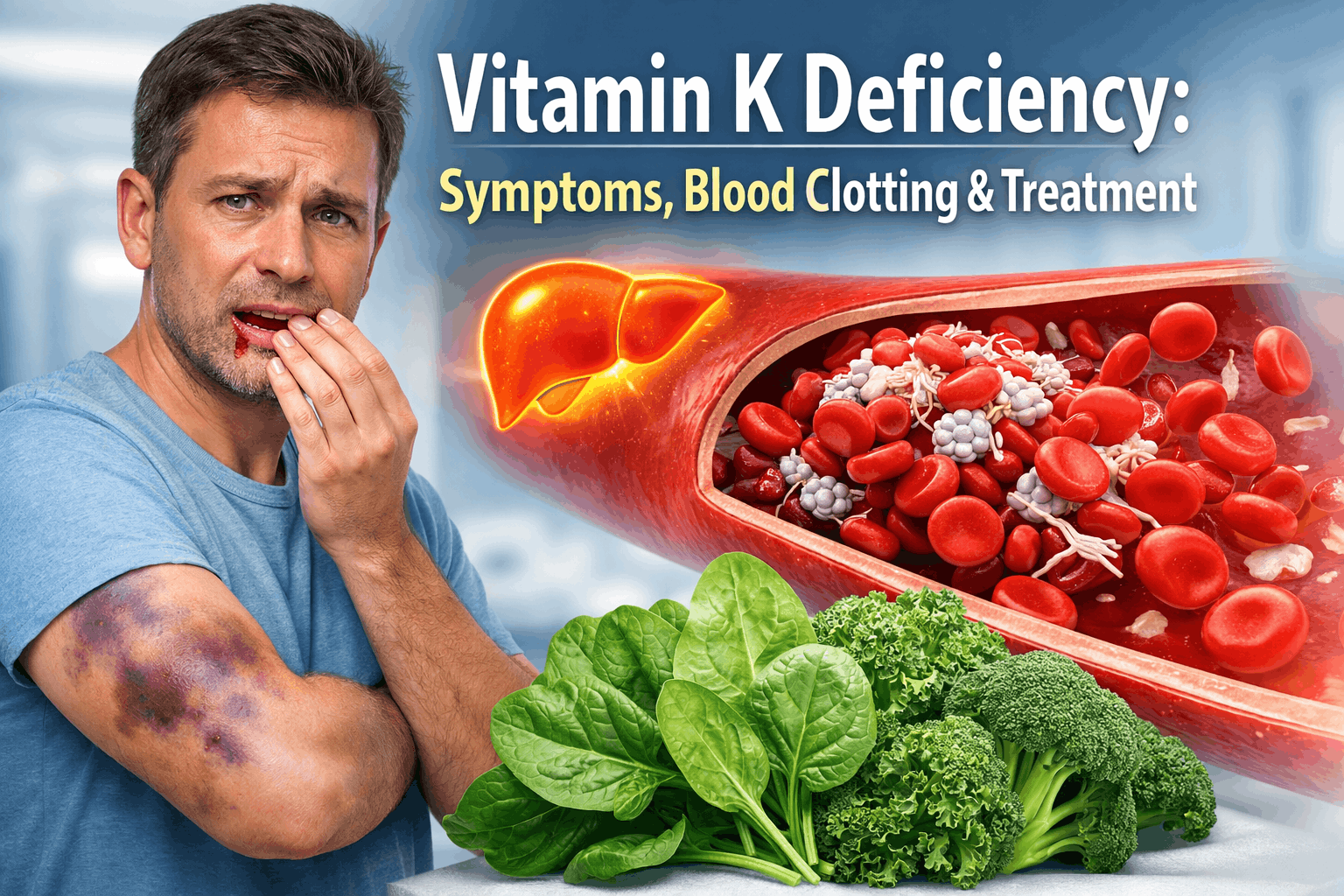
Most people focus on vitamins like C or D, but vitamin K deficiency is a hidden health problem that can seriously affect your body. From easy bruising to excessive bleeding and weak bones, low vitamin K levels may cause symptoms many people ignore until they become severe.
Your body needs vitamin K to help blood clot properly, support heart health, and keep bones strong. Without enough of it, even small cuts or injuries may take longer to heal.
Contents
What Is Vitamin K Deficiency?
Vitamin K deficiency happens when your body does not get enough vitamin K or cannot absorb it properly. This vitamin is essential for producing proteins that control blood clotting and bone metabolism.
There are two main types:
- Vitamin K1 – found in leafy green vegetables
- Vitamin K2 – found in fermented foods and animal products
Both forms play an important role in maintaining overall health.
Common Symptoms of Vitamin K Deficiency
Vitamin K is best known for helping blood clot properly. Without it, even a small injury could become dangerous. It also supports strong bones and overall health.
In simple terms, vitamin K acts like a “helper vitamin” that activates special proteins needed for blood clotting.
Many people do not realize they have low vitamin K until symptoms become noticeable. Some of the most common warning signs include:
Easy Bruising
If bruises appear on your body without major injury, it may be linked to poor blood clotting caused by vitamin K deficiency.
Excessive Bleeding
Frequent nosebleeds, bleeding gums, or cuts that bleed longer than usual are common signs.
When a blood vessel gets damaged, the body follows three main steps:
1. Blood Vessel Constriction
When a blood vessel is injured, it undergoes vasoconstriction, a physiological response in which the vessel narrows to reduce blood flow and minimize blood loss. In cases of sharp-force trauma, such as deep lacerations caused by knives or other sharp objects, vascular damage can be extensive, often resulting in severe hemorrhage that may be difficult to control. In milder forms of injury, blood vessels naturally constrict to slow the circulation of blood at the damaged area, helping the body initiate the early stages of bleeding control.
2. Platelet Plug Formation
Tiny blood cells known as platelets rapidly adhere to the site of vascular injury, where they aggregate to form a temporary platelet plug that helps limit bleeding.
3. Clotting Factor Activation
Specialized blood proteins known as clotting factors are activated sequentially in a cascade-like process, similar to falling dominoes. This chain reaction is triggered when blood vessels are damaged, exposing tissue and signaling the body to initiate hemostasis. As the clotting cascade progresses, fibrinogen is converted into fibrin, a tough, thread-like protein that weaves through the platelet plug. These fibrin strands strengthen and stabilize the clot, helping seal the injured vessel and prevent excessive blood loss while supporting tissue repair.
The clot acts like a protective net that stops bleeding.
Heavy Menstrual Bleeding
Women with low levels of vitamin K may experience unusually heavy menstrual bleeding because vitamin K plays a critical role in the production and activation of clotting factors required for normal blood coagulation. When vitamin K levels are insufficient, the blood may clot more slowly, making it harder for the body to effectively control bleeding during menstruation. As a result, menstrual flow can become heavier or prolonged in some individuals.
Blood in Stool or Urine
In severe cases, internal bleeding may occur when the body is unable to form stable blood clots effectively, leading to uncontrolled bleeding inside tissues, organs, or body cavities. This can happen due to significant trauma, clotting disorders, or severe deficiencies in essential nutrients such as vitamin K. Internal bleeding is considered a medical emergency because it may progress without obvious external signs while causing serious complications, including organ damage, shock, or life-threatening blood loss, and therefore should never be ignored.
Weak Bones
Vitamin K plays an important role in bone health by helping activate proteins that bind calcium to the bone matrix. When vitamin K levels are low, calcium may not be properly utilized within the bones, which can gradually weaken bone structure and reduce bone density. Over time, this deficiency may increase the risk of bone fractures, fragile bones, and conditions such as Osteoporosis, particularly in older adults and postmenopausal women.
Slow Healing
Wounds that heal slowly may also be a sign of low vitamin K levels, as vitamin K is essential for proper blood clot formation and normal tissue repair. When vitamin K is deficient, the body may struggle to control bleeding efficiently and support the early stages of wound healing, which can delay recovery and prolong the healing process.
What Causes Vitamin K Deficiency?
Several medical conditions and lifestyle-related factors can contribute to vitamin K deficiency by interfering with the body’s ability to absorb, produce, or utilize this essential nutrient. Disorders affecting fat absorption, prolonged use of certain medications, poor dietary intake, chronic liver disease, and gastrointestinal conditions may all reduce vitamin K availability, increasing the risk of impaired blood clotting and related complications.
Poor Diet
Not consuming enough green leafy vegetables is one of the leading causes of vitamin K deficiency, as these foods are among the richest natural sources of vitamin K. Vegetables such as spinach, kale, broccoli, and cabbage provide significant amounts of this nutrient
Digestive Disorders
Gastrointestinal disorders such as Crohn’s disease, Celiac disease, and Ulcerative colitis can interfere with the body’s ability to properly absorb nutrients, including vitamin K. These conditions often damage or inflame the intestinal lining, reducing the absorption of fat-soluble vitamins and increasing the risk of nutritional deficiencies and impaired blood clotting.
Long-Term Antibiotic Use
Some antibiotics kill healthy gut bacteria that help produce vitamin K naturally.
Liver Disease
Because the liver plays a central role in processing vitamin K and producing clotting factors, liver disorders can interfere with the body’s ability to properly utilize this vitamin. When liver function is impaired, the activation of vitamin K–dependent clotting proteins may decrease, increasing the risk of abnormal bleeding, bruising, and impaired blood coagulation.
Newborn Babies
Newborn babies are naturally born with very low stores of vitamin K because only limited amounts of the vitamin pass from the mother to the baby during pregnancy. In addition, a newborn’s intestines do not yet contain enough beneficial bacteria to produce adequate vitamin K after birth. Since vitamin K is essential for normal blood clotting, this deficiency can increase the risk of serious bleeding in infants. For this reason, hospitals routinely administer a vitamin K injection shortly after birth to help prevent potentially dangerous bleeding complications.
Best Foods Rich in Vitamin K
Including vitamin K–rich foods in your daily diet is one of the simplest and most effective ways to naturally maintain healthy vitamin K levels. Foods such as leafy green vegetables, broccoli, cabbage, and spinach provide significant amounts of this essential nutrient, supporting normal blood clotting, bone health, and overall physiological function.
Top Vitamin K Foods
- Spinach
- Kale
- Broccoli
- Cabbage
- Lettuce
- Brussels sprouts
- Eggs
- Cheese
- Chicken
- Fermented foods like natto
Dark leafy greens are especially powerful because they contain high amounts of vitamin K1.
How to Fix Vitamin K Deficiency
Treatment for vitamin K deficiency depends on the underlying cause and the severity of the condition. Mild deficiencies may often be managed through dietary changes and increased intake of vitamin K–rich foods, while more significant deficiencies may require vitamin K supplements or medical treatment to restore normal clotting function and prevent bleeding complications.
Improve Your Diet
Eat more vegetables and balanced meals daily.
Consuming more vegetables and maintaining a balanced daily diet can help support healthy vitamin K levels and overall nutritional health. Regular intake of leafy greens, fruits, whole grains, and nutrient-rich foods provides essential vitamins and minerals that contribute to proper blood clotting, bone strength, and normal body function.
Take Supplements
Doctors may recommend vitamin K supplements when dietary intake alone is not sufficient to restore normal vitamin K levels. Supplementation can help improve blood clotting function, reduce the risk of excessive bleeding, and support bone health, particularly in individuals with absorption disorders, chronic illnesses, or significant nutritional deficiencies.
Treat Underlying Conditions
Digestive diseases or liver disorders should also be managed properly.
Avoid Self-Medication
Some medications, especially blood thinners, interact with vitamin K. Always consult a healthcare professional before taking supplements.
Vitamin K Deficiency in Babies
Vitamin K deficiency bleeding (VKDB) is a dangerous condition that can happen in newborns. Babies are born with very little vitamin K, which increases the risk of internal bleeding.
Warning signs may include:
- Bleeding from the nose or umbilical cord
- Bruising
- Pale skin
- Blood in stool
This is why newborn vitamin K shots are strongly recommended by doctors in the United States.
Can Vitamin K Deficiency Be Dangerous?
Yes. Severe vitamin K deficiency can become life-threatening if it causes internal bleeding or serious complications. Early diagnosis and treatment are important, especially for infants, older adults, and people with digestive disorders.
In a healthy person, bleeding time usually stops within:
- 2 to 7 minutes → normal bleeding time
- 3 to 8 minutes → normal clotting time (general range)
If bleeding continues much longer than normal, it may indicate:
- Vitamin K deficiency
- Platelet disorders
- Liver disease
- Hemophilia
- Blood thinner medication effects
Steps to blood clotting
When you get a cut:
- Blood vessels constrict
- Platelets form a plug
- Clotting factors create a stable clot
Vitamin K is important in the third step because it helps activate clotting proteins.
Without enough vitamin K:
- Blood clot formation becomes slow
- Bleeding lasts longer
- Bruising happens easily
Vitamin K is essential for synthesis of prothrombin and clotting factors in the liver, helping blood coagulate normally.
Role of Vitamin K in Blood Clotting
Vitamin K is essential because it helps the liver produce important clotting factors.
Vitamin K Helps Activate:
- Factor II (Prothrombin)
- Factor VII
- Factor IX
- Factor X
Without vitamin K, these clotting factors cannot work properly.
This means:
- Blood takes longer to clot
- Bleeding becomes harder to stop
- Bruising happens more easily
You can think of vitamin K as the “switch” that turns clotting proteins on.
Final Thoughts
Vitamin K deficiency is more common than many people realize. Symptoms like easy bruising, bleeding gums, weak bones, and slow healing should never be ignored. The good news is that most cases can be improved through a healthy diet, proper medical care, and lifestyle changes.
Adding more vitamin K-rich foods to your meals may help protect your bones, support healthy blood clotting, and improve overall wellness naturally.

Diploma in Lab Technician (DMLT)
Paramedical Board, Delhi, Govt. of India
(Reg. No. REG/23/41/1391)
Dedicated and detail-oriented Lab Technician with hands-on experience in diagnostic
testing, sample collection, and laboratory procedures. Seeking a challenging role in a
reputable healthcare organization where I can utilize my skills and contribute to accurate
and efficient patient care.
“Each health article undergoes professional medical review by experienced doctors.”