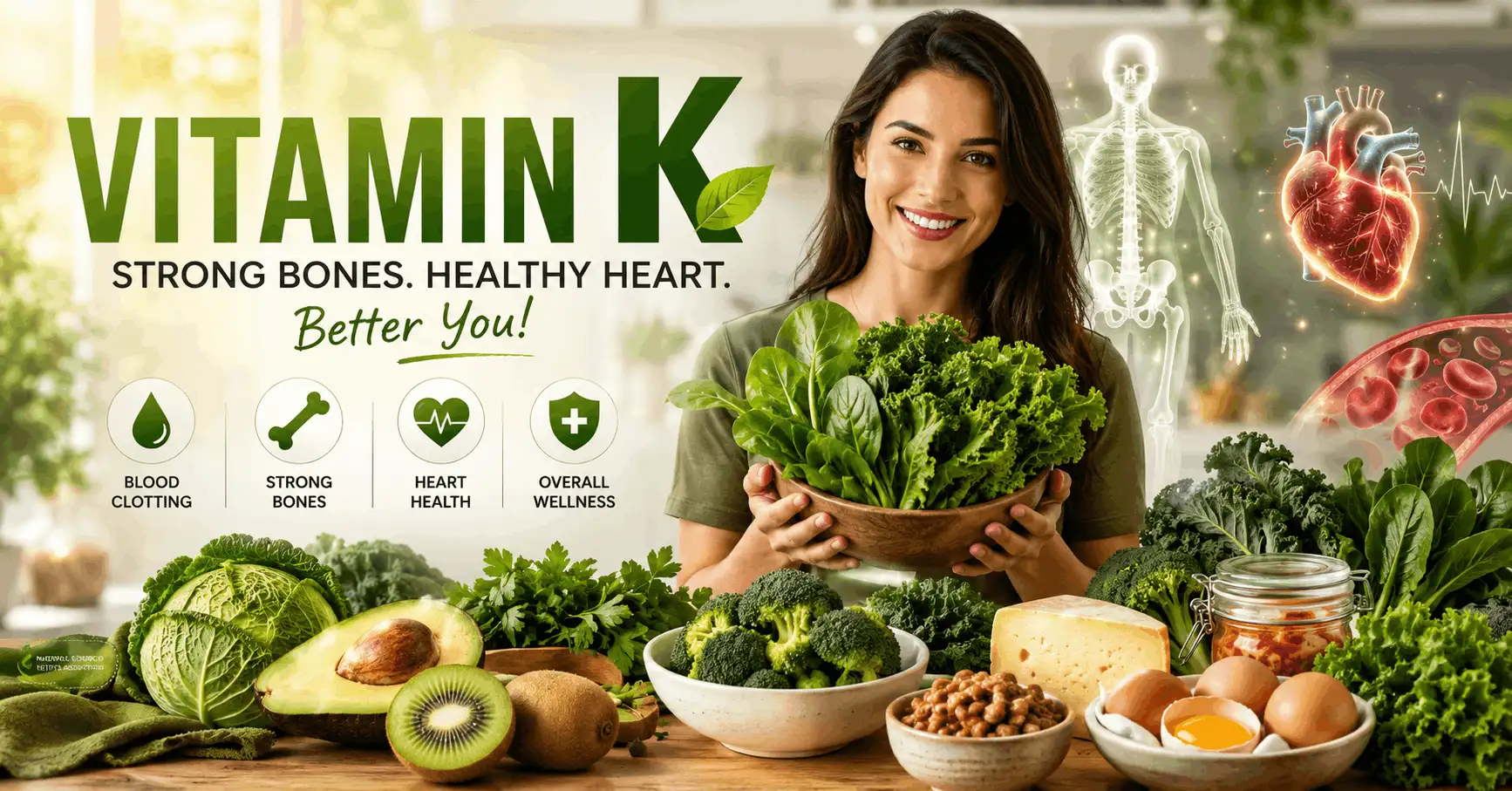
Vitamin K is an essential nutrient that plays a major role in keeping your body healthy. While many people know it helps with blood clotting, Vitamin K is also important for strong bones, heart health, and proper healing. A lack of Vitamin K can lead to several health problems, especially in adults and older individuals.
In recent years, interest in Vitamin K2 has grown rapidly because of its potential benefits for bone strength and cardiovascular health. Understanding how Vitamin K works, the symptoms of deficiency, and the best food sources can help you maintain better overall wellness.
Contents
What Is Vitamin K?
Vitamin K is a fat-soluble vitamin that helps the body produce proteins needed for blood clotting and bone metabolism. Without enough Vitamin K, even small injuries may bleed excessively because the blood cannot clot properly.
There are two primary forms of Vitamin K:
Vitamin K1
Vitamin K1, also known as phylloquinone, is mainly found in green leafy vegetables and plant foods because it plays an important role in photosynthesis, the process plants use to convert sunlight into energy. Leafy greens such as spinach, kale, broccoli, and lettuce contain high amounts of chlorophyll, and Vitamin K1 helps support the plant’s energy production system. When people eat these vegetables, the body absorbs Vitamin K1 and uses it to help blood clot properly and support overall health.
Vitamin K2
Vitamin K2, or menaquinone, is commonly found in fermented foods and animal-based products because it is produced by certain bacteria during the fermentation process and can also accumulate in animal tissues. Foods such as natto, cheese, egg yolks, and liver are rich sources of Vitamin K2. Unlike Vitamin K1, Vitamin K2 remains active in the bloodstream for a longer period, allowing it to better support calcium regulation in the body. It helps activate proteins that move calcium into bones and teeth while reducing calcium buildup inside arteries, which is why Vitamin K2 is often associated with bone strength and heart health. (Cleveland Clinic)
Vitamin K Benefits
Supports Healthy Blood Clotting
One of the most important functions of Vitamin K is helping blood clot properly. It activates proteins that stop bleeding after injuries or cuts.
Without enough Vitamin K, the body may struggle to control bleeding, increasing the risk of bruising and hemorrhage.
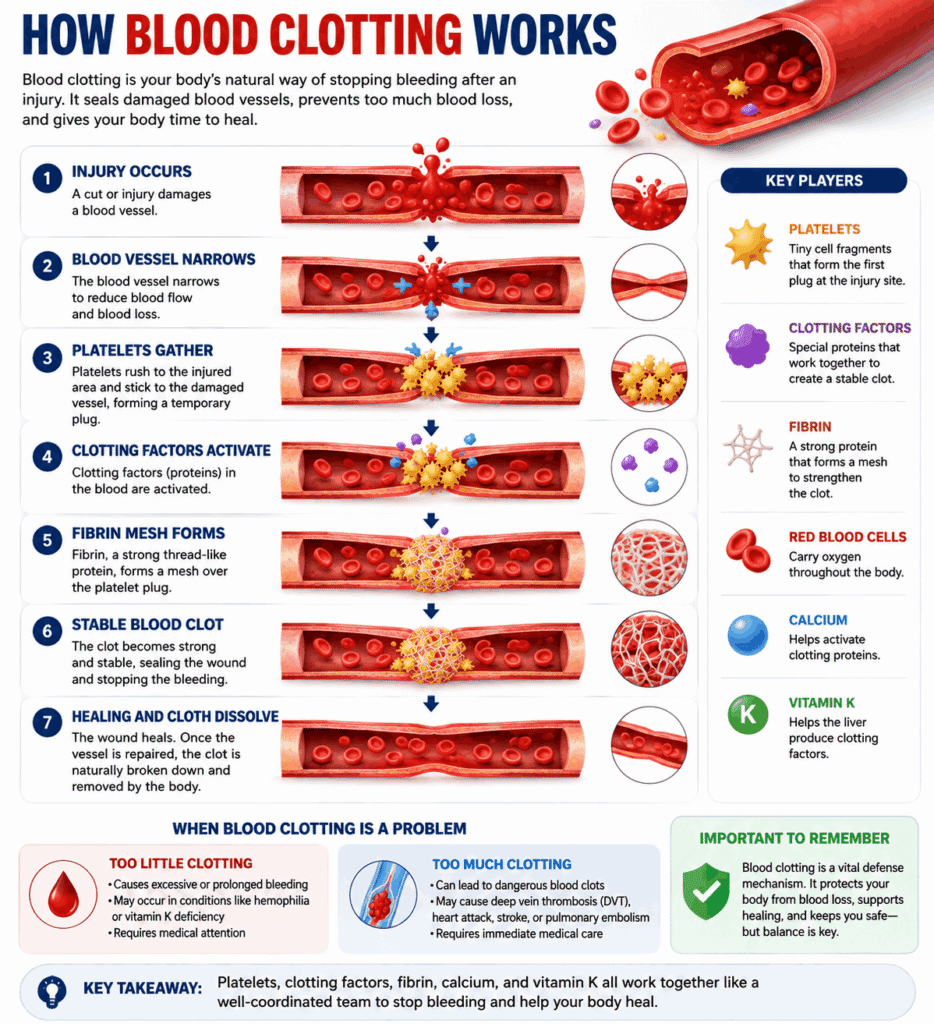
Mechanism: How Blood Clotting Works
- Step 1: 🩹 Injury to a blood vessel
- Step 2: 🩸 Blood vessel narrows (reduces blood loss)
- Step 3: 🟡 Platelets gather and form a temporary plug
- Step 4: 🧬 Clotting factors activate
- Step 5: 🕸️ Fibrin mesh strengthens the clot
- Step 6: ❤️ Stable blood clot stops bleeding
- Step 7: ✨ Wound heals and the clot dissolves naturally
Helps Build Strong Bones
Vitamin K helps activate osteocalcin, a protein that supports bone mineralization. Proper Vitamin K intake may help maintain bone density and reduce the risk of fractures as people age. (Healthline)
Supports Heart Health
Vitamin K2 may help prevent calcium from building up inside arteries. Calcium deposits in blood vessels can increase the risk of heart disease over time. Researchers believe Vitamin K2 helps guide calcium into bones instead of arteries. (Healthline)
May Improve Skin Healing
Vitamin K supports the body’s natural healing process. Some skin care products use Vitamin K to help reduce the appearance of bruises, scars, and dark circles under the eyes.
🩸 How Blood Clotting Works (Simple Diagram)
Supports Dental Health
Some studies suggest that Early Signs of Vitamin K Deficiency You Shouldn’t IgnoreK2 works together with Vitamins A and D to support healthy teeth and gums. It may help strengthen dentin, the tissue beneath tooth enamel. (Healthline)
Key Components of Blood Clotting
| Component | Role |
|---|---|
| 🟡 Platelets | Form the first temporary plug |
| 🧬 Clotting Factors | Trigger the clotting process |
| 🕸️ Fibrin | Creates a strong mesh to stabilize the clot |
| 🦴 Calcium | Helps activate clotting proteins |
| 🥬 Vitamin K | Enables the liver to produce several clotting factors |
Vitamin K2 Benefits
Vitamin K2 has become increasingly popular because of its unique health benefits.
Bone Health Support
Vitamin K2 helps direct calcium into bones where it belongs. This may support stronger bones and lower osteoporosis risk.
Heart Protection
Vitamin K2 may reduce calcium buildup in arteries, helping support cardiovascular health. (Healthline)
Longer Activity in the Body
Compared to Vitamin K1, Vitamin K2 remains active in the bloodstream for a longer time, which may improve its effectiveness.
Works Well With Vitamin D3
Many supplements combine Vitamin K2 with Vitamin D3 because the two nutrients work together to support healthy calcium balance.
Signs of Vitamin K Deficiency
Vitamin K deficiency can develop slowly and may not always be obvious at first.
Common warning signs include:
- Frequent bruising
- Bleeding gums
- Nosebleeds
- Heavy menstrual bleeding
- Blood in urine or stool
- Slow wound healing
- Easy bleeding after minor cuts
Severe deficiency can become dangerous if internal bleeding occurs.
Vitamin K Deficiency Symptoms in Adults
Adults with low Vitamin K levels may experience:
Excessive Bruising
Small bumps or injuries may leave dark bruises more easily than normal.
Bleeding Problems
Cuts may take longer to stop bleeding because clotting proteins are not functioning properly.
Weak Bones
Long-term deficiency may weaken bones and increase fracture risk.
Fatigue and Weakness
Chronic blood loss from poor clotting may contribute to tiredness and weakness.
Digestive Conditions Can Increase Risk
People with digestive disorders such as Crohn’s disease, celiac disease, or ulcerative colitis may struggle to absorb enough Vitamin K.
Certain medications, including long-term antibiotics and blood thinners, can also affect Vitamin K levels.
Vitamin K Rich Foods and Fruits
Eating a balanced diet is one of the best ways to maintain healthy Vitamin K levels naturally.
Fruits Rich in Vitamin K
While vegetables contain more Vitamin K than fruits, some fruits still provide useful amounts.
Examples include:
- Blueberries
- Kiwi
- Avocado
- Grapes
- Blackberries
- Figs
- Pomegranate
Foods High in Vitamin K
Some of the best food sources include:
- Kale
- Spinach
- Broccoli
- Brussels sprouts
- Cabbage
- Lettuce
- Parsley
- Green beans
- Soybeans
- Egg yolks
- Cheese
- Chicken liver
- Fermented foods like natto
Leafy green vegetables are among the richest sources of Vitamin K1.
Vitamin K Rich Foods List
| Food | Type of Vitamin K |
|---|---|
| Kale | Vitamin K1 |
| Spinach | Vitamin K1 |
| Broccoli | Vitamin K1 |
| Brussels sprouts | Vitamin K1 |
| Cabbage | Vitamin K1 |
| Natto | Vitamin K2 |
| Egg yolk | Vitamin K2 |
| Cheese | Vitamin K2 |
| Chicken liver | Vitamin K2 |
| Soybeans | Vitamin K1 & K2 |
Vitamin K Supplements
Some people may need Vitamin K supplement if they cannot get enough Vitamin K through food.
Supplements are commonly available as:
- Vitamin K1
- Vitamin K2 MK-4
- Vitamin K2 MK-7
- Vitamin D3 + K2 combinations
However, people taking blood-thinning medications such as warfarin should speak with a healthcare professional before using Vitamin K supplements because sudden changes in Vitamin K intake may interfere with medication effectiveness.
Vitamin K Rich Foods in Vegetarians
Vegetarians can still obtain plenty of Vitamin K through plant-based foods.
Excellent vegetarian sources include:
- Spinach
- Kale
- Mustard greens
- Swiss chard
- Broccoli
- Cabbage
- Parsley
- Lettuce
- Soybeans
- Fermented soy products
- Avocado
- Kiwi
Fermented foods such as natto are especially rich in Vitamin K2 and are popular among some vegetarian diets.
Final Thoughts
Vitamin K is a vital nutrient that supports blood clotting, bone strength, heart health, and overall wellness. Maintaining healthy Vitamin K levels through balanced nutrition may help reduce the risk of deficiency-related problems and support long-term health.
Adding more leafy greens, fermented foods, and nutrient-rich meals to your diet is one of the simplest ways to improve your Vitamin K intake naturally. For people with dietary restrictions or absorption issues, supplements may also be helpful when recommended by a healthcare professional.

Diploma in Lab Technician (DMLT)
Paramedical Board, Delhi, Govt. of India
(Reg. No. REG/23/41/1391)
Dedicated and detail-oriented Lab Technician with hands-on experience in diagnostic
testing, sample collection, and laboratory procedures. Seeking a challenging role in a
reputable healthcare organization where I can utilize my skills and contribute to accurate
and efficient patient care.
“Each health article undergoes professional medical review by experienced doctors.”