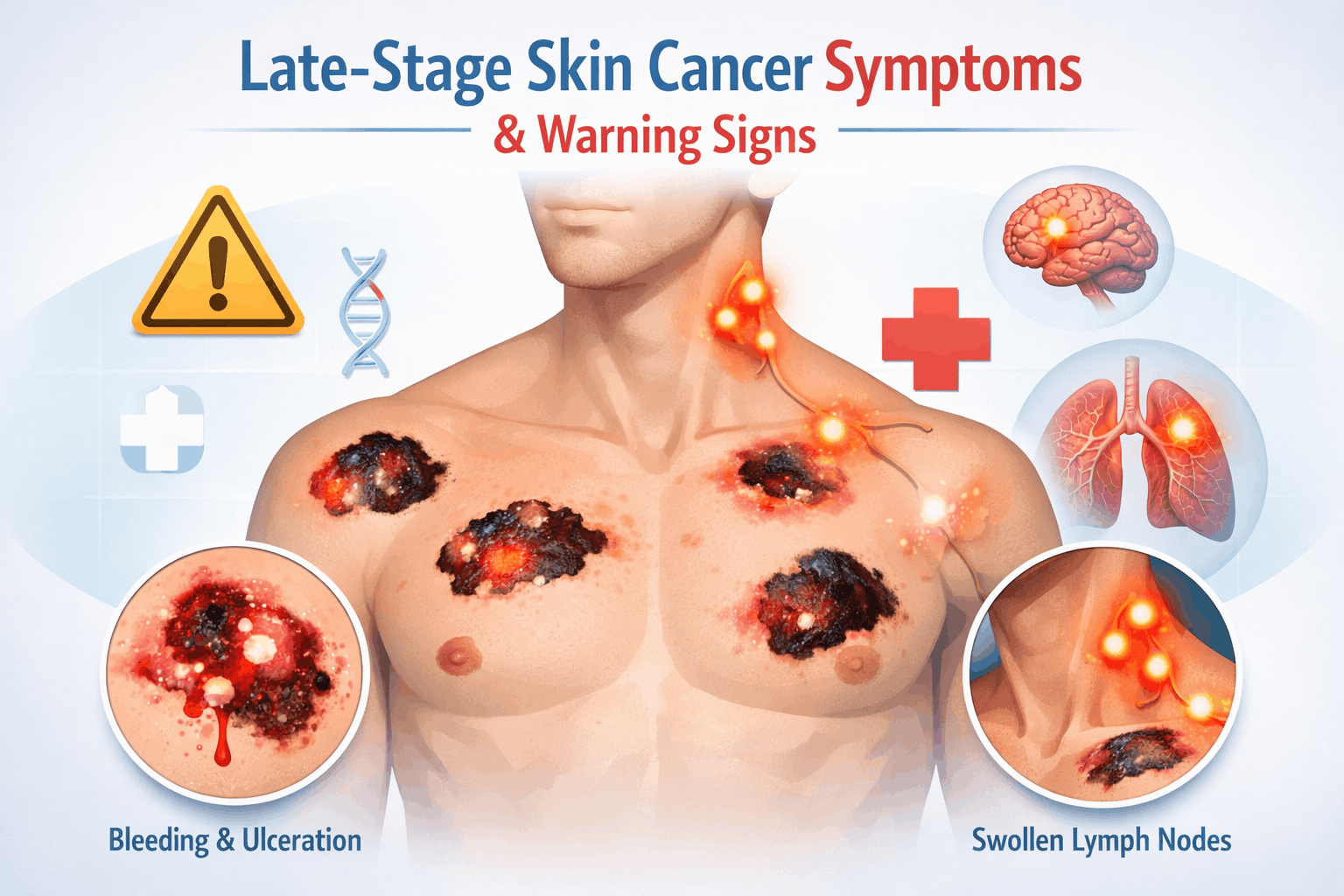
Late-stage skin cancer is a critical condition where cancer cells have spread beyond the original skin site to lymph nodes or other organs. At this stage, symptoms become more intense and systemic, and treatment becomes more complex—and significantly more expensive.
This guide covers advanced symptoms, warning signs, and the real cost of treatment in the United States to help you understand both the medical and financial impact.
Contents
What Is Late-Stage Skin Cancer?
Late-stage (Stage III or IV) skin cancer—especially melanoma—means the disease has metastasized. It may spread to:
- Lymph nodes
- Lungs
- Liver
- Brain
- Bones
At this point, symptoms go far beyond the skin and can affect the entire body.

Major Late Stage Skin Cancer Symptoms
1. Rapidly Changing or Aggressive Skin Lesions
- Large, irregular moles or tumors
- Multiple colors (black, red, white, blue)
- Thick, raised, or ulcerated appearance
These lesions often grow quickly and look very different from normal moles.
2. Open Sores That Don’t Heal
- Persistent ulcers
- Bleeding or oozing lesions
- Recurrent scabbing
This indicates tissue damage and advanced tumor growth.
3. Severe Pain or Nerve Sensitivity
- Constant pain in the affected area
- Burning or itching sensations
- Tenderness when touched
Pain usually signals deeper invasion into nerves or tissues.
4. Swollen Lymph Nodes
- Hard lumps in the neck, armpits, or groin
- Tender or enlarged nodes
This is one of the clearest signs that cancer has spread.
5. Fatigue and Weakness
- Chronic exhaustion
- Reduced physical stamina
Advanced cancer drains the body’s energy resources.
6. Unexplained Weight Loss
- Sudden drop in body weight
- Loss of appetite
This is common in metastatic cancer due to increased metabolic demand.
7. Breathing Problems (Lung Spread)
- Shortness of breath
- Persistent cough
- Chest pain
Occurs when cancer reaches the lungs.
8. Neurological Symptoms (Brain Spread)
- Headaches
- Seizures
- Vision problems
- Confusion
These are serious late-stage warning signs requiring urgent care.
9. Bone Pain
- Deep, aching pain
- Increased fracture risk
- Pain worsening at night
Indicates spread to bones.
Treatment Options for Late-Stage Skin Cancer
Treatment becomes more aggressive and may include:
- Immunotherapy (e.g., checkpoint inhibitors)
- Targeted therapy
- Radiation therapy
- Chemotherapy
- Surgery (in select cases)
- Palliative care (pain relief and quality of life)
Advanced melanoma often responds best to modern immunotherapy, but it comes at a high cost.
Treatment Cost in the U.S. (Important for SEO)
Late-stage skin cancer is among the most expensive cancers to treat in the United States due to prolonged therapy and advanced drugs.
💰 Average Cost Breakdown
1. Overall Cost Range
- $500 to $10,000+ for basic treatments
- $30,000 to $250,000+ for advanced melanoma cases
- Costs rise significantly in late-stage disease due to multiple therapies
2. Immunotherapy (Most Expensive)
- Around $11,000 per infusion
- Up to $200,000 per year for drugs like Keytruda
This is the primary treatment for advanced melanoma.
3. Surgery
- Simple removal: $1,000 – $5,000
- Advanced surgery: $10,000+
4. Radiation Therapy
- $2,000 – $8,000 depending on sessions
5. Chemotherapy
- $1,000 – $10,000+ per month
6. Advanced (Stage IV) Cancer Costs
- Chemotherapy: $10,000–$30,000
- Immunotherapy: $100,000+ annually
💡 With vs Without Insurance
- With insurance: Out-of-pocket costs can still be thousands
- Without insurance: Costs can exceed $250,000+ for advanced treatment
Insurance significantly reduces financial burden but doesn’t eliminate it.
Why Late-Stage Treatment Is So Expensive
- Multiple therapies used together
- Long-term treatment cycles
- Advanced drugs (biologics & immunotherapy)
- Hospital stays and imaging (CT, MRI, PET scans)
- Ongoing follow-up and supportive care
👉 Simply put: the later the stage, the higher the cost.
When to See a Doctor
Seek immediate medical attention if you notice:
- Rapidly changing moles
- Bleeding or non-healing sores
- Swollen lymph nodes
- Persistent fatigue or weight loss
Early detection can save not just your life—but also tens of thousands of dollars in treatment costs.
Final Thoughts
Late-stage skin cancer symptoms go far beyond the skin—they affect the entire body and signal advanced disease. From painful lesions to systemic complications like breathing problems and neurological issues, these signs should never be ignored.
Equally important is understanding the financial burden, especially in the U.S., where treatment costs can reach hundreds of thousands of dollars. Early detection remains the most powerful way to reduce both health risks and expenses.
FAQs,
What are the symptoms of late-stage skin cancer?
Late-stage skin cancer symptoms include large, irregular lesions, bleeding sores, swollen lymph nodes, fatigue, weight loss, and signs of organ spread.
How do you know if skin cancer has spread?
Signs include swollen lymph nodes, breathing issues, bone pain, headaches, and neurological symptoms.
What is the treatment cost for late-stage skin cancer in the U.S.?
Treatment can range from $30,000 to $250,000+, depending on therapy like immunotherapy, surgery, and radiation.
Is late-stage melanoma curable?
It is difficult to cure, but treatments like immunotherapy can improve survival and quality of life.
Can insurance cover skin cancer treatment in the U.S.?
Yes, most insurance plans cover treatment, but out-of-pocket costs can still be significant.

Diploma in Lab Technician (DMLT)
Paramedical Board, Delhi, Govt. of India
(Reg. No. REG/23/41/1391)
Dedicated and detail-oriented Lab Technician with hands-on experience in diagnostic
testing, sample collection, and laboratory procedures. Seeking a challenging role in a
reputable healthcare organization where I can utilize my skills and contribute to accurate
and efficient patient care.
“Each health article undergoes professional medical review by experienced doctors.”