
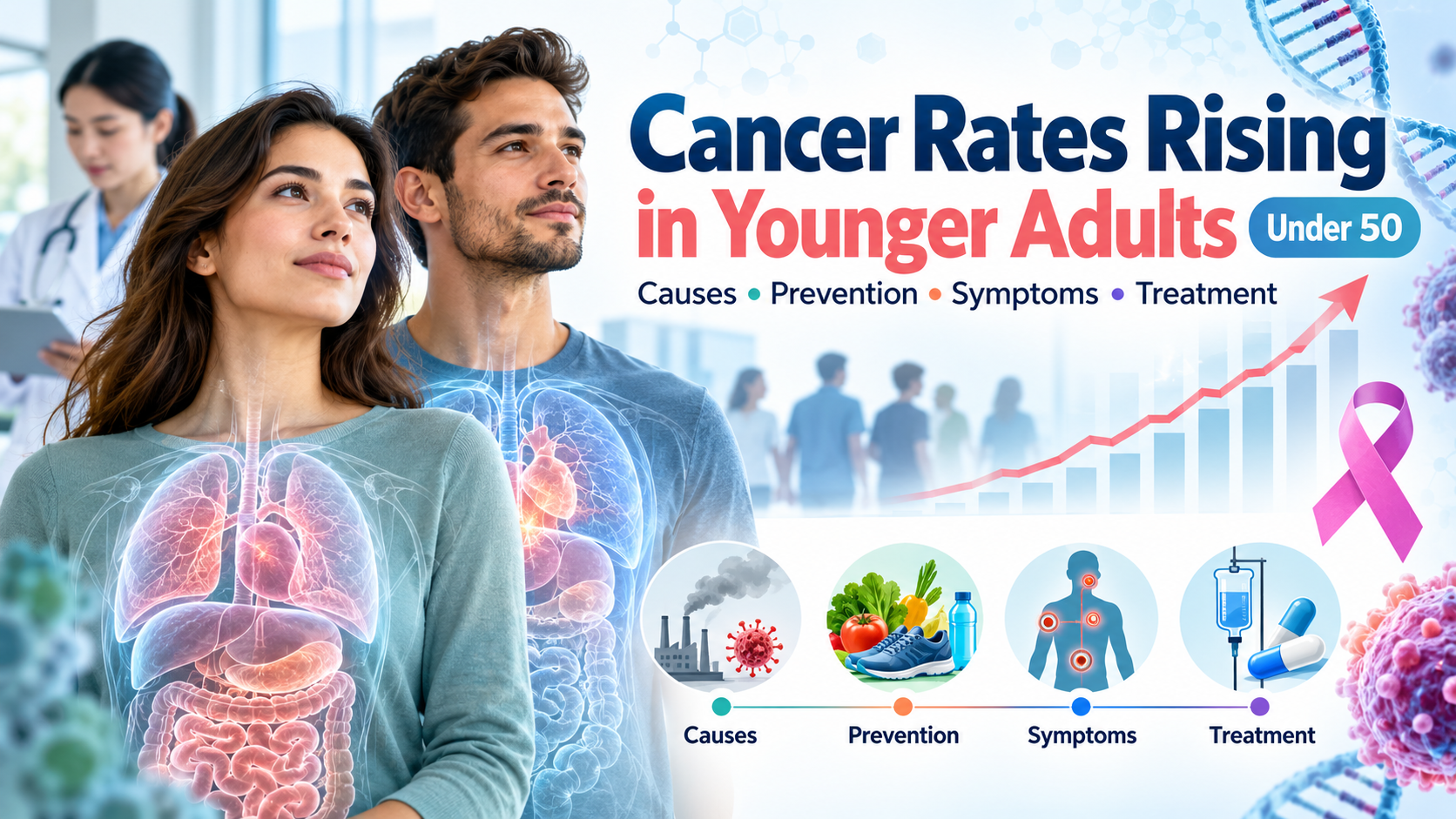
Cancer has traditionally been viewed as a disease that mostly affects older adults. Age is still one of the strongest risk factors for cancer, and most cancers continue to be diagnosed later in life.
Contents
But a troubling pattern is becoming harder to ignore.
New international research examining cancer trends in England, the United States, and the Netherlands suggests that several types of cancer are increasing more rapidly among adults younger than 50.
The finding does not mean that cancer has suddenly become common in young people. Most people under 50 will not develop cancer. But the direction of the trend is important enough that researchers are now asking a much bigger question:
Why are more younger adults being diagnosed with cancer—and can some of these cases be prevented?
The answer is complicated. Obesity, diet, physical inactivity, alcohol, tobacco, environmental exposures, changing reproductive patterns, infections, genetics, and even changes in the gut microbiome are all being studied.
At the same time, better awareness and improved diagnostic testing may be identifying some cancers that previously would have been missed.
Here is what the latest findings mean, what cancer actually is, which warning signs deserve attention, and what you can realistically do to reduce your cancer risk.
What Did the New Cancer Study Find?
An international analysis highlighted in reports published on October 6, 2026, examined cancer patterns among adults younger than 50 in England, the United States, and the Netherlands.
Researchers identified notable increases in several early-onset cancers.
In the United States, the analysis found rising rates among people under 50 for cancers including:
- Kidney cancer
- Colorectal cancer
- Uterine cancer
- Pancreatic cancer
- Breast cancer
Similar trends were identified in England and the Netherlands, although the specific cancer types and size of the increases differed between countries.
One particularly important finding was that not every cancer is increasing.
Lung cancer rates among younger adults have declined in the countries studied, a trend researchers associate in part with falling smoking rates.
That contrast matters because it suggests that cancer trends can change when major preventable risk factors change.
News context: The Guardian · The Times
Should Younger Adults Be Worried?
The findings deserve attention, but they should not create unnecessary fear.
Cancer remains much more common in older adults. A rising rate does not automatically mean the absolute chance of developing cancer at a young age is high.
For example, if a cancer rises from a relatively small number of cases to twice that number, the percentage increase may sound dramatic even though the overall risk remains low.
The important message is different:
Being younger does not make someone immune to cancer.
Persistent or unexplained symptoms deserve proper medical evaluation regardless of age.
HealthMozo previously covered a case in which persistent back pain and other warning signs were eventually linked to advanced cancer. Stories like this demonstrate why symptoms that repeatedly return or worsen should not automatically be dismissed simply because a person is young.
What Is Cancer?
Cancer is not one disease.
It is a large group of diseases in which abnormal cells begin growing and dividing without the normal controls that regulate healthy cells.
Your body contains trillions of cells. Normally, cells grow, divide, perform their function, and eventually die in an organized way.
Cancer begins when changes in a cell’s DNA interfere with those controls.
The abnormal cells may:
- Continue dividing when they should stop
- Avoid normal cell death
- Invade nearby tissues
- Form tumors
- Enter the bloodstream or lymphatic system
- Spread to distant organs
When cancer spreads from its original location to another part of the body, the process is called metastasis.
Not every tumor is cancerous.
A benign tumor does not invade surrounding tissues or spread to distant organs in the same way malignant cancer can.
A malignant tumor can invade nearby tissues and potentially spread throughout the body.
Some cancers, including leukemia, may not form a solid tumor at all.
Why Does Cancer Develop?
There is rarely one simple answer.
Cancer usually develops after genetic changes accumulate within cells.
Some changes happen naturally as cells divide. Others may be promoted by environmental exposures, lifestyle factors, infections, inherited genes, or a combination of several influences.
In many people, doctors will never be able to identify one exact reason why cancer developed.
Understanding a risk factor is therefore different from saying a factor definitely caused someone’s cancer.
Having a risk factor does not mean you will develop cancer, and people without obvious risk factors can still get cancer.
Major Cancer Risk Factors
1. Tobacco
Tobacco remains one of the most important preventable causes of cancer.
Smoking is strongly linked with lung cancer but can also increase the risk of cancers involving the:
- Mouth
- Throat
- Esophagus
- Bladder
- Kidney
- Pancreas
- Cervix
- Stomach
- Blood
The encouraging part is that cancer risk begins to decline after a person quits smoking.
For a detailed explanation of lung cancer symptoms, diagnosis, treatment, and prevention, see HealthMozo’s complete lung cancer guide.
The decline in early-onset lung cancer reported in the recent international analysis is an important reminder that prevention can make a measurable difference.
2. Excess Body Weight
Obesity is increasingly important in discussions about younger-onset cancer.
Excess body fat does more than change body weight. Fat tissue can affect:
- Hormones
- Insulin signaling
- Chronic inflammation
- Metabolic health
These biological changes may contribute to the development of certain cancers over time.
Obesity has been associated with increased risk for several cancers, including colorectal, kidney, uterine, pancreatic, and postmenopausal breast cancers.
Notably, several of these cancers are among those increasing in younger adults.
That does not prove obesity is responsible for every case, but it is one of the major modifiable factors researchers are studying.
3. Poor Diet
There is no single food that causes cancer and no single “anti-cancer food” that guarantees protection.
Cancer risk is more strongly influenced by long-term dietary patterns.
A diet that regularly contains plenty of:
- Vegetables
- Fruits
- Whole grains
- Beans and legumes
- Other high-fiber foods
can support overall health and weight management.
At the same time, consistently consuming large amounts of heavily processed foods, processed meat, excess calories, and low-fiber foods may contribute to unfavorable metabolic patterns.
This is particularly relevant to colorectal cancer, which is increasingly being diagnosed in younger adults.
4. Physical Inactivity
Your body benefits from regular movement in ways that extend far beyond weight control.
Physical activity helps support:
- Healthy insulin levels
- Hormonal balance
- Immune function
- Cardiovascular health
- Healthy body weight
- Normal bowel function
Regular exercise is associated with a lower risk of several types of cancer.
You do not need to become an athlete.
Walking, cycling, swimming, strength training, active household work, or other consistent movement can all contribute to a healthier lifestyle.
5. Alcohol
Alcohol is an established cancer risk factor.
Drinking alcohol has been linked with cancers of areas including the:
- Breast
- Liver
- Mouth
- Throat
- Esophagus
- Colon and rectum
Cancer risk can increase with greater alcohol consumption.
From a cancer-prevention standpoint, drinking less is generally better than drinking more.
6. Genetics and Family History
Some people inherit genetic changes that increase their lifetime cancer risk.
For example, inherited variants involving genes such as BRCA1 and BRCA2 can significantly affect the risk of certain breast, ovarian, prostate, and other cancers.
A family history becomes particularly important when:
- Several close relatives have had the same cancer
- Cancer occurred at an unusually young age
- One person developed multiple cancers
- Certain cancers repeatedly appear across generations
People with a strong family history may benefit from genetic counseling or earlier/more intensive screening.
Family history does not mean cancer is inevitable.
It means your risk assessment may need to be more personalized.
7. Infections
Some infections can contribute to cancer development.
Important examples include:
Human papillomavirus (HPV)
Persistent infection with certain high-risk HPV types can lead to cervical cancer and several other cancers.
Vaccination can prevent many HPV-related cancers.
Hepatitis B and C
Chronic viral hepatitis can damage the liver over many years and increase liver cancer risk.
Vaccination against hepatitis B is an important cancer-prevention tool.
8. Radiation and Ultraviolet Exposure
Excessive ultraviolet radiation from sunlight or tanning devices can damage DNA and raise skin cancer risk.
That is why sun protection matters even when a person is young.
HealthMozo has a separate guide on late-stage skin cancer symptoms and treatment for readers who want more information about advanced skin cancer.
High levels of ionizing radiation can also increase cancer risk.
HealthMozo has previously discussed the connection between radiation exposure and long-term cancer risk.
9. Environmental and Workplace Exposures
Certain chemicals and occupational exposures can increase cancer risk.
Examples include asbestos and some industrial carcinogens.
Air pollution is also being studied as an important long-term health risk.
The degree of risk depends on the substance, amount of exposure, duration, and individual factors.
Why Are Cancer Rates Rising in People Under 50?
This is the question researchers are trying to answer.
There is unlikely to be one explanation.
Several changes occurring across modern societies may be contributing simultaneously.
Rising Obesity
Obesity rates have increased significantly over recent decades.
Because excess body fat affects hormones, inflammation, and metabolism, researchers believe it may contribute to some early-onset cancers.
Changes in Diet
Modern diets often contain more highly processed foods and fewer naturally fiber-rich foods than traditional dietary patterns.
Researchers are particularly interested in how long-term dietary changes may influence colorectal and other gastrointestinal cancers.
Less Physical Activity
Many adults spend long periods sitting for work, entertainment, commuting, and daily activities.
A sedentary lifestyle can contribute to metabolic problems and excess weight.
Alcohol Use
Patterns of alcohol exposure across adulthood may influence long-term cancer risk.
Changes in the Gut Microbiome
Scientists are increasingly studying the gut microbiome—the community of microorganisms living in our digestive system.
Diet, antibiotics, infections, obesity, and other environmental exposures can alter this ecosystem.
Researchers are investigating whether some microbiome changes may influence inflammation and cancer development, particularly colorectal cancer.
This is an active area of research and should not yet be interpreted as a proven single cause.
Better Detection
Some of the apparent increase may result from:
- Greater awareness
- Better medical imaging
- More frequent testing
- Improved diagnostic methods
- Increased recognition of symptoms
However, researchers do not believe improved detection alone explains the entire trend.
Which Cancers Are Increasing in Younger Americans?
According to the latest international analysis, several cancers have shown concerning upward trends among U.S. adults younger than 50.
Colorectal Cancer
Early-onset colorectal cancer has become one of the most closely watched cancer trends.
Because of growing concern about colorectal cancer in younger adults, screening recommendations in the United States now generally begin earlier than they once did for average-risk people.
Adults should discuss personal risk and appropriate screening with their healthcare provider, particularly if they have:
- A family history of colorectal cancer
- Previous polyps
- Inflammatory bowel disease
- A known hereditary syndrome
- Concerning bowel symptoms
Possible warning signs can include:
- Blood in stool
- Persistent changes in bowel habits
- Abdominal discomfort
- Unexplained weight loss
- Iron-deficiency anemia
- Ongoing fatigue
Breast Cancer
Breast cancer also remains an important concern among women younger than 50.
Possible warning signs include:
- A new breast lump
- Changes in breast shape or size
- Skin dimpling
- Nipple changes
- Unusual nipple discharge
- Swelling in the breast or armpit
HealthMozo’s overview of common diseases affecting women’s health includes additional information about breast and cervical cancer.
Pancreatic Cancer
Pancreatic cancer remains relatively uncommon in young adults, but increasing incidence deserves attention because the disease is often difficult to detect early.
Symptoms may be subtle and can include:
- Persistent upper abdominal or back pain
- Unexplained weight loss
- Loss of appetite
- Jaundice
- Changes in stool
- New or suddenly worsening diabetes
Read HealthMozo’s detailed guide to pancreatic cancer causes, symptoms, diagnosis, and treatment.
Kidney Cancer
Kidney cancer may not cause obvious symptoms at an early stage.
Possible signs can include:
- Blood in the urine
- Persistent pain in the side or back
- An abdominal mass
- Unexplained weight loss
- Fatigue
- Persistent fever without a clear cause
These symptoms can occur for many reasons other than cancer, but persistent or unexplained symptoms should be evaluated.
Uterine Cancer
Abnormal uterine bleeding is one of the most important warning signs.
Possible symptoms include:
- Bleeding between periods
- Unusually heavy bleeding
- Bleeding after menopause
- Pelvic pain or pressure
Unusual bleeding should never simply be assumed to be “normal,” particularly when it is new or persistent.
Does a Rise in Cancer Mean Everyone Under 50 Needs Cancer Tests?
No.
Screening is not the same as testing every person for every cancer.
Screening recommendations depend on:
- Age
- Sex
- Family history
- Smoking history
- Personal medical history
- Genetic risk
- Type of cancer
Unnecessary testing can create its own problems, including false-positive findings, anxiety, unnecessary procedures, and cost.
The right approach is risk-based screening plus prompt investigation of genuine symptoms.
Cancer Screening: What Younger Adults Should Know
Cancer screening aims to find cancer—or sometimes precancerous changes—before symptoms appear.
For average-risk adults in the United States, screening recommendations vary by cancer.
For example, colorectal cancer screening commonly begins at age 45 for average-risk adults.
Breast, cervical, colorectal, and selected lung cancer screening can detect disease earlier in appropriate people.
Prostate cancer screening typically involves shared decision-making between a patient and healthcare professional rather than automatically testing every man at the same age.
People at higher risk may need different schedules.
Family history can change everything, so tell your healthcare provider about cancer diagnoses among parents, siblings, children, grandparents, aunts, and uncles—especially when those cancers occurred at young ages.
Cancer Warning Signs You Should Not Ignore
Cancer symptoms vary widely, and most symptoms on this list will ultimately have a non-cancerous cause.
But persistent changes deserve attention.
Talk with a healthcare professional if you notice symptoms such as:
- Unexplained weight loss
- A new or enlarging lump
- Blood in stool or urine
- Unusual bleeding
- A cough that does not improve
- Persistent hoarseness
- A changing mole or skin lesion
- Difficulty swallowing
- Persistent abdominal discomfort
- Major changes in bowel habits
- Severe or unexplained fatigue
- Persistent pain without a clear explanation
- Recurrent fever or night sweats
- Unexplained neurological symptoms
For persistent back pain accompanied by weakness, numbness, difficulty walking, or other neurological symptoms, HealthMozo’s guide to spinal tumor warning signs explains when further investigation may be appropriate.
Remember:
A symptom lasting a few days is very different from a symptom that persists, worsens, repeatedly returns, or appears with other unexplained changes.
Can Cancer Be Prevented?
No strategy can prevent every cancer.
Cancer can occur even in someone who exercises, eats well, does not smoke, and has no known family history.
But a meaningful proportion of cancer risk is linked with factors that can be modified.
That makes prevention worthwhile.
How to Lower Your Cancer Risk
Don’t Smoke
If you do not smoke, do not start.
If you currently smoke, quitting remains one of the most powerful health changes you can make.
Benefits begin after quitting and continue to build over time.
Maintain a Healthy Weight
Avoid focusing only on appearance or a number on a scale.
The goal is long-term metabolic health.
Build habits that support a healthy weight through:
- Nutritious food
- Reasonable portions
- Regular movement
- Adequate sleep
- Sustainable routines
Crash diets are not a cancer-prevention strategy.
Stay Physically Active
Find movement you can maintain.
For example:
- Brisk walking
- Cycling
- Swimming
- Strength training
- Dancing
- Sports
- Active household work
Consistency matters more than perfection.
Build a Healthier Diet
A practical cancer-conscious eating pattern includes plenty of:
- Vegetables
- Fruits
- Whole grains
- Beans
- Lentils
- Nuts
- Fiber-rich foods
At the same time, reduce your routine dependence on heavily processed foods and excess calories.
You do not need a “detox,” miracle drink, or expensive supplement to prevent cancer.
Limit Alcohol
If you drink alcohol, reducing consumption can reduce exposure to a known cancer risk factor.
There is no alcoholic beverage that becomes “cancer safe” because it is wine, beer, or spirits.
Alcohol itself is the relevant exposure.
Protect Your Skin
Use sensible sun protection:
- Seek shade during intense sunlight
- Wear protective clothing
- Use broad-spectrum sunscreen appropriately
- Avoid tanning beds
- Watch for new or changing skin lesions
Get Recommended Vaccines
Vaccination can prevent some infection-related cancers.
Two important examples are:
- HPV vaccination
- Hepatitis B vaccination
Ask your healthcare provider which vaccines are appropriate for your age and medical history.
Know Your Family History
You cannot change your genes, but you can change what you do with the information.
A strong family cancer history may lead to:
- Earlier screening
- More frequent screening
- Genetic counseling
- Genetic testing
- Preventive strategies
Attend Routine Checkups
Cancer prevention is not just about lifestyle.
Routine care gives healthcare professionals a chance to identify:
- Changing risk factors
- Abnormal findings
- Screening gaps
- Family-history concerns
- New symptoms
How Is Cancer Diagnosed?
No single test diagnoses every cancer.
Depending on the suspected cancer, doctors may use:
Physical Examination
A clinician may look for lumps, enlarged lymph nodes, unusual skin changes, or abnormalities involving specific organs.
Blood Tests
Blood tests may identify anemia, organ dysfunction, unusual blood cells, or certain tumor markers.
However, most routine blood tests cannot rule out cancer by themselves.
Imaging
Tests may include:
- X-rays
- Ultrasound
- CT scans
- MRI
- PET scans
- Mammography
Endoscopy
A flexible camera may be used to examine areas such as the colon, stomach, lungs, or other internal structures.
Biopsy
A biopsy involves removing cells or tissue and examining them under a microscope.
For many cancers, biopsy provides the definitive diagnosis.
Molecular and Genetic Testing
Modern oncology increasingly tests tumors for specific mutations, proteins, or biomarkers.
These results can sometimes help doctors choose targeted treatment.
How Is Cancer Treated?
Cancer treatment has changed enormously.
There is no single “cancer treatment” because therapy depends on:
- Cancer type
- Stage
- Tumor location
- Molecular features
- Patient age
- Overall health
- Previous treatment
- Patient preferences
A treatment plan may combine several approaches.
Surgery
Surgery attempts to remove cancer from the body.
It is often most useful when a solid tumor is localized and can be removed safely.
Chemotherapy
Chemotherapy uses drugs that destroy or slow the growth of rapidly dividing cancer cells.
Modern chemotherapy includes many different drugs and combinations.
Radiation Therapy
Radiation uses high-energy radiation to damage cancer cells in a specific area.
It may be used alone or alongside surgery and chemotherapy.
Targeted Therapy
Targeted medicines act on specific molecules or genetic changes that cancer cells rely on.
Because not every cancer has the same biological targets, tumor testing may help determine whether targeted therapy is suitable.
Immunotherapy
Immunotherapy helps the immune system recognize or attack cancer.
It has transformed the treatment of several cancers, although it does not work equally well for every cancer or every patient.
Hormone Therapy
Some breast and prostate cancers depend on hormones to grow.
Hormone therapy can block those hormonal signals.
Stem Cell or Bone Marrow Transplantation
Certain blood cancers may be treated with stem cell transplantation.
Palliative and Supportive Care
Palliative care is not simply end-of-life treatment.
It can be introduced alongside cancer treatment to help manage:
- Pain
- Nausea
- Fatigue
- Shortness of breath
- Nutrition problems
- Emotional distress
- Sleep problems
The goal is better quality of life.
Are There Home Remedies That Cure Cancer?
No scientifically proven home remedy can cure cancer.
Herbal products, juices, supplements, detox diets, fasting programs, or alternative therapies should never replace evidence-based cancer treatment.
Some complementary approaches may help manage symptoms or improve well-being, but they should be discussed with the oncology team because supplements and herbs can interact with chemotherapy or other medications.
The safest rule is simple:
Support your health at home—but treat cancer with qualified medical care.
Can Lifestyle Changes Help After a Cancer Diagnosis?
Often, yes—but they do not replace treatment.
Depending on the patient’s condition, doctors may encourage:
- Nutritious meals
- Appropriate physical activity
- Smoking cessation
- Limited or no alcohol
- Adequate sleep
- Emotional support
- Maintaining muscle strength
- Managing other chronic diseases
Cancer treatment can affect appetite, digestion, weight, immunity, and energy, so advice should be individualized.
Why Early Detection Matters
Cancer is generally easier to treat when it is found before it has spread extensively.
That does not mean every early cancer is curable or every advanced cancer is untreatable.
Modern treatments have improved outcomes even for some metastatic cancers.
But detecting cancer earlier can provide:
- More treatment options
- Greater opportunity for surgery
- Less extensive treatment in some cases
- Better symptom control
- Improved survival for many cancer types
This is why persistent symptoms deserve attention—even in someone who feels “too young” to have cancer.
A Special Message for Adults Under 50
The new cancer trend does not mean you should live in fear.
It means outdated assumptions should change.
You should not assume:
“I’m only 30, so this cannot be cancer.”
At the same time, you should not assume:
“I have back pain, so I must have cancer.”
Both extremes are unhelpful.
The better approach is awareness.
Know what is normal for your body. Pay attention when something changes. Give common, mild problems reasonable time to improve—but seek care when symptoms persist, worsen, recur, or appear alongside warning signs.
Frequently Asked Questions
Is cancer really increasing among people under 50?
Research from several countries has found increasing rates of certain early-onset cancers. However, cancer remains considerably more common in older adults.
What cancers are increasing in younger Americans?
Recent analyses have highlighted rising rates of cancers including colorectal, kidney, uterine, pancreatic, and breast cancer among U.S. adults younger than 50.
Why is cancer increasing in young people?
Researchers do not yet have one definitive explanation. Obesity, diet, inactivity, alcohol, environmental exposures, infections, biological aging, microbiome changes, and improved detection are among the factors being studied.
Can stress cause cancer?
Stress can affect overall health, sleep, behavior, and quality of life, but it is inaccurate to say that ordinary psychological stress directly causes cancer in the same established way as tobacco or certain carcinogenic exposures.
Does sugar cause cancer?
All cells use glucose for energy, including cancer cells. Eating sugar does not simply “feed” cancer in a way that allows someone to starve a tumor by eliminating sugar. However, diets that contribute to excess calorie intake and obesity may indirectly affect cancer risk.
Can young healthy people get cancer?
Yes. Healthy habits can reduce risk but cannot reduce it to zero.
At what age should colorectal cancer screening begin?
For average-risk adults in the United States, regular colorectal cancer screening generally begins at age 45. People with higher risk may need earlier screening.
Does every lump mean cancer?
No. Many lumps are caused by benign conditions. However, a new, enlarging, hard, persistent, or otherwise unusual lump should be medically evaluated.
Is cancer always fatal?
No. Many cancers are curable, and many others can be controlled for long periods. Outcomes vary greatly according to cancer type, stage, biology, and treatment response.
Can cancer be cured naturally?
There is no proven natural or home remedy that reliably eliminates cancer. Evidence-based medical treatment should not be delayed in favor of unproven therapies.
The Bottom Line
The rise of certain cancers among adults younger than 50 is a real public-health concern, but it should be understood in context.
Cancer is still primarily a disease of aging, and most younger adults will not develop it.
What has changed is the assumption that age alone is enough to rule cancer out.
Researchers are now seeing meaningful increases in several early-onset cancers across multiple countries, including the United States. Lifestyle and metabolic changes may explain part of the trend, while genetics, environment, infections, improved diagnosis, and factors scientists are still investigating may also contribute.
The practical message is not fear.
It is prevention and awareness.
Do not smoke. Stay active. Maintain a healthy weight. Eat a balanced, fiber-rich diet. Limit alcohol. Protect yourself from excessive UV exposure. Get recommended vaccines and cancer screenings. Know your family history.
And most importantly, do not ignore a persistent or unexplained change in your body simply because you are young.
Cancer cannot always be prevented.
But many risks can be reduced, and finding cancer earlier can sometimes make a profound difference.
Current-news reporting referenced in this article: The Guardian and The Times.
Medical Disclaimer
This article is intended for general health education and awareness. It is not a substitute for professional medical advice, diagnosis, cancer screening recommendations, or treatment. Screening needs vary according to age, family history, personal risk factors, and medical history. If you have persistent or concerning symptoms, contact a qualified healthcare professional.

Diploma in Lab Technician (DMLT)
Paramedical Board, Delhi, Govt. of India
(Reg. No. REG/23/41/1391)
Dedicated and detail-oriented Lab Technician with hands-on experience in diagnostic
testing, sample collection, and laboratory procedures. Seeking a challenging role in a
reputable healthcare organization where I can utilize my skills and contribute to accurate
and efficient patient care.
“Each health article undergoes professional medical review by experienced doctors.”