
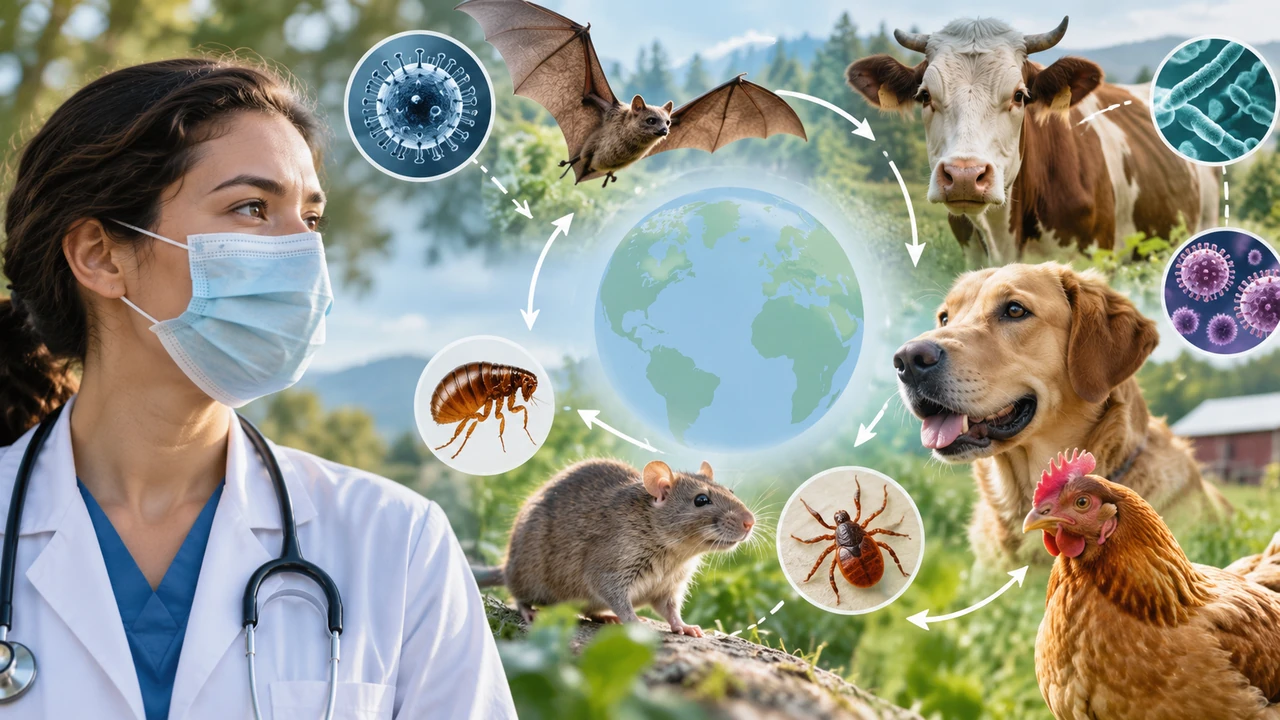
Humans and animals have always shared the same world. We live with pets, raise livestock, encounter wildlife, eat animal-derived foods, and share environments with birds, rodents, insects, and countless other species.
Most of these interactions are harmless—and many are beneficial.
But sometimes, a virus, bacterium, parasite, or fungus that normally circulates in animals finds a way into a human host. When this happens, the result may be a zoonotic disease.
Zoonotic infections are an important part of global infectious disease. According to the Centers for Disease Control and Prevention, more than 6 out of every 10 known infectious diseases in people can spread from animals, while about 3 out of every 4 new or emerging infectious diseases originate in animals.
The World Health Organization recognizes more than 200 known types of zoonoses.
Some cause mild illness. Others—such as rabies, Ebola, plague, certain influenza viruses, and hantavirus infections—can become life-threatening.
Understanding how these diseases move between animals, humans, and the environment does not mean being afraid of animals. It means knowing where real risks exist and how practical precautions can reduce those risks.
Contents
What Is a Zoonotic Disease?
A zoonotic disease, or zoonosis, is an infection that can naturally spread between vertebrate animals and humans.
The germ involved may be a:
- Virus
- Bacterium
- Parasite
- Fungus
- Less commonly, another infectious agent
Animals involved may include:
- Pets
- Livestock
- Birds
- Rodents
- Bats
- Reptiles
- Amphibians
- Wildlife
One important point is easy to miss:
An animal does not always have to look sick to carry a germ that can infect people.
A healthy-looking chicken may carry Salmonella. A bat carrying rabies may not be recognized as infected. Rodents can spread certain pathogens through urine or droppings without a person ever touching the animal directly.
That is why zoonotic disease prevention is more about understanding exposure than judging whether an animal “looks healthy.”
How Do Diseases Spread From Animals to Humans?
There is no single transmission route.
Different zoonotic diseases spread in different ways.
Direct Contact
A germ may spread when a person directly contacts an infected animal or its:
- Saliva
- Blood
- Urine
- Feces
- Mucus
- Skin lesions
- Other body fluids
Animal bites and scratches are particularly important because they can introduce infectious material through broken skin.
Rabies is a classic example.
Indirect Contact
You do not always have to touch the animal itself.
Germs may contaminate:
- Cages
- Bedding
- Farm equipment
- Water bowls
- Soil
- Animal enclosures
- Household surfaces
- Areas contaminated by droppings or urine
A person may later become infected after touching a contaminated surface and transferring the germ to the mouth, nose, eyes, or broken skin.
Fleas, Ticks, and Mosquitoes
Some infections require a vector—a living organism that carries a pathogen between hosts.
Common vectors include:
- Ticks
- Fleas
- Mosquitoes
For example, fleas can transmit plague bacteria after feeding on infected rodents.
Ticks can transmit several diseases maintained in wildlife-host cycles.
Food
Animal-associated pathogens may enter the food supply through:
- Undercooked meat
- Raw or undercooked eggs
- Unpasteurized milk
- Contaminated produce
- Cross-contamination in kitchens
Salmonella and Campylobacter are familiar examples.
Water and the Environment
Some pathogens survive in environments contaminated by animal urine or feces.
Leptospirosis, for example, can be acquired through water or soil contaminated with urine from infected animals.
Inhalation
Certain animal-associated pathogens may also be inhaled.
Hantavirus infection can occur when contaminated rodent urine, droppings, or nesting material is disturbed and infectious particles become airborne.
Certain infections associated with birds or livestock may also create inhalation risks in specific occupational situations.
Why Zoonotic Diseases Matter
Zoonotic diseases are not simply veterinary problems.
They exist at the point where human health, animal health, and environmental health meet.
Changes in the way humans use land and interact with animals can create new opportunities for pathogens to cross species.
Important factors may include:
- Urban expansion
- Deforestation
- Habitat fragmentation
- Agricultural expansion
- Intensive livestock production
- Wildlife trade
- International travel
- Animal movement and trade
- Climate and ecological changes
This does not mean wildlife itself is the problem.
Risk often rises when ecological boundaries change and contact among wildlife, livestock, and humans becomes more frequent.
What Is Disease Spillover?
Scientists often use the word spillover when a pathogen crosses from its usual animal host into a human.
Imagine a virus that normally circulates within one animal population.
Most of the time, it remains there.
But if environmental conditions, animal behavior, human activity, or biological changes create the right opportunity, the pathogen may infect a human.
That first jump is spillover.
What happens after that depends on the pathogen.
Some infections may end with one human case.
Others may cause occasional clusters.
A smaller number can gain the ability to spread effectively between humans and create larger outbreaks.
This distinction matters:
An animal-to-human infection does not automatically mean that the disease can spread efficiently from person to person.
Important Zoonotic Diseases You Should Know
There are hundreds of zoonotic diseases, so no short list can include them all.
These examples demonstrate how different zoonotic infections can be.
Rabies
Rabies is one of the clearest examples of why rapid action after an animal exposure matters.
The rabies virus spreads mainly through infected saliva, usually after a bite or scratch.
Dogs remain a major source of human rabies globally, while wildlife such as bats, raccoons, skunks, and foxes are important sources of exposure in the United States.
Once clinical rabies symptoms develop, the disease is almost always fatal.
But rabies has an important difference from many deadly infections:
Appropriate post-exposure treatment can prevent rabies if started before symptoms appear.
If you are bitten or scratched by an animal that may carry rabies, wash the wound thoroughly with soap and running water and seek medical advice promptly.
Salmonella
Salmonella is commonly associated with contaminated food, but animal contact is another important route.
Chickens, ducks, reptiles, amphibians, and other animals can carry Salmonella even when they appear healthy.
This is especially important for people who keep backyard poultry.
HealthMozo has previously covered the risks in its guide to the Backyard Poultry Salmonella Outbreak.
Wash your hands after handling:
- Chickens or ducks
- Eggs
- Feeders
- Water containers
- Poultry cages
- Bedding
- Equipment used around poultry
Plague
Plague is caused by the bacterium Yersinia pestis.
The bacteria can circulate among rodents and fleas.
Humans may become infected through:
- Infected flea bites
- Direct contact with infected animals
- Exposure to infected tissues or fluids
- Respiratory exposure in pneumonic plague
Although plague is far less common today than it was historically, naturally occurring plague has not disappeared.
Modern antibiotics can treat the disease when diagnosis and treatment begin early.
Read HealthMozo’s detailed guide to plague symptoms, treatment, prevention, and current updates.
Ebola Virus Disease
Ebola is another important example of a zoonotic disease.
Evidence from previous outbreaks suggests that wildlife is part of the natural ecology of Ebola viruses.
An initial animal-to-human spillover can begin an outbreak. Once Ebola is circulating among humans, it can spread through direct contact with infected body fluids.
This illustrates an important concept:
A disease may begin through animal-to-human transmission but later spread mainly from person to person during an outbreak.
For more information, read HealthMozo’s Ebola Virus: Symptoms, Causes, Treatment and Prevention.
Hantavirus
Hantaviruses are carried by certain rodents.
People may become infected after exposure to infected rodent:
- Urine
- Saliva
- Droppings
- Nesting materials
In the Americas, some hantaviruses can cause severe illness involving the lungs and cardiovascular system.
Cleaning a heavily rodent-infested enclosed area can create risk if contaminated dust becomes airborne.
This is why dry sweeping or vacuuming rodent droppings without appropriate precautions is discouraged.
Avian Influenza, or Bird Flu
Avian influenza viruses primarily circulate among birds.
Most do not easily infect humans, but certain strains can occasionally cross into people—particularly after close exposure to infected poultry, wild birds, livestock, or contaminated environments.
Public-health agencies watch these viruses carefully because influenza viruses can change over time.
Scientists are particularly interested in whether a virus develops changes that make human-to-human transmission easier.
Leptospirosis
Leptospirosis is caused by Leptospira bacteria.
Infected animals may shed the bacteria through urine.
Humans can become infected when contaminated water or soil contacts:
- Broken skin
- Eyes
- Nose
- Mouth
Risk may increase after flooding, heavy rainfall, or exposure to contaminated freshwater where the bacteria are circulating.
Brucellosis
Brucellosis is a bacterial infection associated mainly with livestock such as:
- Cattle
- Goats
- Sheep
- Pigs
Humans can become infected through:
- Direct occupational exposure
- Contact with infected tissues or fluids
- Consumption of unpasteurized dairy products
People with greater occupational risk include:
- Farmers
- Veterinarians
- Slaughterhouse workers
- Laboratory personnel
Lyme Disease and Other Tick-Borne Infections
Ticks can acquire pathogens while feeding on animals and later transmit some of those pathogens to humans.
Lyme disease is one of the best-known examples in the United States.
The ecological relationship is more complex than saying one animal simply “gives” a person Lyme disease.
Wildlife, ticks, pathogens, vegetation, climate, and human behavior all play roles.
HealthMozo also covers the Bourbon virus, a rare tick-associated viral disease identified in the United States.
Ringworm
Despite its name, ringworm is not caused by a worm.
It is a fungal infection.
Dogs, cats, livestock, and other animals can transmit dermatophyte fungi through direct contact or contaminated objects.
Ringworm is generally much less dangerous than diseases such as rabies or Ebola, but it demonstrates an important point:
Zoonotic disease does not always mean a rare or deadly infection.
Many zoonoses are common and treatable.
Toxoplasmosis
Toxoplasma gondii is a parasite with a complex life cycle involving cats.
Humans can become infected through several routes, including:
- Undercooked contaminated meat
- Contaminated soil
- Contaminated water
- Contact with material contaminated by cat feces
Pregnancy deserves particular attention because a newly acquired infection during pregnancy can sometimes affect the developing fetus.
Simply owning a cat does not mean someone will develop toxoplasmosis.
Risk depends on specific exposure and hygiene practices.
Pets Can Carry Germs Without Looking Sick
Pets provide companionship and emotional benefits to millions of families.
Zoonotic disease prevention should not turn pet ownership into fear.
Instead, think in terms of sensible hygiene.
Dogs and cats can sometimes carry organisms associated with:
- Rabies
- Ringworm
- Salmonella
- Campylobacter
- Leptospirosis
- Parasites
Regular veterinary care, vaccination, flea and tick prevention, appropriate waste handling, and handwashing can greatly reduce risk.
The CDC emphasizes that animals can sometimes appear healthy and clean while still carrying germs.
A simple rule works well:
Love your pets—but wash your hands.
What About Backyard Chickens and Farm Animals?
Farm animals create another type of exposure.
Cattle, goats, sheep, pigs, poultry, and other livestock can carry pathogens that matter to humans.
Children may be especially interested in touching animals at:
- Farms
- Fairs
- Petting zoos
- Backyard poultry areas
After touching an animal, a child’s next instinct may be to eat, rub the eyes, or put fingers near the mouth.
That is where handwashing becomes particularly important.
Food and drinks should generally be kept outside animal-contact areas.
Items such as:
- Pacifiers
- Bottles
- Toys
- Strollers
can also become contaminated if taken into animal enclosures.
Wildlife Should Be Enjoyed From a Distance
A wild animal that appears calm, injured, abandoned, or unusually friendly can tempt someone to approach.
That may create risk for both the person and the animal.
Wildlife may be associated with pathogens such as:
- Rabies virus
- Plague bacteria
- Hantaviruses
- Leptospira
- Salmonella
- Tick-borne pathogens
Avoid handling sick or dead wild animals with bare hands.
If you find injured wildlife, contact an appropriate wildlife rehabilitation, animal control, or public-health service rather than attempting to keep the animal yourself.
Why Bats Deserve Understanding, Not Fear
Bats are frequently mentioned in discussions about emerging infectious diseases.
That should not be interpreted to mean bats are “bad” animals.
Bats play important ecological roles, including:
- Insect control
- Pollination
- Seed dispersal
However, certain bats can carry pathogens capable of infecting humans.
The practical approach is not extermination.
It is:
- Avoiding unprotected contact
- Preventing bats from entering living spaces when possible
- Seeking public-health advice after certain exposures
Bat bites can sometimes be very small and difficult to notice, which is one reason possible bat exposure is taken seriously during rabies risk assessment.
Who Is More Vulnerable to Zoonotic Disease?
Anyone can develop a zoonotic infection.
However, some people are more likely to develop serious illness.
These groups may include:
- Children younger than 5
- Adults older than 65
- Pregnant people
- People with weakened immune systems
- People receiving chemotherapy
- People taking immunosuppressive medications
- People with certain chronic diseases
Some occupations may also involve greater exposure.
These include:
- Veterinarians
- Farmers
- Animal handlers
- Wildlife workers
- Laboratory personnel
- Slaughterhouse workers
Higher risk does not mean these individuals must avoid animals.
It means precautions need to be more deliberate.
Common Symptoms of Zoonotic Infections
There is no single set of symptoms shared by all zoonotic diseases.
Different pathogens affect different parts of the body.
Possible symptoms may include:
- Fever
- Chills
- Headache
- Muscle aches
- Fatigue
- Diarrhea
- Vomiting
- Abdominal pain
- Rash
- Swollen lymph nodes
- Cough
- Shortness of breath
- Neurologic symptoms
These symptoms can also occur in many illnesses unrelated to animals.
The important clue may be exposure history.
Tell your healthcare professional if you recently:
- Were bitten or scratched
- Handled wildlife
- Cleaned rodent droppings
- Worked with livestock
- Had a tick bite
- Visited a farm
- Handled poultry
- Consumed unpasteurized dairy
- Traveled to an area with a known outbreak
That information may significantly change which diagnoses a healthcare professional considers.
When Should You Seek Medical Care?
Seek medical advice after a potentially significant animal exposure when:
- You have been bitten or scratched by a potentially rabid animal
- You had close contact with a bat and cannot confidently rule out a bite
- A wound becomes red, swollen, painful, or begins draining
- Fever develops after significant animal exposure
- You become ill after handling poultry, livestock, rodents, or wildlife
- You develop severe diarrhea or dehydration
- You develop breathing problems following rodent exposure
- You develop neurological symptoms
- You are pregnant or immunocompromised and had a potentially high-risk exposure
Possible rabies exposure deserves particularly urgent assessment.
Do not wait for rabies symptoms to develop.
How to Prevent Diseases From Animals
Most people do not need to radically change how they live around animals.
Basic precautions can provide substantial protection.
Wash Your Hands
Wash with soap and running water after:
- Touching animals
- Feeding animals
- Cleaning cages
- Handling animal waste
- Working around livestock
- Collecting eggs
- Visiting petting zoos
Children should be supervised.
Avoid Touching Your Face
Do not eat, drink, smoke, or touch your mouth while handling animals or cleaning their environments.
Keep Pets Healthy
Veterinary care can help with:
- Vaccination
- Flea prevention
- Tick prevention
- Parasite control
- Identification of illness
Handle Animal Waste Carefully
Use appropriate gloves or tools when cleaning:
- Feces
- Urine
- Litter boxes
- Cages
- Heavily contaminated areas
Wash your hands afterward even if gloves were used.
Prevent Bites and Scratches
Avoid:
- Teasing animals
- Cornering frightened animals
- Approaching unfamiliar wildlife
- Handling animals behaving strangely
Teach children to ask permission before touching unfamiliar pets.
Practice Food Safety
Cook meat and eggs appropriately.
Avoid unpasteurized milk and dairy products when infection risk is a concern.
Prevent raw meat from contaminating cooked food or kitchen surfaces.
Protect Against Ticks and Fleas
Use appropriate:
- Insect repellents
- Protective clothing
- Pet parasite control
- Tick checks after outdoor activities
Do Not Keep Wildlife as Pets
Wild animals have needs that ordinary homes usually cannot meet and may carry pathogens unfamiliar to pet owners.
What Should You Do After an Animal Bite?
The correct response depends on:
- The animal
- Geographic location
- Type of exposure
- Wound severity
- Local disease risk
As an immediate first step, thoroughly wash the wound with soap and running water.
Possible rabies exposure requires prompt professional assessment.
Healthcare and public-health professionals may consider:
- Animal species
- Local rabies activity
- Whether the animal can be observed
- Whether testing is possible
- Type of contact
- Location and severity of the injury
Do not decide whether treatment is needed based only on how healthy the animal appears.
Why Antibiotics Do Not Treat Every Zoonotic Disease
“Zoonotic disease” describes the relationship between an infection, animals, and humans.
It does not identify the type of germ causing the disease.
A bacterial zoonosis may require antibiotics.
A viral zoonosis will not respond to antibiotics.
Fungal and parasitic infections require different types of treatment.
Taking leftover antibiotics after an animal exposure is therefore not a safe strategy.
Correct diagnosis matters.
Why Are Scientists Concerned About Emerging Zoonotic Diseases?
The concern is not that every virus found in an animal will become a pandemic.
Most will not.
The concern is the enormous number of interactions occurring among:
- Humans
- Animals
- Microorganisms
- Changing environments
Changes in:
- Land use
- Wildlife habitat
- Agriculture
- Climate
- International travel
- Animal trade
can create new opportunities for pathogens to cross species.
Monitoring animal health can therefore provide important early warnings for human health.
What Is One Health?
One Health is an approach based on a simple scientific reality:
Human health cannot always be separated from animal health and environmental health.
A veterinarian may identify disease in animals before doctors begin seeing human cases.
Environmental scientists may detect ecosystem changes that increase disease risk.
Public-health teams may identify human infections.
Agricultural agencies may work to control disease in livestock.
Wildlife specialists may monitor pathogens in wild populations.
When these groups share information and coordinate their response, disease threats can sometimes be detected and controlled earlier.
The CDC, World Health Organization, Food and Agriculture Organization of the United Nations, and World Organisation for Animal Health all support collaborative One Health approaches.
One Health is relevant to:
- Zoonotic diseases
- Food safety
- Antimicrobial resistance
- Vector-borne diseases
- Environmental health
- Livestock health
- Wildlife health
Antimicrobial Resistance Adds Another Challenge
Some zoonotic bacteria can become resistant to antibiotics.
Antimicrobial resistance can move through:
- Human populations
- Animal populations
- Food systems
- Healthcare environments
- Soil and water
When bacteria become resistant, infections that were previously easier to treat can become more difficult.
Responsible antibiotic use is therefore important in both human and veterinary medicine.
Should We Be Afraid of Wildlife?
No.
That is not the message of zoonotic disease science.
Healthy ecosystems and wildlife are essential.
The better lesson is:
Respect wildlife, understand exposure, and avoid unnecessary close contact.
A deer walking through a forest is not a public-health emergency.
A bat should not be handled with bare hands.
A wild rodent should not be brought into your home.
A dead wild animal should not be casually picked up.
A child should wash their hands after touching farm animals.
Risk awareness is about making sensible distinctions—not fearing nature.
Frequently Asked Questions
What Is a Disease That Spreads From Animals to Humans Called?
It is generally called a zoonotic disease or zoonosis.
Are All Animal Diseases Dangerous to Humans?
No.
Most animal pathogens cannot infect humans.
Zoonotic diseases are the group capable of crossing between animals and humans under appropriate conditions.
Can a Healthy-Looking Pet Carry Germs?
Yes.
Animals can sometimes carry pathogens without appearing sick.
That is why routine hygiene and veterinary care remain important.
Can Chickens Carry Salmonella Without Being Sick?
Yes.
Healthy-looking poultry can carry and shed Salmonella.
Can Rodents Spread Disease Without Biting?
Yes.
Some rodent-associated diseases can spread through fleas or through exposure to urine, droppings, saliva, or contaminated environments.
Is Plague Still a Zoonotic Disease?
Yes.
Yersinia pestis circulates in animal reservoirs, particularly rodents, and can reach people through infected fleas or direct animal exposure.
Pneumonic plague can also spread from person to person under certain circumstances.
Do All Zoonotic Diseases Spread Between Humans?
No.
Some mainly result from animal exposure.
Others can spread between humans after the initial spillover.
Are Zoonotic Diseases Becoming More Important?
Changes in land use, agriculture, climate, travel, trade, wildlife habitats, and human-animal contact can create new opportunities for some diseases to emerge or spread.
That does not mean every zoonotic disease is increasing everywhere.
Can Vaccines Prevent Zoonotic Diseases?
Vaccines are available for some zoonoses.
Rabies is an important example.
Vaccinating animals can also protect people by reducing disease transmission at its source.
Can Zoonotic Diseases Be Completely Prevented?
Not every case can be prevented.
However, many risks can be substantially reduced through:
- Vaccination
- Hygiene
- Animal health programs
- Safe food handling
- Vector control
- Disease surveillance
- Responsible interaction with wildlife
The Bottom Line
Animals are not the enemy.
Viruses, bacteria, parasites, and fungi are part of ecosystems that humans also inhabit.
Sometimes these microbes cross the biological boundary between species.
That is zoonotic disease.
One infection may come from an animal bite.
Another from poultry.
Another from a flea.
Another from a tick.
Another from contaminated water.
Another from inhaling particles disturbed from rodent waste.
That means there is no single method for preventing every zoonotic infection.
But several principles consistently reduce risk:
Understand the exposure.
Respect wildlife.
Keep pets healthy.
Wash your hands.
Handle food safely.
Prevent bites and vector exposure.
Seek medical care promptly after high-risk exposures.
Protecting people from future animal-associated disease threats will not depend on human medicine alone.
It also requires veterinarians, wildlife specialists, environmental scientists, agriculture professionals, laboratories, and public-health agencies to work together.
That is the idea behind One Health—the recognition that the health of humans, animals, and the environment is deeply connected.
Sources and Further Reading
- World Health Organization — Zoonoses
- CDC — About Zoonotic Diseases
- CDC — One Health
- FAO — Zoonoses and One Health
- World Organisation for Animal Health — One Health
- WOAH — Tripartite Zoonoses Guide
Medical Disclaimer
This article is intended for general health education and public-health awareness only. It is not intended to diagnose an infection or replace medical advice from a qualified healthcare professional.
If you have been bitten, scratched, exposed to a potentially rabid animal, or develop symptoms after significant animal exposure, contact a healthcare professional or local public-health authority.
Seek emergency medical care for severe breathing difficulty, confusion, seizures, severe dehydration, or other potentially life-threatening symptoms.

Diploma in Lab Technician (DMLT)
Paramedical Board, Delhi, Govt. of India
(Reg. No. REG/23/41/1391)
Dedicated and detail-oriented Lab Technician with hands-on experience in diagnostic
testing, sample collection, and laboratory procedures. Seeking a challenging role in a
reputable healthcare organization where I can utilize my skills and contribute to accurate
and efficient patient care.
“Each health article undergoes professional medical review by experienced doctors.”